
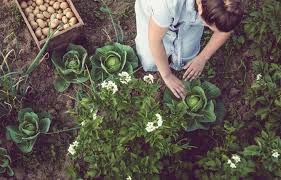
We tend to assume that eating organic food is good for our health. A recent, large-scale study looks more closely at whether it might reduce cancer risk.
A new study attempts to answer a question that scientists and consumers have been pondering for years: Can organic food reduce the risk of developing cancer?

Organic food started as a niche product only a few decades ago but is now present in most grocery stores across the United States.
In brief, for regulators to class food as organic, farmers and manufacturers must produce it without using synthetic fertilizers, genetically modified organisms, or pesticides.
Many consumers assume that it is more healthful to eat organic food than nonorganic food.
It may seem sensible to assume that consuming fewer pesticides is beneficial. However, scientists have so far found it challenging to discover ways to prove health benefits that they can associate with organic food.
Researchers know that certain pesticides are potentially carcinogenic at higher levels of exposure, but they have yet to understand clearly the impact of long-term, low-level exposure.
We all face exposure to a cocktail of chemicals throughout our lives — in food, the water we drink, and the air that we breathe — and this exposure makes their impact on our health even more difficult to dissect.
Because organic food contains significantly fewer pesticides than nonorganic food, proponents have long suggested that it might have associated health benefits.
Scientists have investigated exposure to pesticides in relation to several health outcomes, such as Alzheimer’s disease, Parkinson’s disease, infertility, and asthma.
To date, only one study has investigated cancer risk and the consumption of organic food. The authors of this 2014 paper concluded that “there was little or no decrease in the incidence of cancer associated with consumption of organic food, except possibly for non-Hodgkin lymphoma.”
The link with non-Hodgkin lymphoma is important because research has previously linked three pesticides — glyphosate, malathion, and diazinon — to this type of cancer.
Recently, researchers set out to put this theory to the test once more. They published their results in JAMA Internal Medicine earlier this week.
The scientists drew their data from the French NutriNet-Santé cohort, a large-scale, ongoing study examining various associations between health and nutrition. Their data were sampled from 2009 to 2016 and included 68,946 adults.
The research team collected information on diet plus a large number of additional factors. These other observations included the age, sex, occupational status, and educational level of the individuals.
The scientists also recorded the amount of sun exposure the participants had, their use of dietary supplements, marital status, monthly income, weight, height, general health, and lifestyle factors.
Two months after enrollment in the study, the researchers asked the participants how frequently they ate food from 16 different groups of organic products. Depending on how many of these they consumed, and how often they did so, the researchers gave each person a score out of 32.
Every participant also filled out a 24-hour food survey for 3 randomly selected days, and the study followed each participant for an average of 4.5 years. During this time, there were 1,340 new diagnoses of cancer.
Read Also : Where does the water in a well come from?,https://greenstories.co.in/where-does-the-water-in-a-well-come-from/
Even after adjusting for other dietary factors, the results were as expected, and the authors conclude:
“A higher frequency of organic food consumption was associated with a reduced risk of cancer.”
Individuals who ate the most organic produce had a 25 percent lower risk of receiving a cancer diagnosis, during the follow-up, when compared with those eating the least amount of organic produce.
Specifically, there was a reduction in non-Hodgkin lymphoma and postmenopausal breast cancer. The authors write that “no association was detected for other types of cancer.”
The authors are clear that more work will be needed before they can confirm their conclusions. However, if organic food truly does reduce cancer risk, it would be a relatively simple intervention for doctors to recommend — especially to those who are most at risk.





Buy Irrigation Drips On krishiBazaar
click here:- https://krishibazaar.in/index.php?route=product/category&path=103&limit=25
Buy Irrigation Drips On KrishiBazaar
Click here:-https://krishibazaar.in/index.php?route=product/category&path=103