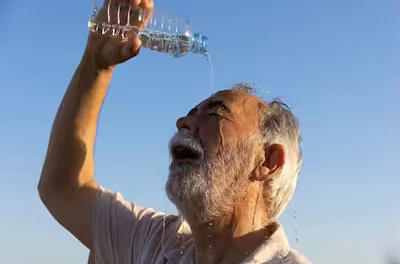
Many of us exercise, others simply love to plan for it and have romantic, day-dreamy notions about how the (not yet performed) exercise will do wonder (in future). There there are the gym-freaks, the laser from the focus of whom can melt titanium. Exercise sure does wonders for our bodies and mind, this is true. But a study says too much exercise can be harmful to you.
This may sound obvious but researchers who have carried out this study are talking about molecular level analysis and not just a sprain in the ankle from doing too many jumping jacks.
The research has been published in journal Military Medical Research and has been reported by ScienceAlert.
________________________________________________________________________
Read Also : Situation of Waste Management Start-ups in India
________________________________________________________________________
“People who are very fit might be more prone to viral respiratory infection immediately after vigorous exercise,” says Ernesto Nakayasu, a biomedical scientist with Pacific Northwest National Laboratory (PNNL) as quoted in a release from the laboratory
“Having less inflammatory activity to fight off an infection could be one cause.”
Some previous studies have mentioned upper respiratory tract infection self-reported by athletes though there is little evidence that excess exercise increases the likelihood of opportunistic infection.
Before they arrived at their conclusion, Nakayasu and his colleagues examined blood plasma, urine, and saliva of 11 firefighters before and after 45-minutes vigorous exercise.
“We wanted to take an in-depth look at what’s happening in the body and see if we’re able to detect danger from exhaustion in its earliest stages,” explains PNNL bioanalytical chemist Kristin Burnum-Johnson. “Perhaps we can reduce the risk of strenuous exercise for first responders, athletes, and members of the military.”
________________________________________________________________________
Read Also : Is stevia a healthy alternative? Everything you should know,
________________________________________________________________________
It was reported that after exercise, there was a decres in molecules that are connected with inflammation. In addition to this there was increase in the amount of Opiorphin, which dilates peripheral blood vessels.
“[Opiorphin] may increase blood flow to muscles during the exercise regimen to improve the delivery of oxygen and nutrients,” the team write in their paper as reported by ScienceAlert.
“We postulate that the decrease in inflammatory molecules we observed in the saliva after exercise might represent an adaptive mechanism to improve gas exchange in response to higher cellular oxygen demand.”