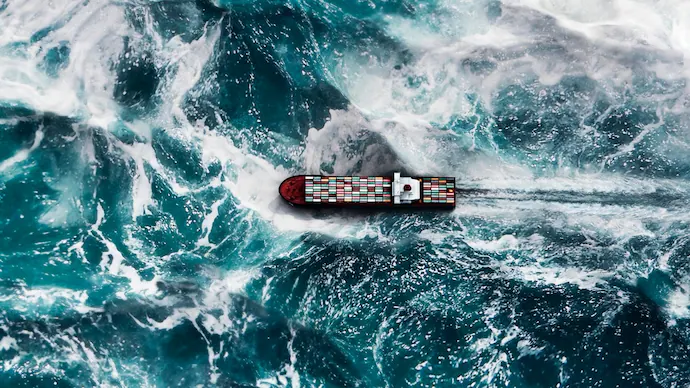
Researchers attribute coastal darkening primarily to increased nutrient and sediment runoff from agriculture and rainfall, which stimulate plankton growth and reduce light penetration.

In Short
- The picture is not solely of a darkening ocean with around 10% of the ocean
- It affect plankton growth and reduce light penetration
- Shifts in algal bloom dynamics and rising sea surface temperatures are likely culprits
More than 21% of the world’s oceans — covering an area greater than 75 million square kilometers — have undergone significant darkening over the past 20 years, according to a new study published in Global Change Biology.
_______________________________________________________________________
Read Also : 6 Excellent Sources Of Vegetarian Protein For Your Daily Diet
________________________________________________________________________
The research, led by scientists from the University of Plymouth and Plymouth Marine Laboratory, reveals that changes in the ocean’s optical properties are reducing the depth of photic zones, the sunlit layers that support 90% of marine life.
The study, which analysed satellite data and advanced numerical models from 2003 to 2022, found that the photic zone, where sunlight and moonlight fuel ecological interactions, has become shallower across vast stretches of both coastal and open ocean.
Over 9% of the ocean, an area roughly the size of Africa, has seen photic zone depths decrease by more than 50 meters. In 2.6% of the ocean, the reduction exceeds 100 meters.

While about 10% of the ocean has become lighter, the overall trend is towards darkening, raising concerns for marine species that depend on light for survival, reproduction, and feeding.
“Our results provide evidence that such changes cause widespread darkening that reduces the amount of ocean available for animals that rely on the sun and the moon for their survival and reproduction,” said Dr. Thomas Davies, Associate Professor of Marine Conservation at the University of Plymouth.
_______________________________________________________________________
Read Also : Vegan Protein Sources
________________________________________________________________________
Causes and Consequences
Researchers attribute coastal darkening primarily to increased nutrient and sediment runoff from agriculture and rainfall, which stimulate plankton growth and reduce light penetration.
In the open ocean, shifts in algal bloom dynamics and rising sea surface temperatures are likely culprits.
The implications are far-reaching. As photic zones shrink, light-dependent organisms are forced closer to the surface, increasing competition for food and resources.
NOTE – This article was originally published in indiatoday and can be viewed here