
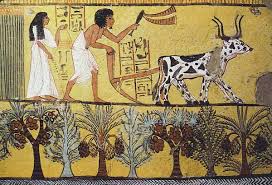
In Egyptian mythology, it is believed that Osiris, son of Ra the sun god, marked the start of a civilization and taught the divine practice of sowing, maintaining, and harvesting of crops to humans living in his kingdom.
Such is the divinity of this field. From a healthy breakfast to happy lunch and snacks & from your dinner platter to those much craved midnight snacks, everything you consume is the by/final product or somehow related to this single practice, agriculture.
_______________________________________________________________________
Read Also : Smart Farming: The Future of Agriculture
________________________________________________________________________
The history of agriculture can be traced back to the start of Homo sapiens race, roughly up to 1, 05,000 years back when they collected natural, wildly grown plant product, along with this about 11,500 years back mankind learned how to grow crops of its own if that’s the case the legend must have roots in the earliest of human beings.
So, let’s conclude the trip down the memory lane & address what you are here to read about, what are some of the BEST AGRICULTURE PRACTICES.
Evolution from past to present:
Going back, the earliest recorded practice was that of slash and burn agriculture. In an area abundant in forest resources, a village or tribe would cut down a part of the forest to cultivate crops and after some time, move on to the next patch giving the earlier soil time to heal. This type of farming if done right, would prove to be an asset for soil quality but sadly overuse of this practice would certainly lead to deforestation and hence further reducing the soil quality.
We have come a long way since then, the soil quality now is not only controlled by the amount of time it is used to cultivate crops but is affected by various other factors like season, climate, chemicals used, along with type & variety of crops cultivated upon that land.
To overcome other shortcomings, agriculture has seen a surge of innovative ideas that revolutionized the field or have the potential for a successful revolution which will further affect the growth, output, and other environmental factors associated with the field.
Key points to consider while practicing agriculture:
While the practice of cultivating crops is the main source of food and nutrition for humankind, it also comes with its fair share of downside if followed blindly without any caution.
The above-stated stage can now be seen in various parts of India with the global stage affected in the same manner.
While practicing agriculture, an individual or a community should keep some keynotes in mind to gain maximum while at the same time maintaining the ecological balance established by nature.
Sustainable agriculture is a term very closely related to BEST AGRICULTURE PRACTICES, it follows the basic principles of sustainability as defined in books.
________________________________________________________________________
Read Also : Ayurveda and Modern Medicine: Are They Compatible?
________________________________________________________________________
This practice of sustainable agriculture has now qualified from being an option to becoming a necessity due to the gradual boom in population which put upon a massive pressure on the supply chain to meet the demand quotas.
While practicing agriculture one should keep in mind that along with us, future generations will also have to depend upon this very land for their survival thus maintaining soil and water quality, minimizing air, water & soil pollution & promoting biodiversity should be the base of practicing this divine art.
Counting down some of the BEST PRACTICES IN AGRICULTURE
Vermicomposting: Since the past few years, farmers are suffering heavily from a constant decline in soil quality due to its overuse. To maintain soil quality even after the application of chemical pesticides & insecticides, the practice of vermicompost has risen to a new pedestal. Vermicompost has found a new market inside the distress of farmers and exclusively deals with enriching soil quality with the help of works, primarily earthworms.
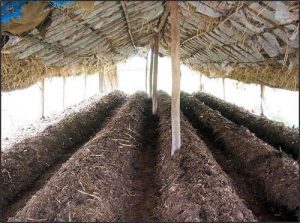
With the help of numerous case studies, it can be easily concluded that farmers who successfully use vermicomposting, have observed a surge in their yield with very low & repairable damages to their field. This finally results in increasing one’s income without pressurizing the ecosystem near the field.
Crop rotation: this method deals with the planting of various crops sequentially on the same land to maintain or improve soil health, optimize nutrients present in soil & to combat pests and weed problems. This is turn helps to maintain the ecological balance of the land thus helping to turn out a greater yield year after another.
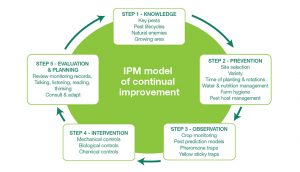
Integrated pest management: starting with official UNFAO’s definition, IPM is defined as ‘careful consideration of all available pest control technique’s & subsequent integration of appropriate measures the discourage the development of pest population & keep pesticides & other interventions to a level that are economically justified & reduce risks to human health & environment’. Coming out of this long definition, IPM is the integration of various activities such as monitoring, prevention & control to keep the use of chemical means at bay. Thus this method is becoming popular on a global level, all thanks to the long lists of benefits it carries along with it.
________________________________________________________________________
Read Also : Zoo Removes Parrots From Display For Swearing At Visitors,
________________________________________________________________________
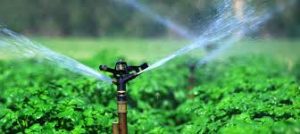
Water management in irrigation: being the soul of agricultural practices, water is considered to be the lifeblood of plants, with time various water management techniques are developed notable of which are:-
- Drip irrigation: regarded the most efficient system for irrigation process, water is directly applied to the root of a plant. Not easy to maintain or install, but efficiency can be increased by ten folds.
- Deep pipe irrigation: another direct to root watering method but difficult to execute perfectly’
- Wick irrigation: similar to deep pipe irrigation but executed with help of fabric wick.
- Perforated pipe: the basic type of drip irrigation, easy to install, not highly reliable’
- Sprinkler system: can be used to cover a large area, easy to install, moderate efficiency.
The systems mentioned above have higher efficiency than traditional field filling operation & are being effectively used for managing the water required for irrigation.
Along with these practices which are all potentially revolutionary in their wake, here are some other notable practices which have gained or are gaining popularity among the masses
- Diversification
- System & landscape management
- Agroforestry practices
- Integration of livestock & crops
- Including cover crops with regular crops
Conclusion
It’s important to consider the possibility of a bleak future if things deteriorate at the present rate, however preventing that bleak & gloomy future from becoming a reality will take a lot of hard & smart work.
Along with traditional knowledge, revolutionary ideas, innovations & discoveries will be needed to indeed change the face of the planet & achieve the much-desired goal of sustainability.
Tags: #agri, #agricultura, #agriculture, #agriculturelife, #agro, #farm, #farmer, #farmers, #farming, #farmlife, #fendt, #getgreen, #global, #gngagritech, #green, #greenstories, #harvest, #johndeere, #landwirtschaft, #masseyferguson, #nature, #newholland, #Tractor




