For every 100 kg of plastic, 50-70 litres of poly-fuel are produced, with 20-30 kg of gas and 5-7 kg of remains. The gases are utilized to re-heat the reactor, and the residue is mixed with bitumen and aggregate to make roads.
________________________________________________________________________
Read Also : The young ancient secret of BIOCHAR,
________________________________________________________________________
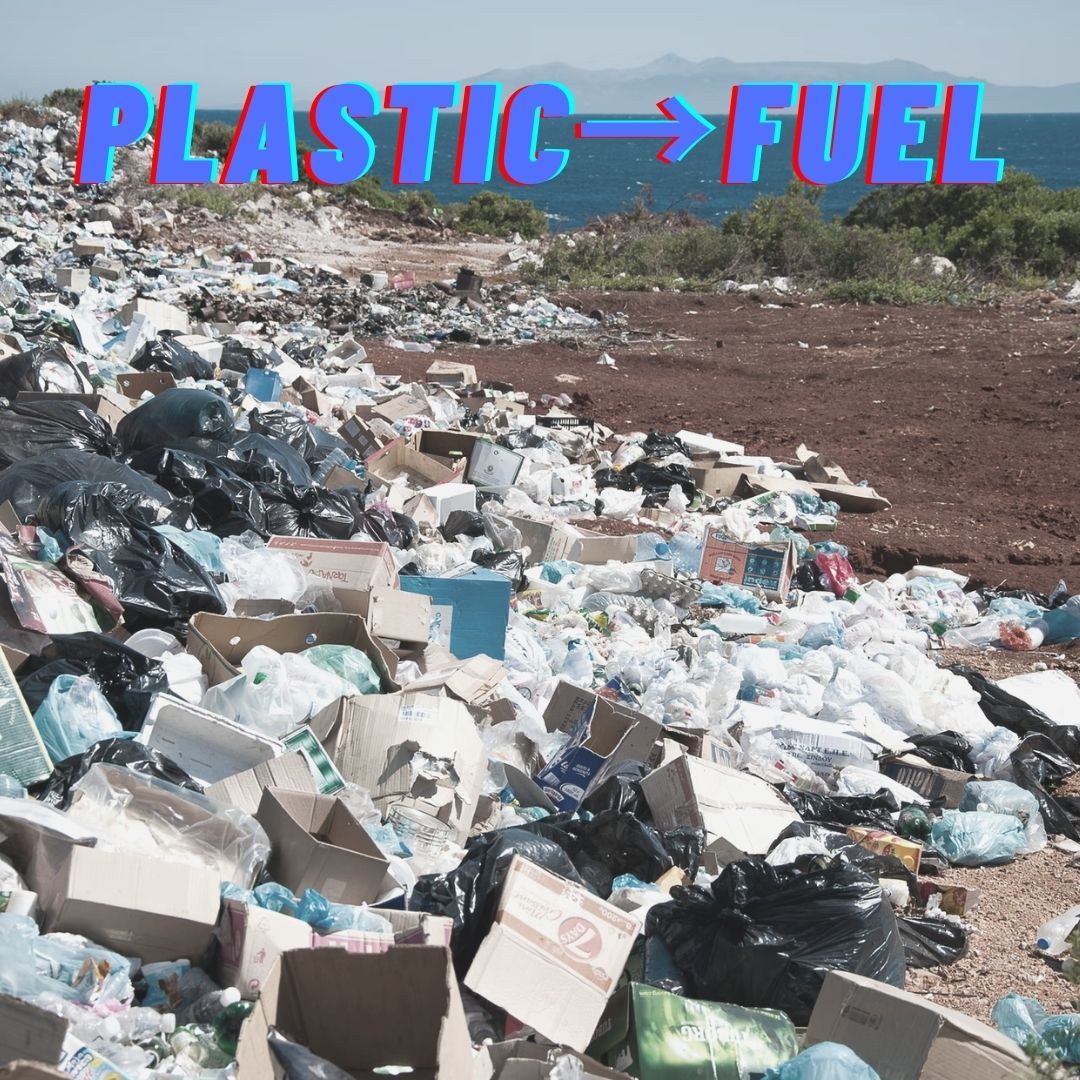
India produces close to 26,000 tonnes of plastic per day, and worse, little more than 10,000 tonnes of plastic waste is discarded every day. Given how pervasive plastic has become in daily life, India, like much of the rest world, is struggling to dispose of its growing waste.
Two Pune-based environmentalists, Dr Medha Tadpatrikar and Shirish Phadtare are combating the same battle against plastics.
Origin Of Idea
Phadtare was on an animal sanctuary visit when they were denied entry to a specific location due to the death of a deer. Further investigation revealed that the animal’s death was caused by plastic consumption, and this incident triggered him, resulting in the entity’s formation. After two years of solution hit and trial, they found ‘Rudra Environmental Solution’ that ‘recovers’ plastic by converting it to fuel.
The environmentalists have developed a solution that converts 25 lakh tonnes of plastic waste into poly fuel to make a difference. The Thermolytic Deep Polymerization Process, which converts shredded plastic into power, was developed after two years of research, consultation with experts, and intensive study.
________________________________________________________________________
Read Also: Ballabgarh in Haryana records country’s worst air quality,
________________________________________________________________________
Furthermore, all byproducts generated during the process are utilized, reducing waste and increasing efficiency.
Procedure Of Plastic Conversion
For the past year and a half, Rudra has collaborated with the Keshav Sita Memorial Foundation Trust to raise awareness about waste segregation at the source and to collect waste plastic from various areas of Pune. As mentioned by Print Week, nearly 12,000 households, hotels, and businesses participated in the collection.
After collecting plastic from sources, the plastic conversion into fuel is performed when the plastic is transported to a plant near Jejuri of Rudra Environmental Solution and placed in the reactor alongside a catalyst (TCD Process).
For every 100 kg of plastic, 50-70 litres of poly-fuel are produced, with 20-30 kg of gas and 5-7 kg of remains. The gases are utilized to re-heat the reactor, and the residue is mixed with bitumen and aggregate to make roads. The following process contributes to zero-waste, recycling, and reusing used plastic, as per reported by.
________________________________________________________________________
Read Also : The Mystical Himalayas – Where Yogis and Sages Live – Part 1
________________________________________________________________________
Mission and Vission Achieved
Over the years, Rudra Environmental Solutions has gained the trust and investors of a Singapore-based firm. Moreover, they have successfully ventured and handed over the ownership of 3 plants and kept three under their license. They have achieved a milestone in their journey of reducing plastic going into landfills by converting a few 100 tonnes of plastic to date.
NOTE – This article was originally published in Thelogicalindian and can be viewed here