Hidden in Mexico’s Sierra Madre del Sur for over 120 years, a long-lost species has finally been rediscovered, proving that nature still holds extraordinary secrets.
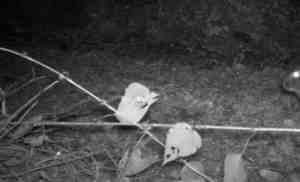
For over a century, the Omiltemi cottontail rabbit was thought to be lost to history, unseen by scientists since its last recorded sighting 120 years ago. Despite its disappearance from scientific records, local hunters in Mexico’s Sierra Madre del Sur insisted that the elusive rabbit still roamed the dense forests. Their reports intrigued ecologist José Alberto Almazán-Catalán, who embarked on a five-year search to uncover the truth.
Partnering with Re:wild, a global conservation initiative dedicated to rediscovering species lost to science, Almazán-Catalán and his team carefully mapped out potential habitats and set up a network of camera traps deep in the rugged terrain. After years of uncertainty, their patience finally paid off—the cameras captured unmistakable footage of the long-lost rabbit, proving that it had survived against the odds.
_______________________________________________________________________
Read Also : Worst mass extinction event in Earth’s history was caused by global warming analogous to...
________________________________________________________________________
What Makes the Omiltemi Cottontail So Important?
With the species now confirmed alive, scientists are eager to learn more about its role in the ecosystem. Though small and unassuming, the Omiltemi cottontail plays a crucial part in maintaining the balance of its environment. It helps disperse seeds as it forages, aiding in forest regeneration. Its droppings contribute to soil fertility, enriching the land and supporting plant growth. Most importantly, it serves as a vital prey species, feeding a range of predators, including snakes, owls, ocelots, pumas, and coyotes.
“They are important for seed dispersal … their droppings are important for soil fertility … they are the base of the food chain for predators such as snakes, owls, tigrillos, ocelots, pumas, and coyotes,” explained Almazán-Catalán.
_______________________________________________________________________
Read Also : Things You Can Do to Reduce Global Warming
________________________________________________________________________
What’s Next for the Omiltemi Cottontail?
Rediscovering the species is a significant achievement, but it also raises urgent questions about its population size and the threats it may be facing. Scientists now need to determine how many individuals remain in the wild and assess their reproductive habits and survival rates. Habitat loss due to deforestation and human encroachment is a growing concern, and researchers must identify the key dangers to ensure the species does not slip into true extinction.
Christina Briggs of Re:wild emphasized the importance of this research, stating, “Alberto and his team are helping fill a huge knowledge gap to make sure that the Omiltemi cottontail rabbit is never lost to science again.”

________________________________________________________________________
Read Also: 11 Best Healthy Recipes | Easy Healthy Recipes
________________________________________________________________________
A Growing Trend of Conservation Success
The rediscovery of lost species is becoming more frequent, proving that nature can be more resilient than we often assume. Around the world, similar conservation efforts have led to remarkable success stories. In India, pygmy pigs have been reintroduced, stabilizing their dwindling populations. On Tristan da Cunha, a remote island in the South Atlantic, conservationists have managed to save the Wilkins’ bunting, one of the rarest birds in the world.
The return of the Omiltemi cottontail rabbit is another reminder that even species thought to be long gone may still be out there, waiting to be found. With dedicated conservation efforts, more discoveries like this may be on the horizon, proving that the natural world still holds surprises yet to be uncovered.
NOTE – This article was originally published in indiandefencereview and can be viewed here