

As we learned in our article on soil salinization, large accumulations of chloride is detrimental to the effectiveness of soil. Protecting soil biodiversity by preventing the use of chloride can help farmers grow better crops and build a more sustainable environment. With the increase in our global population, practicing natural sustainable farming is critical to fulfilling the rising demand for food.
________________________________________________________________________
Read Also: Top 5 Soil Articles on EcoFarming Daily in 2021 (so far…)
________________________________________________________________________
What is Soil Biodiversity and Why is it Important?
Soil is the most important and biologically diverse part of our ecosystem. When we break it down, soil biodiversity is the simple relationship between soil and the mix of organisms in the soil that interact with one another.
These organisms work with nearby vegetation to form a web of interconnected and interdependent activities that make up agriculture production. There are billions of species that interact within soil to make up that ecosystem. Unfortunately, it takes decades for healthy soil to form, so it is crucial that we protect and maintain it.
It’s worth to mention that soil is priceless; the benefits it provides to plants, humans, and animals cannot be measured. That said, it is possible to measure specific benefits that it provides. Recycling of organic wastes, for example, is considered to be one of the most important benefits of soil.
Mankind produces more than 38 billion metric tons of organic waste on a global scale annually. Were it not for the decomposing/recycling activity of organisms within soil, much of the globe’s land surface would be covered with organic debris. The economic value of this service represents approximately 50% of the total benefits of soil biotic activity worldwide (>US$ 760 billion).
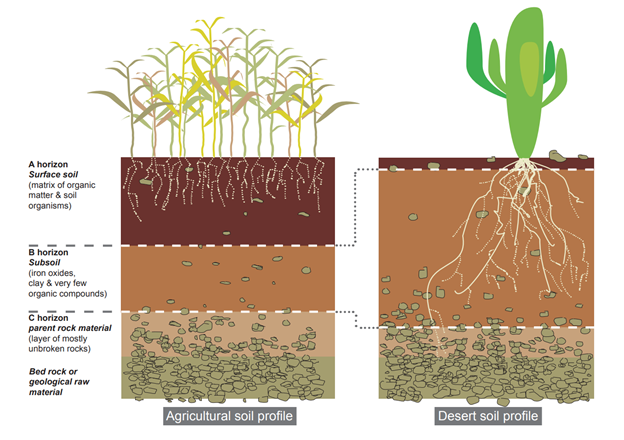
Comparing two different soil types to show how biological factors affect soil quality. Source: European Crop Protection Association.
________________________________________________________________________
Read Also: This small change to farming could reduce agriculture’s climate impact by 30%
________________________________________________________________________
How to adopt Sustainable Farming?
Soil biodiversity has a critical role in the field of agriculture. It allows for the sustainable use of land by improving soil structure, regulating pesticides, and increasing the availability of nutrients for the growth of crops.
Farmers, as the guardians of land, play a vital role in protecting soil biodiversity. Some production techniques that farmers can adopt to help maintain soil biodiversity are non-tillage practices, utilizing cover crops along with cash crops, and nutrient management. Let’s take a closer look at some of them:
No-Till Soil
Tilling soil is an extremely damaging practice. It involves turning over the top 6 – 10 inches of soil to mix in any crop and manure residues and warm the surface of the soil. While this seems like a good thing, tilling soil actually disturbes its structure and makes it more susceptible to erosion. This practice destroys many microorganisms that are a part of the soil. Adopting till-free practices not only preserves the soil’s health but it allows the farmer to save valuable time and money that can be utilized elsewhere.
Cover Crops
Cover crops are special crops that protect soil from wind and water erosion. They help store nitrogen and carbon in the soil which can be converted to SOM, or soil organic matter. They have many benefits, but one key feature is that they act as “green manure”. At the end of their growing season, their leftover biomass can be recycled back into the soil to replenish it with nutrients.
Nutrient Management
Farmers use a combination of chemical and natural fertilizers to assist with crop production. Three nutrients that are fundamental for crop production are: nitrogen, potassium, and phosphorus. However, excess of any one of these can lead to pest problems, an imbalance in the soil’s pH level, contaminated water sources, and other environmental issues. This is why farmers need to carefully plan the timing, quantity, type, and method of their fertilizer application.
In order to encourage the development and adaptation of more sustainable farming methods, it is crucial to understand the role farmers play in preserving our natural resources. When we have a full assessment of how different methods affect the soil and its biodiversity, we’re able to provide the proper technical and financial support.
It’s important to understand that sustainable farming is interdependent with soil biodiversity. Biodiversity cannot be maintained using unsustainable agriculture, and agriculture requires fertile soils and is, therefore, dependent on high soil biodiversity to produce good quality crops. Since some farming practices deeply influence the quality of soil, it is crucial to know what practices we should support and invest in to have a healthy soil.
________________________________________________________________________
Read Also: HOW SUPPORTING ORGANIC FARMING BENEFITS YOU AND THE PLANET
________________________________________________________________________
Takeaways
- Our whole ecosystem depends on billions of interactions between soil and living organisms.
- This biodiversity is a complex and crucial part of nature because of the impact it has on plants, animals, and humans.
- Farmers play an integral role in preserving biodiversity as they have direct influence on its state.
- Since consumers like us can’t participate in these activities, it’s important to learn how farmers operate in order to show our support.
Ultimately, Earth’s soil is finite, and frequently used poor agricultural procedures will deteriorate it faster. Soil protection through the careful monitoring of farming activities are the solutions to conserve and grow our future.
NOTE – This article was originally published in Sciencing and can be viewed here








Trackbacks/Pingbacks