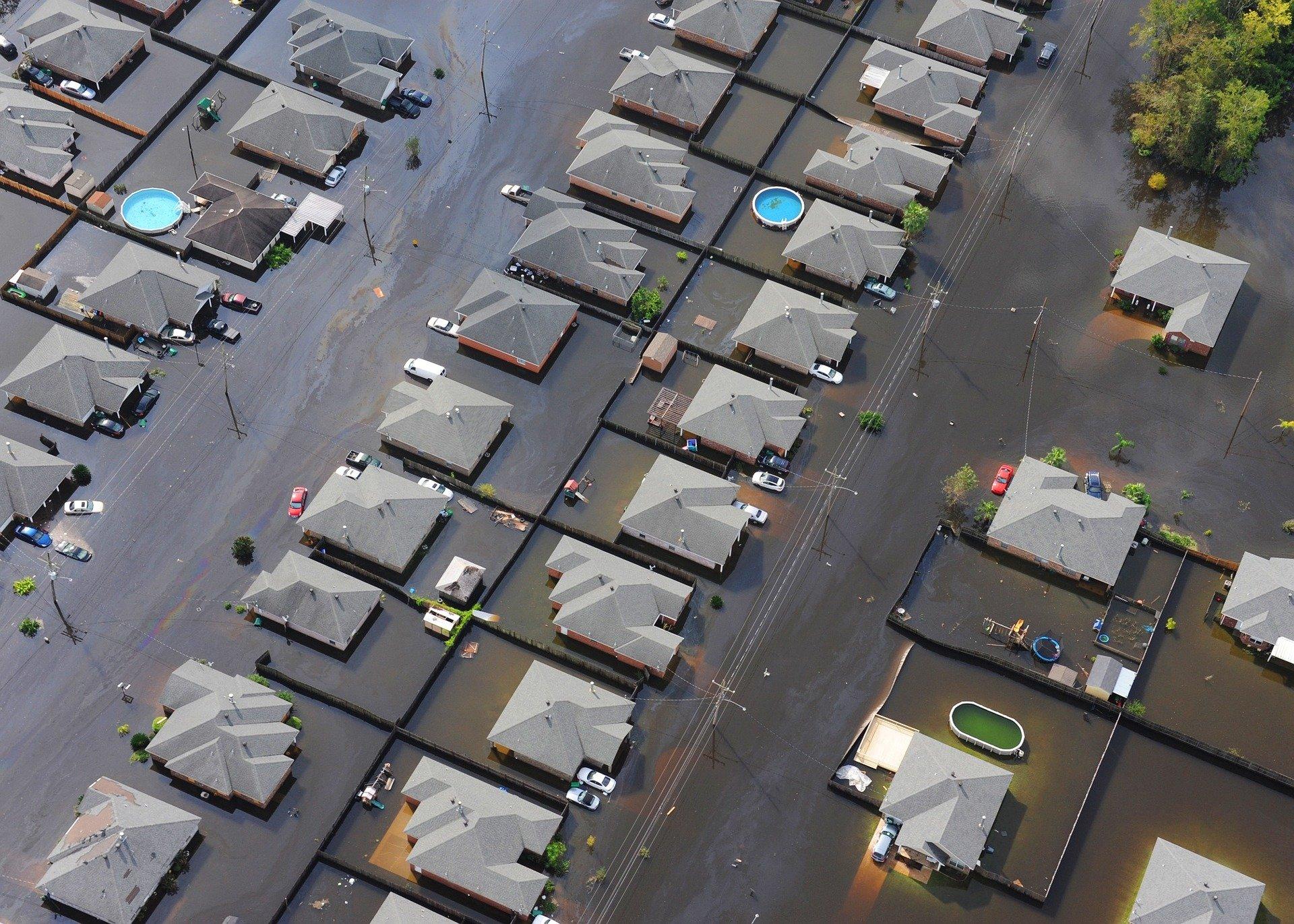
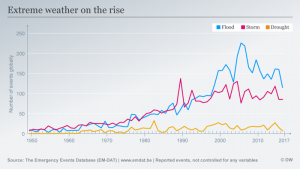
Floods are becoming one of the most frequent and common disasters in the world predominantly in the densely populated regions like coasts and river banks. It has now become a widespread fact that there is a deep grassroot-level relationship between floods and climate change.
_______________________________________________________________________
Buy Organic Products Online at best prices at https://www.getgreen.co.in .
_______________________________________________________________________
Consequences of floods:
- Apart from the injuries and fatalities, several waterborne diseases spread into the community. Malaria is common in these regions.
- A huge shock is inflicted to the economy. Roads, buildings and other public properties are damaged. A rather hefty loss is caused to the infrastructure.
- Industries come to a halt abruptly. All kinds of transportation and communication services like railways, telephone and internet get disrupted.
- The forest cover and the habitat is also affected due to floods caused by unnatural and untimely shifts in climate patterns.
Correlation between floods and climate change
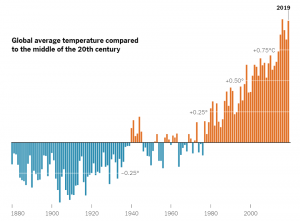
Contrary to what people think, mismanagement by government is not the cause of floods, climate change is the primary reason behind the increasing floods across the globe.
Humans have emitted around 2,300 billion tonnes of carbon dioxide in the last two hundred years. This has caused the average temperature to rise by one degree Celsius. This one-degree change in temperature might be taken casually by many but the repercussions of this change are rather devastating.
The ocean’s heat content has increased drastically which eventually leads to change in weather cycles which further result in untimely heavy rains and storms especially in places which have not been prepared for this havoc creating weathers.
Rampant deforestation, particularly in the mountain regions, induces the flooding water to carry more silt. This silt on being deposited on the river bed incites the river to gradually overflow and flood the plains.
Sea levels have already risen eight inches from the pre-industrial times. Oceans are expanding due to global warming. Researchers reported in 2014 that the arctic glaciers had retreated past the point of no return. The ice melt has become unstoppable. If all the earth’s land ice were to melt, our oceans would rise by a whopping 216 feet.
Regions Inflicted by floods
Around 2.3 billion people have been affected by a flooding disaster in the past two decades. The United States, Asian countries like China, India, Bangladesh, North and South Korea regularly face flooding disasters every year. An estimated 165,000 casualties due to floods have been reported in the past twenty-five years. In South America too, more than 2 million were affected in this decade. In 1931, China faced a catastrophic flood with more than two million fatalities.
Sometimes unplanned cities with poor drainage systems could result in urban flooding in times of high intensity rainfalls.
________________________________________________________________________
Read Also : Targeted Ecosystem Restoration Can Protect Climate, Biodiversity,
________________________________________________________________________
Impacts of floods across the globe
According to the United Nations, more than six hundred million people live on coastal areas that are less than thirty feet above the sea level and any amount of further greenhouse gas emissions will cause sea levels to rise higher. Scientists predict a rise of twenty feet or more by the end of this century.
Some coastal areas are already struggling. During high tides in Miami and monsoons in Mumbai, water already slides across city streets. This is happening now which is a physical sign of rising sea levels.
Florida with its long sandy beaches and wetlands, cities like New York, Shanghai, Venice, Mumbai and Alexandria, all metropolises with these watery boundaries, their geography is going to change in a substantial way in the coming times. The sea levels are going to gnaw the corners of these eminent coastal cities.
The cost for prevention of the borders of these coasts from inevitable rising waters is very high. It is estimated billions of dollars will be needed to be spent to barricade these cities from tidal waters.
Conclusion
The irony is that governments around the world have collectively spent trillions of dollars in arms and ammunition whereas they have been ignorant towards global climate change and rising sea levels which could engulf the coasts bearing the lives of hundreds of millions of people around the globe.
_______________________________________________________________________
Read Also :Climate change: New report will highlight ‘stark reality’ of warming
________________________________________________________________________
Changing climate tends to be such an abstract and distant problem. We must realise that it is as real and personal as anything could ever be and therefore, act accordingly before it is too late.
Tags: #assam, #assamfloods, #bihar, #climatechange, #climatecrisis, #covid, #flood, #flooded, #flooding, #floods, #floodwater, #getgreengetgrowing, #gngagritech, #greenstories, #india, #karnataka, #mold, #mumbai, #nature, #rain, #river, #storm, #thunderstorms, #water, #winter