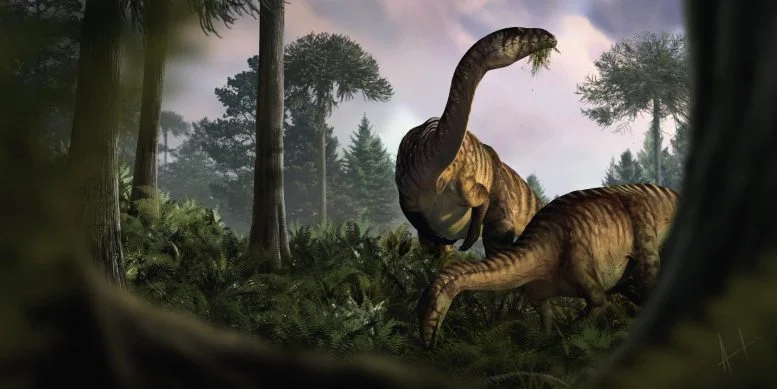
A duo of sauropodomorphs; one munching on the newly evolved plants in a wet Early Jurassic environment whilst the other is looking up as if there was something hiding in the vegetation. Credit: Marcin Ambrozik
Researchers have used fossil feces to study dinosaur diets, revealing how diverse eating habits contributed to their evolutionary success in the Late Worst mass extinction event in Earth’s history was caused by global warming analogous to...
______________________________________________________________________________
“Piecing together ‘who ate whom’ in the past is true detective work,” says Martin Qvarnström, a researcher at the Department of Organismal Biology and lead author of the study. “Being able to examine what animals ate and how they interacted with their environment helps us understand what enabled dinosaurs to be so successful.”
Ecological Insights from the Polish Basin
The study, published in Nature, focused on a previously underexplored region, the Polish Basin, located in the Late Triassic time in the northern parts of the then-supercontinent Pangea. The researchers built a comprehensive picture of the Triassic and Things You Can Do to Reduce Global Warming
______________________________________________________________________________
Coprolite Contents Reveal Diverse Diets
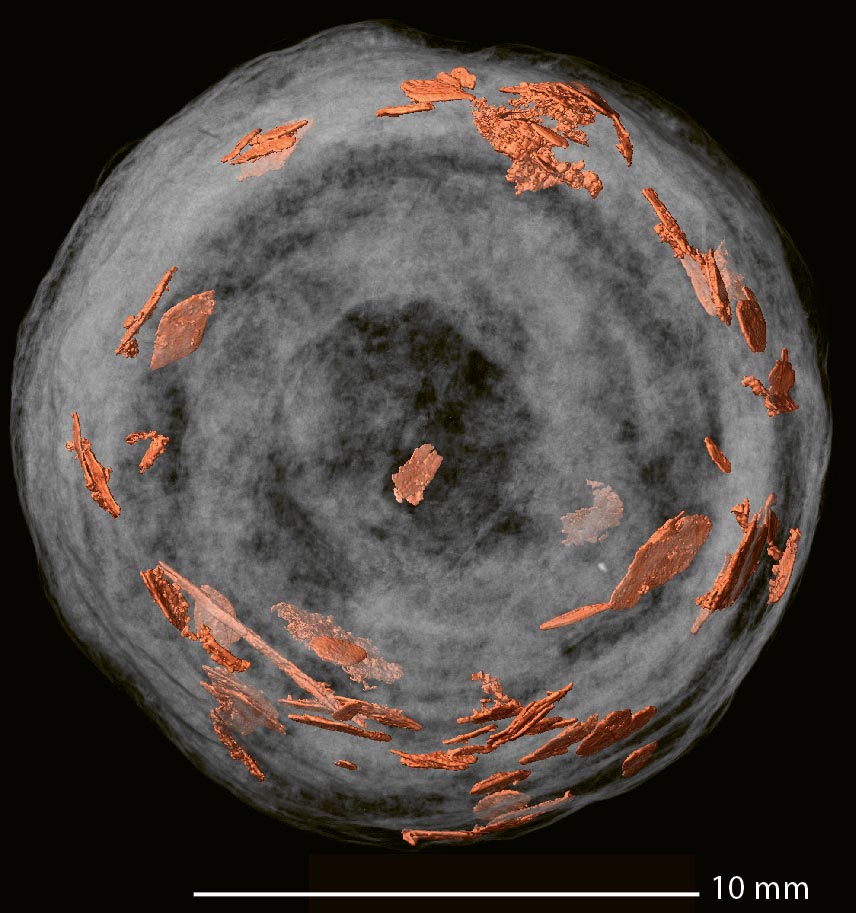
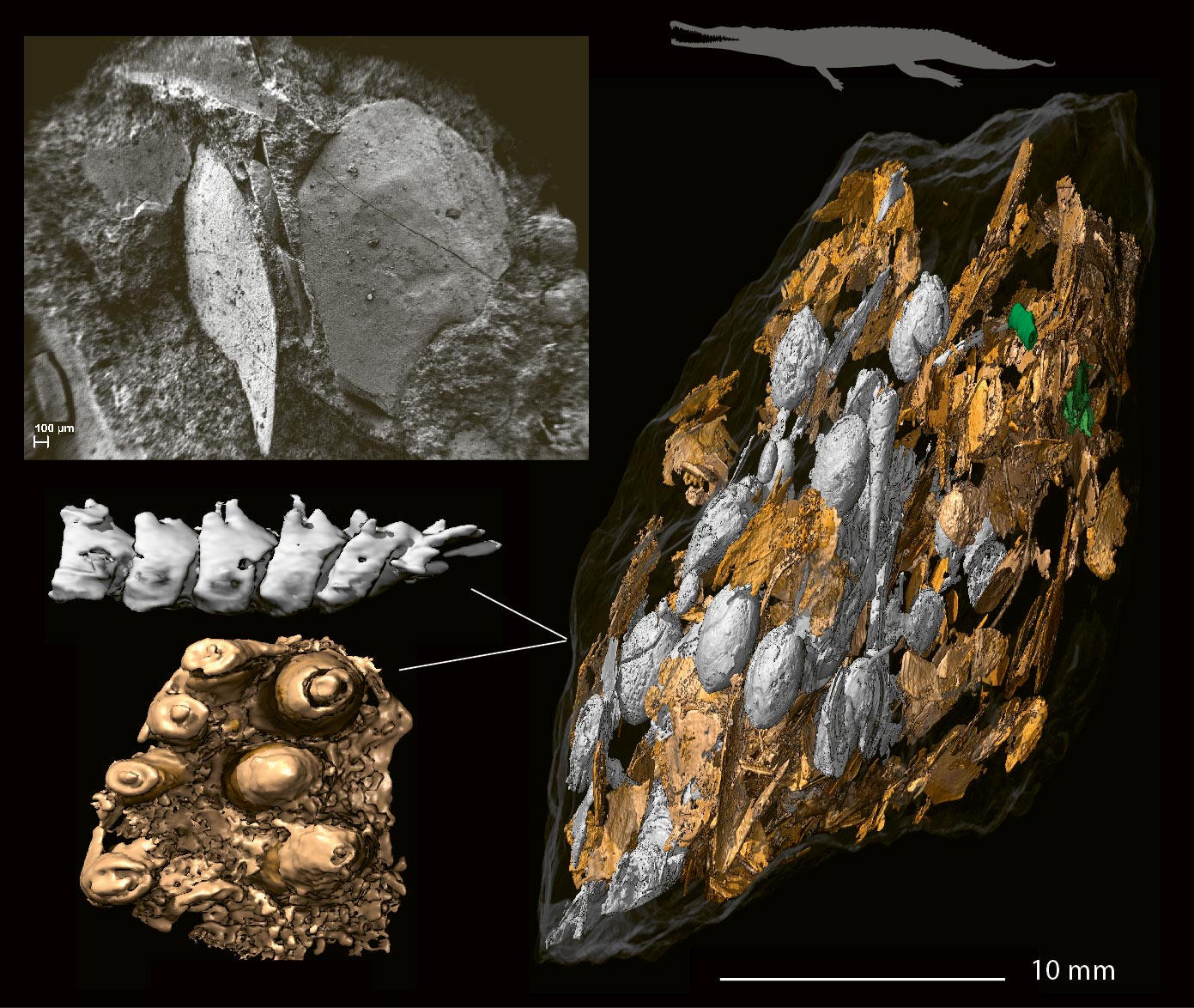
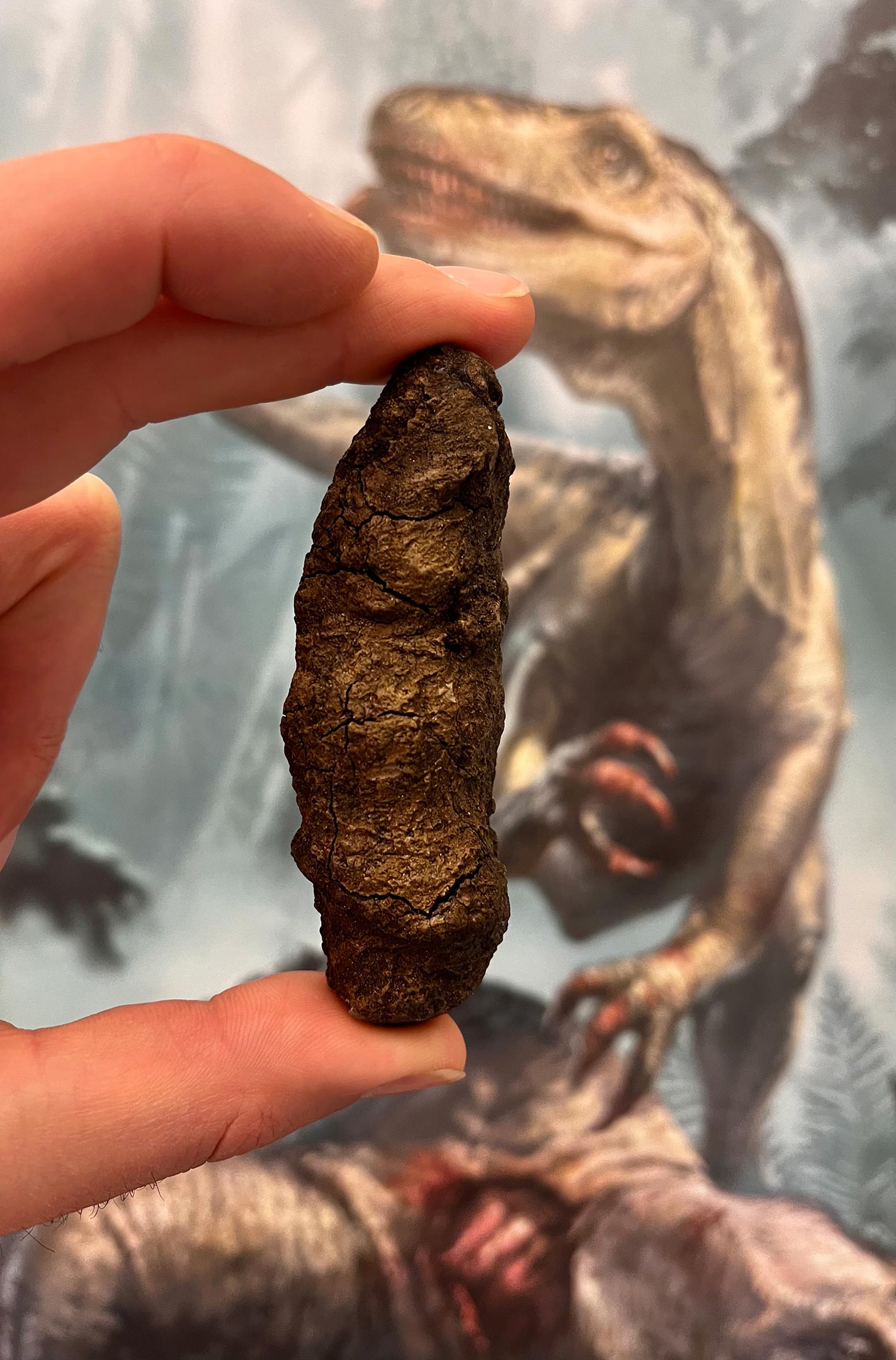
The coprolites contained remains of fish, insects, larger animals, and plants, some of which were unusually well preserved, including small beetles and semi-complete fish. Other coprolites contained bones chewed up by predators that, like today’s hyenas, crushed bones to obtain salts and marrow. The contents of coprolites from the first large herbivorous dinosaurs, the long-necked sauropods, surprised the researchers. These contained large quantities of tree ferns but also other types of plants and charcoal. The paleontologists hypothesize that charcoal was ingested to detoxify stomach contents, as ferns can be toxic to herbivores.
Implications for Understanding Dinosaur Evolution
The research addresses a significant gap in current knowledge: the first 30 million years of dinosaur evolution during the Late Triassic period. Although much is known about their lives and extinction, the ecological and evolutionary processes that led to their rise are largely unexplored. The study results in a five-step model of dinosaur evolution that the researchers believe can explain global patterns.
________________________________________________________________________
Read Also : Chemical Fertilizer Manufacturer Goes Organic
________________________________________________________________________

The team emphasizes that understanding how the first dinosaurs achieved their success can offer valuable insights into prehistoric ecosystems and evolutionary processes in general. The results show that dietary diversity and adaptability were crucial survival traits during the environmental changes of the Late Triassic.
“Unfortunately, climate change and mass extinctions are not just a thing of the past. By studying past ecosystems, we gain a better understanding of how life adapts and thrives under changing environmental conditions,” says Qvarnström.

“The way to avoid extinction is to eat a lot of plants, which is exactly what the early herbivorous dinosaurs did. The reason for their evolutionary success is a true love of green and fresh plant shoots,” Niedzwiedzki concludes.
NOTE – This article was originally published in scitechdaily and can be viewed here
Tags: #animals, #climate, #dinosaur, #environment, #fish, #footprints, #FossilizedDung, #getgreengetgrowing, #gngagritech, #greenstories, #jurassic, #nature, #plants, #vomit