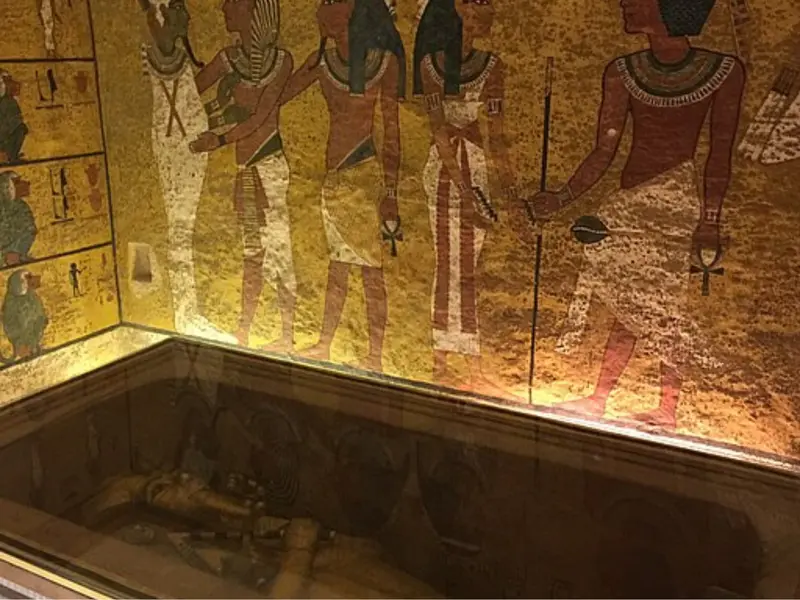

A fungus found in King Tutankhamun’s tomb and another tomb in Poland has been flagged as carrying compounds that can help treat cancer. This fungus killed several excavators and scientists, but now it is being tested to develop a new line of treatment.
________________________________________________________________________
King Tutankhamun’s tomb has been a major point of thrill amongst archaeologists ever since it was discovered in 1922 by excavators led by the Egyptologist Howard Carter. However, several excavators died soon after, triggering rumours of a mummy’s curse. No one knew at the time what had happened. Then, in the 1970s, the tomb of Casimir IV was discovered in Poland, and surprisingly, 10 scientists died after entering it. This time, researchers knew what had killed them – Aspergillus flavus, a toxic fungal spore. Investigators found evidence that the fungus that can cause lung infections was present in the tomb. This led them to establish that the same fungus also likely killed the excavators who entered King Tutankhamun’s tomb. Now, scientists have discovered yet another secret about this fungus. According to a recent study published in Nature Chemical Biology, certain isolated compounds from the fungus A. flavus can be used to destroy leukaemia cells. These compounds, called ribosomally synthesised and post-translationally modified peptides (RiPPs), can help develop new cancer treatments.
________________________________________________________________________
Also Read: Bamboo Tree – Lesson for Life
________________________________________________________________________
Researchers found the molecules formed a unique structure of interlocking rings that were named “asperigimycins,” after the fungus in which they were found. They think that this unique structure potentially disrupts the process of cell division. Adding a lipid to one variant of the RiPP led it to perform just as well as cytarabine and daunorubicin, the current FDA-approved leukaemia treatment drugs. “Cancer cells divide uncontrollably. These compounds block the formation of microtubules, which are essential for cell division,” senior author Sherry Gao, PhD, said in a press release. José Larios, MD, a transplant haematologist at the Barbara Ann Karmanos Cancer Institute in Detroit, said that the new compound attacks cancer cells by interfering with a crucial step of cellular reproduction.
_______________________________________________________________________
Read Also : CARBON EMISSIONS WILL CHANGE OCEAN SURFACE CLIMATE BY 2100 BY 95 PERCENT: STUDY
________________________________________________________________________
Every time a cell reproduces, it copies the DNA, after which the duplicated chromosomes must move to opposite ends of the cell. The new fungal RiPP compound interferes with this microtubule organisation, which would cause this faulty chromosome segregation and subsequent cell death, needed to treat cancer. The researchers added that the compound cells were effective against leukaemia cells, but had no effect on breast, liver, or lung cancer cells. Larios said that while she is excited about this new cytotoxic compound, it has a “long and rigorous journey”. There would be various testing stages, as the average time from discovery to FDA approval is 10 years.
NOTE – This article was originally published in wionews and can be viewed here