The population of India crossed the 1.2 billion mark in 2015, and now it stands at 1.38 billion with a population density of 455 per square km. India’s 3.287 million square km land area holds 18% of the world’s population. In addition to other challenges, the garbage generated by the masses is a crisis like never before.
_______________________________________________________________________
Buy Organic Products Online at best prices at http://www.getgreen.co.in .
________________________________________________________________________
Across the country, cities are drowning in detritus. In Banglore, what was once a serene lake, turned into a frothing mess in Bellandur. In Delhi, in addition to huge mountains of garbage at Gazi Pur and G.T. Karnal road bye-pass, the water of Yamuna is not fit for bathe even, leaving aside its use for drinking purposes. India is the third-largest producer of solid waste, after only China and the United States. Left unmanaged, dumped, or burned, waste generates dangerous gases and leachate due to microbial decomposition, harms human health, which hurts the environment and climate, and also hinders the growth of developing and developed countries alike.
According to data from Indiaspend.com, 377 million people in urban areas (as per the 2011 census), generate 62 million MT of waste each year. About 43 MT or 70% are collected, out of which only 12 million MT or 19 35% is treated, and 31 million MT 50% are dumped in landfills. Rest 19 million MT 30.62% remains unlifted. As the pace of urbanization sustains and more people head to cities, the mountain of trash in every city is getting bigger and bigger.
As per the report by the MoHUA (ministry of housing and urban affairs), as of January 2020, 147,613 MT of solid waste is generated per day, from 84,475 wards. The 2014 report by the “Task Force on Waste of Energy” under the planning commission estimates that urban India will generate 2,76,342 tonnes per day waste by 2021, 4,50132 TPD by 2031, 11,95,000 TPD by 2050. The per capita generation is increasing by 1.3% on annual basis. Maharashtra generates the highest, at 22,080 MT per day from 7322 wards, while Sikkim generates the lowest at 89 MT per day from 53 wards.
_______________________________________________________________________
Read Also : Soil carbon is a valuable resource, but all soil carbon is not created equal
________________________________________________________________________
Out of the total waste generated per year, 50% is organic waste, rest is a mix of recyclable and biomedical/hazardous waste. In Hyderabad during a survey, it was found that HIH (high-income household) generates
Wet waste———–0.902 Kgs.
Dry waste———–0. 378 Kgs.
Hazardous waste—-0. 216 Kgs.
—————
Total waste ———1.496 Kgs. Per Day.
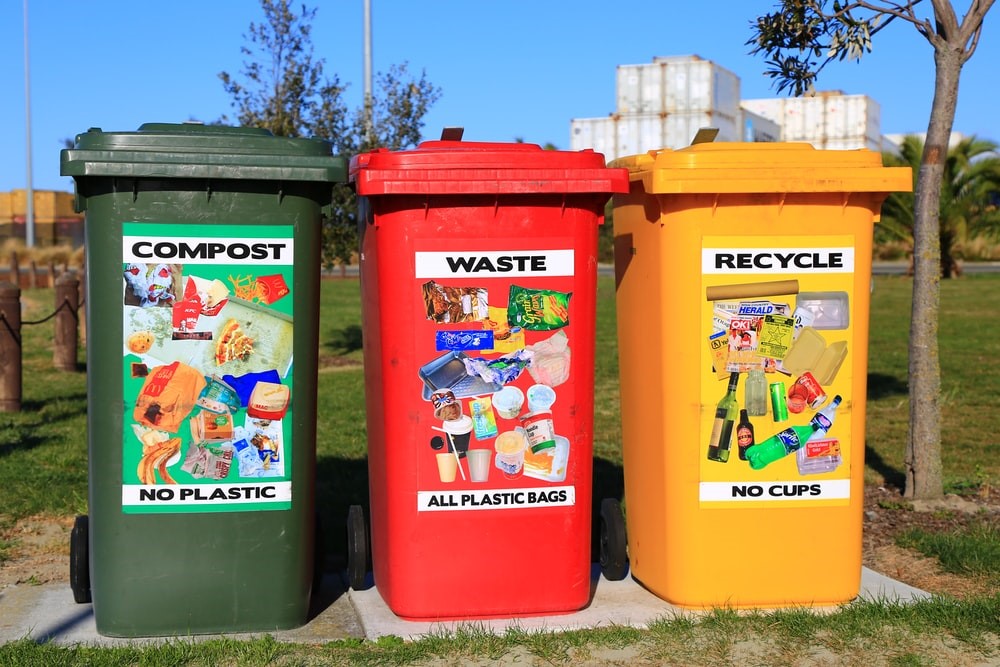
Whereas MIH (middle household) generates 1.322 Kgs. per day. So far we take an average of both, it will be 1.409 Kgs of waste is generated per person per day. Out of which, wet waste is 63.45%, dry waste is 21.75% and 14.80 is hazardous waste. The conclusion is almost 85% of the waste is recyclable which with very some simple efforts by each one of us, can be put back in nature. Only this exercise if we adopt it sincerely, can not only save the environment, rather can create wealth out of it.
The per capita MSW ( Municipal solid waste) generation in India is on the rise owing to two reasons. One is that of population growth, and the second is the increasing trend of urbanization, increasing consumerism. In addition, the larger cities are becoming vulnerable to IHW (industrial hazardous waste) at the rate of 2% to 5%. It seems to be a grave issue when one considers that India is expecting the most significant increase in the population by 2050. Followed by China, India will add a further 425 million, the highest in the world to its urban population by 2050. Another factor that affects is, one half to three-quarters of annual resource inputs to industrial economies, is returned to the environment as waste within just one year.
How it affects human health? It has been identified that 22 diseases affect human beings, that are directly linked to improper solid waste management. Several studies have been published that link asthma, heart attack, and emphysema to the burning of garbage. Human fecal matter is also found in municipal waste, which attracts rodents, which further leads to the spread of diseases. Some of the other challenges in the management of waste or garbage are, the lack of data on the quantum of waste generation is conflicting. Segregation of waste at the household level is missing, because of a complete lack of public awareness of the consequences. Waste collection efficiency is very poor. Habitually in most of the cities and towns in India, we dispose of the regular waste simply by depositing it in low-lying areas, outside the city, and that too without taking adequate precautions. Research shows that there is no land available for landfill. No comprehensive research studies have been conducted to cover all the cities and towns of the country. Local authorities lack adequate funding and infrastructure, in the absence of which, they are unable to adopt innovative technologies for waste treatment.
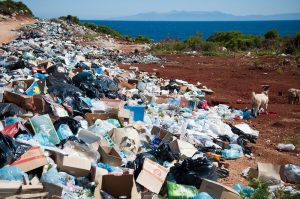
Dump yards frequently catch fire because of the emanation of methane gas. In 2016, in Deonar in Mumbai, a fire raged for three months, pumping tonnes of cancer-causing smoke into the air. Burning garbage is classified as the third biggest cause of greenhouse emissions in India. Apart from human health, the effect on land, water, and food pollution is a matter of grave concern.
_______________________________________________________________________
Read Also : Why scientists want to solve an underground mystery about where microbes live
________________________________________________________________________
Burning releases, carbon monoxide, nitrogen oxide, sulfur dioxide, and carcinogenic hydrocarbons apart from particulate matter in the air. India releases 6% of methane emissions from garbage, compared to 3% of the global average. There’s a report that by 2050, we will require 1500 square kilometers of landfill area for dumping India’s increasing volumes of MSW. It’s equal to the combined areas of three out of the top five most populated cities in India, Hyderabad, Mumbai, and Chennai.
This is a fact that the word GARBAGE has distinct dirt feeling to it. It instantly evokes a foul odor and a desire to turn away from there. But, GARBAGE/ WASTE/DIRT is an inevitable part of our lives. It’s there in our homes, in our environment, and every nook and corner of this earth. Ironically the garbage or the waste we dislike the most is always carried by each one of us, from 3 Kgs to 13 Kgs in our bodies. Of course, there’s an extraordinary organic recycling mechanism in place. But we need to understand that there is nothing as waste or garbage or useless in nature. So how did waste get such a terrible reputation? Over the last four decades, we humans have grossly grown insensitive and tripled our consumption of the products, made out of the earth’s natural resources, or we can say that we have become a perfect mechanism of converting natural resources into garbage or waste. The only solution to this monstrous challenge lies only in citizens’ participation and contribution, especially in source segregation. There must also be a strong thrust in the policies on the behavioral change amongst the citizens, elected representatives, and the decision-makers to minimize wastage and of its reuse and recycling. All of us will also have to come out of the mindset or the syndrome, “NOT IN MY BACKYARD (NIMBY). Only then we will be able to fight this ever-growing monster of GARBAGE.
Tags: #biomedical, #decomposition, #environment, #foodpollution, #getgreengetgrowing, #gngagritech, #greenstories, #hazardouswaste, #landfill, #microbial, #organicwaste, #recyclable, #waste, #wastegeneration, #wastemanagement, #WaterPollution