In a new study, researchers compiled nearly 2,40,000 satellite images of glacier terminus positions from 1985 to 2022.
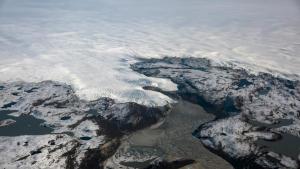
Climate change has caused Greenland’s ice sheet to lose 20% more ice than previously thought, according to research published Wednesday that used satellite imagery to track the retreat of glaciers over the past four decades.
Previous studies have found that about 5,000 gigatons of ice has been lost from the surface of the Greenland ice sheet in the past two decades, a major contributor to rising sea levels.
In the new study, researchers in the United States compiled nearly 2,40,000 satellite images of glacier terminus positions — where glaciers meet the ocean — from 1985 to 2022.
_______________________________________________________________________
Read Also : Agave Power: How a Revolutionary Agroforestry and Grazing System in Mexico Can Help Reverse…
________________________________________________________________________
“Nearly every glacier in Greenland has thinned or retreated over the past few decades,” lead author Chad Greene, a glaciologist from NASA’s Jet Propulsion Laboratory, said.
“There really aren’t any exceptions, and this is happening everywhere, all at once.”
They found that over 1,000 gigatons (1 gigaton is equivalent to 1 billion tons), or 20%, of ice around the edges of Greenland had been lost over the past four decades and not been accounted for.
“The Greenland ice sheet has lost appreciably more ice in recent decades than previously thought,” researchers said in the journal Nature.
_______________________________________________________________________
Read Also : What is Plasma Gasification – And It’s Significance
________________________________________________________________________
Because the ice at the island’s edges is already in the water, the authors stressed that this would have had a “minimal” direct impact on sea level rise.
But it could herald further overall ice melt, allowing glaciers to more easily slip towards the sea.
Susceptible to change
Researchers found that the Greenland glaciers most susceptible to seasonal changes — that is expanding in winter and retreating in summer — are also the ones most sensitive to the impact of global warming and experienced the most significant retreat since 1985. The melting of Greenland’s vast ice sheet — the world’s second-largest after Antarctica — is estimated to have contributed more than 20% to observed sea level rise since 2002.
NOTE – This article was originally published in thehindu and can be viewed here
Tags: #agri-food, #climate, #climatechange, #climatecrisis, #climaterisk, #environment, #getgreengetgrowing, #glacier, #globalwarming, #gngagritech, #greenland, #greenstories, #ice, #nasa