CWC said 1,435 glacial lakes and water bodies showed an increase in their water spread area, while 1,008 recorded a decrease over the 14-year period.
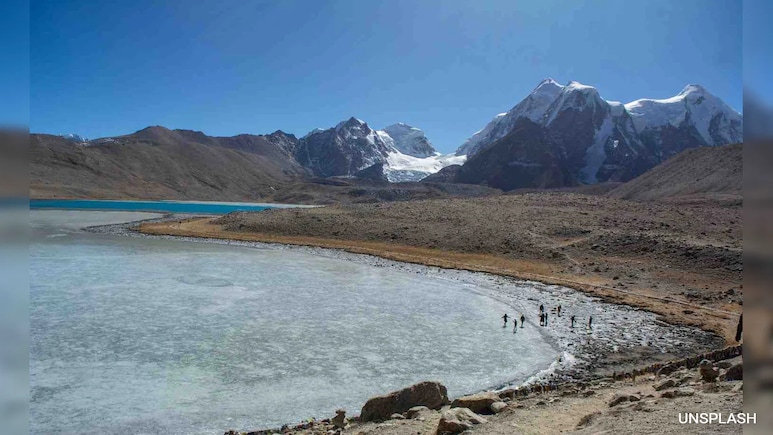
Glacial lakes and other water bodies in the Himalayan region have expanded by 9.24 per cent over the past 14 years, said a Central Water Commission (CWC) report, spotlighting the effects of climate change.
The total inventory area of glacial lakes and water bodies increased from 5.30 lakh hectares in 2011 to 5.79 lakh hectares in 2025, it said.
The Monthly Monitoring Report by the commission keeps track of water bodies in the Himalayan region. Its August iteration, which is yet to be made public, noted that shrinking glaciers and the expansion of glacial lakes have become some of the most visible signs of global warming in the region.
The CWC said 1,435 glacial lakes and water bodies showed an increase in their water spread area, while 1,008 recorded a decrease over the 14-year period.
_______________________________________________________________________
Read Also : Change In Course Of Himalayan Glacier Can Help To Understand The Glacial-Tectonic Interaction
________________________________________________________________________
The report said the commission monitors 2,843 glacial lakes and water bodies using high-resolution Sentinel satellite data through Google Earth Engine. Of these, 428 glacial lakes located within India showed expansion and require “vigorous monitoring for disaster preparedness.”
These include 133 in Ladakh, 50 in Jammu and Kashmir, 13 in Himachal Pradesh, seven in Uttarakhand, 44 in Sikkim, and 181 in Arunachal Pradesh.
Within India, the total water spread area of glacial lakes increased from 1,995 hectares in 2011 to 2,445 hectares in 2025, registering a 22.56 per cent rise, according to the CWC report.
The commission warned that the increase in lake sizes raises the risk of glacial lake outburst floods (GLOFs) — sudden floods caused by the breach of unstable moraine dams, which can cause extensive downstream damage.
The report said direct prediction of outburst events is not feasible with current knowledge, underscoring the importance of continuous monitoring.
The monthly monitoring reports are shared with the central and state disaster management authorities to support early warning systems, and are published on the CWC website for wider access.
According to the Glacial Lake Atlas of Indian River Basins 2023, 28,043 glacial lakes larger than 0.25 hectares have been mapped across the Himalayan river basins, of which 7,570 are located within India.
_______________________________________________________________________
Read Also : 34 of 100 large glacial lakes show an ‘increasing trend’ in water spread area, Central Water Commission tells NGT
________________________________________________________________________
(Except for the headline, this story has not been edited by NDTV staff and is published from a syndicated feed.)