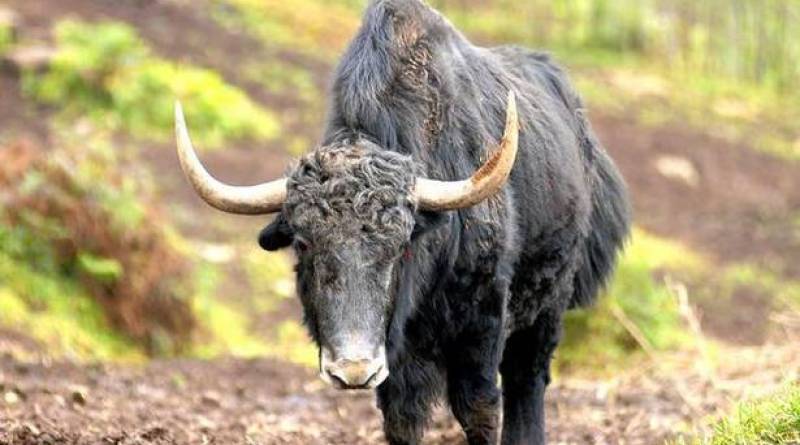
National Research Centre on Yak (NRCY) in West Kameng district, Arunachal Pradesh has tied up with the National Insurance Company Ltd. for insuring Himalayan Yak.
_______________________________________________________________________
Buy Organic Products Online at best prices at https://www.getgreen.co.in .
_______________________________________________________________________
The insurance policy would shield the yak owners against the risks posed by weather calamities, diseases, in-transit mishaps, surgical operations and strikes or riots.
The owners of the Yaks would have to get their yaks ear-tagged and provide a proper description in order to get their animals insured.
Buy Prime Test Series for all Banking, SSC, Insurance & other exams
_______________________________________________________________________
Read Also : Delhi pollution: 10-unit rise in PM 2.5 causes 7 hospital admissions with respiratory disease…
________________________________________________________________________
About the Himalayan Yak:
- Himalayan Yak is a long-haired domesticated cattle found throughout the Himalayan region of the Indian subcontinent, Tibetan Plateau, Myanmar and as far north as Mongolia and Siberia.
- They are accustomed to very cold temperatures and can survive up to -40 degrees but find it difficult when the temperature crosses 13 degrees.
- The total yak population in India is about 58,000.
- The Highest Yak Population is in the Union Territories of Ladakh and Jammu and Kashmir. It is followed by Arunachal Pradesh, Sikkim, Himachal Pradesh and West Bengal and Uttarakhand.
_______________________________________________________________________
Read Also : Earth’s Iron Core under Indonesia’s Sea is Growing Lopsided, Claims Study
________________________________________________________________________
Yak – the lifeline of pastoral nomads in high altitudes of the Indian Himalayan region – is facing the threat of gradually rising temperatures in the region.
The increasing trend of environmental temperature at high altitudes is resulting in heat stress in yak during warmer months of the year. This, in turn, is affecting the rhythms of physiological responses of the animal. Studies have shown that the average environmental temperature in the region has increased 1.5 percent in the past 25 years, with yearly incremental increase of 0.06 degree.
Yak is accustomed to very cold temperatures and can survive up to minus 40 degrees but finds is difficult when the temperature crosses 13 degrees. “Yak can efficiently conserve its body heat during cold weather conditions and has minimal body mechanism to dissipate heat by way of sweating.
This makes yak more susceptible to heat stress,” explained Dr Vijay Paul, principal scientist at the ICAR-National Research Centre on Yak (NRCY), Dirang, while addressing a media workshop on climate adaptation here.