Table of Contents
Introduction
The winter garden should not be lifeless. On the contrary, a range of winter crops can offer fresh components for seasonal food.
It’s a good idea to have a fleece roll and also some bells to hand. Even in colder nights hardened plants are unlikely to be destroyed, but can help retain the quality of the roots and leaves for eating.
_______________________________________________________________________
Read Also : Organic Farming: A Welcome Alternative to Industrial Agriculture
________________________________________________________________________
Numerous plants, even under a snow layer, may withstand cold. It’s due to their capacity to resist cold, severe conditions they are known as winter veggies
The increased sugar content can tolerate the cold hardy types of cold-hardy temperatures
The sugar contained in winter vegetable water makes it freeze at a lower stage, enabling it to survive in cold conditions. This procedure also results in the cooler months in cold-hardy crops, whereby winter is the perfect season to harvest.
CARROTS

https://happydiyhome.com/how-to-grow-carrots/
Carrots are easily cultivated as long as sown in loose, sandy soil throughout the colder seasons—spring and fall (carrots can tolerate frost). Carrots might take between 2 and 4 months to develop depending on the type and local circumstances. Plant them for continuous harvest till the fall throughout spring and summer.
In the summer months this popular radish may be picked, but in autumn and winter reaches optimum sweetness.
_______________________________________________________________________
Read Also : Smart Farming: The Future of Agriculture
________________________________________________________________________
Under frozen circumstances, carrots turn stored starches into sugars to prevent water freezing in their cells.
In chilly temperatures, carrots taste especially sweet. Indeed, following a frost, carrots are sometimes referred to as “sugar carrots.”
This healthy veggie is also very nutritious. Carrots are a good beta-carotene source that can be transformed into bodily vitamin A. One big carrot (72 g) contains 241% of the recommended daily consumption.
Carrots are utilized in many popular diets, such as vegan, keto, palaeo, and more, due to their various health advantages. Carrots can also be consumed in the form of smoothies or in juice.

https://feastingnotfasting.com/wp-content/uploads/2014/02/DSC_0981.jpg
Just add a pinch of salt in the juice and there you go!
As a matter of fact it is very easy to store carrots. The crispy drawer of your refrigerator will keep the whole carrots fresh for several weeks. If you still have the lush green tops, first cut them. Then keep them with hole in a plastic bag.
BENEFITS OF CARROT
A good source of vitamin A
Carrots are beneficial to the eyes. This is most likely the most well-known carrot superpower. They’re high in beta-carotene, a chemical that your body converts into vitamin A, which aids in the health of your eyes. Vitamin A is crucial for eye health and also for immunological function. Furthermore, beta-carotene protects your eyes from the sun and reduces your risk of cataracts and other eye disorders.
Diabetes management
They can aid in the management of diabetes. Diabetics are recommended to eat enough of non-starchy veggies, such as carrots. Carrot fibre can help keep blood sugar levels in check. They’re also high in vitamin A and beta-carotene, both of which have been linked to a decreased risk of diabetes.
Bone health
They can help to strengthen your bones. Carrots include calcium and vitamin K, both of which are beneficial to bone health.
Yellow carrots contain lutein, which is beneficial to the eyes. According to research, it can assist or prevent age-related macular degeneration, the primary cause of visual loss.
Strengthening immune system
Carrots include vitamin C, which helps your body produce antibodies that protect your immune system. Vitamin C also aids in the absorption and use of iron, as well as the prevention of infections.
Helps loosing weight
As they are high in fibre they can assist you in losing weight.1/2 cup of carrots only has 41 calories, they can help you feel satisfied for longer, allowing you to consume fewer calories. If you want to reduce weight, consider including carrots into your diet.
BEST TIME TO PLANT CARROT
Sow seeds outside for the summer crop 3 to 5 weeks before the last frost date in the spring. Here are the dates for your local frost.
- Plant a fresh seed round every three weeks until late spring to ensure ongoing yield.
- Seeds should be sowed throughout the autumn harvest from mid- to late summer—from around 10 weeks before the first fall freeze.
_______________________________________________________________________
Read Also : ELEGANT & EFFICIENT: BEST PRACTICES IN AGRICULTURE
________________________________________________________________________
HOW TO PLANT CARROTS
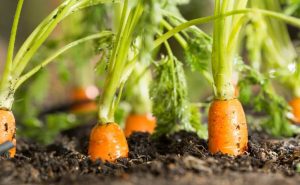
https://www.ugaoo.com/knowledge-center/best-way-to-grow-carrots-in-containers/
Seeds in the garden (or anywhere you want to grow them) are best suggested for seeding rather than transplantation. Carrots don’t enjoy disturbing their roots.
- Sow 1⁄4″ deep, 2 to 3,” 1 foot apart in rows. Cut a carrot a few centimetres from the top and put them straight in the soil.
- Mulch carrots carefully so that moisture may stay, and the sun can not directly touch its roots.
- Keep the ground wet while the irrigation is regular. The ground must not create a hard crust on top in order to sprout little carrot seeds; it must cover with a layer of vermiculite or fine compost to avoid crusts. (The finger should be damp if you stick it in the ground, but not wet, to the middle knuckle.)
- When seedlings are one inch large, they are three to four inches apart. Instead of removing the tops of the delicate roots of the rest of plants, snap them with a scissor.
- Water for a minimum of one inch a week to start with, then two inches as the roots grow
- Weed carefully, but take cautious not to damage the roots of the baby carrots.
- 5 to 6 weeks after sowing, treat with a low yet high-potassium and phosphate fertiliser.
NOTE – Carrots are sluggish to germinate occasionally. It may take two to three weeks to exhibit signs of life, so don’t be afraid if your carrot won’t appear immediately!
Do not anticipate getting completely straight carrots from the “grocery store” or keep unrealistic hopes. Whatever their form, your carrots will taste still better!
Submitted by Rashmi Ahlawat
Tags: #broccoli, #carrot, #carrots, #delicious, #dinner, #farming, #food, #foodie, #foodphotography, #foodporn, #garlic, #getgreengetgrowing, #gngagritech, #greenstories, #healthy, #healthyfood, #homemade, #instafood, #onions, #organic, #organicfarming, #OrganicFood, #potatoes, #tomatoes, #vegan, #vegetables, #veggies, #yummy