https://www.theindiaforum.in/article/india-s-biggest-challenge-future-farming
What is the need of fertilisers? And why are they used?
The world’s crops, like ourselves, require crucial minerals and nutrients for strong, healthy growth.Fertilizer production is directly tied to agricultural productivity and food production, which is why it is our core industry. Fertilizers have an underappreciated function in food production. Fertilizers provide nourishment to plants.
Fertilizers replenish and replace nutrients lost in the soil by crops.Crop yields and agricultural output would be dramatically lowered if fertilisers were not used. Mineral fertilisers are used to enhance the soil’s nutrition pool with minerals that are easily absorbed and utilised by plants.
Simply put, fertiliser is used to:
- Provide nutrients that are not found in the soil.
- Replace nutrients that were lost after harvest.
- To improve the quality of your food and increase your production, balance the nutrients.
________________________________________________________________________
Read Also : Difference Between DAP and NPK Fertilizer
________________________________________________________________________
Current State of Agriculture in India
What is DAP Fertiliser?

https://www.amazon.in/Saving-Purpose-Fertilizer-Garden-Plants/dp/B07XYVFK7L
Diammonium Phosphate (DAP) which is the most commonly used phosphorus fertiliser in the market is made up of two typical fertiliser ingredients, and its high nutritional content and good physical features make it a popular option in agriculture and other sectors.
For the same reason, DAP (Di-ammonium Phosphate) is a commonly used fertiliser in India as it includes both Nitrogen and Phosphorus, which are both main macronutrients and part of a set of 18 important plant nutrients. DAP is made in fertiliser facilities by reacting ammonia with phosphoric acid under regulated circumstances.
________________________________________________________________________
Read Also : A proven substitute for DAP
________________________________________________________________________
What is the significance of DAP for farmers?
The DAP fertiliser must be sprinkled at the time of sowing crops like mustard and wheat since it is a basic nutrient for Rabi crops. Farmers claim that planting an acre of ground requires a sack weighing at least 45 kg. Any delay in its delivery might have a negative influence on crop planting. As a result, the state’s farmers have been frustrated due to a shortage of fertiliser availability.
The scarcity of DAP has already become a major issue in south Haryana, which is famed for its mustard crop farming, with farmers already panicking. The DAP is not accessible on the open market, even if a farmer wishes to buy fertiliser at a higher price.
While other cost-effective technologies are available, the subsidy on phosphate fertilisers has risen to an intolerable level. Using current developments in agricultural sciences, the fertiliser sector must produce unique products. Rock phosphate mineral will be given to manure-producing enterprises (at subsidised prices) in the same way that it is supplied to chemical fertiliser manufacturers for the production of PROM Khad (Phosphate Rich Organic Manure)
Let me introduce you to PROM or Phosphate rich organic manure.
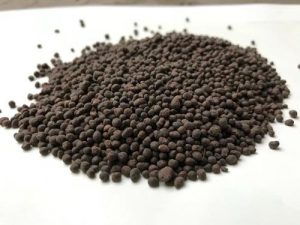
PROM or Phosphate Rich Organic Manure
https://www.amazon.in/Saving-Purpose-Fertilizer-Garden-Plants/dp/B07XYVFK7L
Organic phosphate-rich manure Or PROM is a form of fertiliser which can be used instead of diammonium phosphate and single super phosphate.
All plants require phosphorus, yet soil levels are restricted, posing a dilemma in agriculture. For the significant plant development required for agricultural production in many places, phosphorus must be given to the soil. Single super phosphate is a non-nitrogen fertiliser that contains phosphate in the condition of monocalcium phosphate and gypsum and is best used to replenish phosphate and lower soil alkalinity in alkali lands.
________________________________________________________________________
Read Also : Not fear – Accepting, Adjusting and Adapting Will Sail Humanity Through This Crisis!
________________________________________________________________________
Why to use PROM instead of Fertiliser?
Chemical fertiliser use that is excessive affects agricultural yield by destroying native soil flora and fauna. Only around 30% of the phosphorus supplied to the soil by diammonium or single super phosphate is absorbed by the plants, while the remainder is transformed to forms that cannot be utilised by the crops, a process known to soil scientists as the phosphate issue.
Benefits or PROM
- Co-composting high-grade rock phosphate in extremely fine size produces phosphorus-rich organic manure. The agronomic effectiveness of phosphate rich organic manure improves with the finer the rock phosphate. This material, according to research, will be a more efficient means of providing phosphorus to soil than chemical fertilisers.
- Other advantages of phosphate-rich organic manure include its ability to supply phosphorus to the second crop planted in a treated area as effectively as the first, and the fact that it may be made from acidic waste materials recovered from biogas plant outflow.
The majority of the phosphorus in rock phosphate minerals is in the form of tricalcium phosphate which if put simply, makes it water-insoluble. A pH of 5.5 to 7 is optimal for phosphorus dissolution in the soil. Aluminum, iron, and manganese ions keep the local pH below 5.5, inhibiting phosphorus dissolution, whereas magnesium and calcium ions keep the pH above 7, preventing phosphorus from being released from its stable molecule.
________________________________________________________________________
Read Also : DAP vs NPK: Let’s talk about crop fertilisers
________________________________________________________________________
Microorganisms create organic acids, which promote the gradual breakdown of phosphorus from rock phosphate dust given to the soil, allowing the plant roots to absorb more phosphorus.
A green chemistry phosphatic fertiliser is made out of phosphate-rich organic manure. Natural minerals or manufactured oxides in water-insoluble forms including micronutrients like copper, zinc, and cobalt may help phosphate-rich organic manure perform better.
PROM is a perfect or even superior alternative for DAP for these reasons.
Tags: #agriculture, #bajabunga, #bajanas, #DAP, #farming, #fertilizer, #garden, #gardening, #getgreengetgrowing, #gngagritech, #greenstories, #growyourown, #horticulture, #hydroponics, #lawn, #lawncare, #organic, #organicfertilizer, #pertanian, #phosphorus, #plants, #prom, #soil, #urbangarden, #vegetables