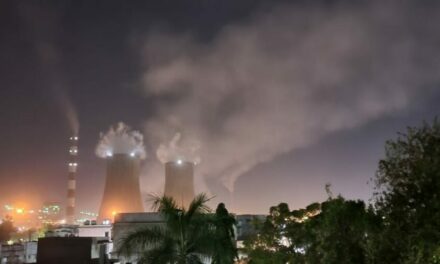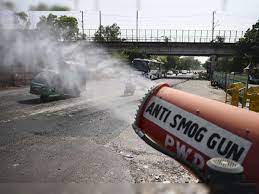
There are a variety of factors that contribute to the deteriorating air quality in Delhi. Smoke from farmers burning crop stubble, vehicle exhaust and factory emissions combine to form a toxic concoction that remains stranded in the lower part of the atmosphere during the winter season
Smog in Delhi during the winter season has become an annual affair. Despite policy interventions and immense debate over the years, there have been no signs of improvement in the kind of air the people breathe in the national capital.
There are a variety of factors that contribute to the deteriorating air quality in Delhi. Smoke from farmers burning crop stubble, vehicle exhaust and factory emissions combine to form a toxic concoction that remains stranded in the lower part of the atmosphere during the winter season.
Out of this, two causes have largely grabbed the limelight: stubble burning and Delhi’s cold temperature.
_______________________________________________________________________
Read Also : Worst mass extinction event in Earth’s history was caused by global warming analogous to...
________________________________________________________________________
Dip in stubble burning
A new analysis done by Climate Trends, a Delhi-based research institute, has revealed that stubble burning—which largely takes place in the agricultural states of Punjab and Haryana—has actually seen a drop in the past two years.
It has indicated that Delhi’s meteorology might have played a major part in Delhi breathing toxic smog this year.
Using NASA Earth VIIRS data to count farm fires and wind and temperature profile data from CPCB reveal that there has been a 47.8 per cent reduction in farm fires in Punjab and a 38.04 per cent reduction in Haryana between 2022 and 2023 for the period Oct 1 to Nov 5.
Of this, Sangrur district has performed better in Punjab with 46 per cent reduction, from 4,287 fire counts in 2022 to only 2,295 fire counts in 2023.
_______________________________________________________________________
Read Also : Things You Can Do to Reduce Global Warming
________________________________________________________________________
Wind direction contributing to smog in Delhi?
Analysing the wind trajectory data reveals a strong correlation between the wind direction originating from Punjab and Haryana and the resulting pollution levels in Delhi, the study states.
The wind carries pollution from Punjab and Haryana to Delhi 81 per cent of the times, based on the wind trajectory for October 2023, the study notes.
“Air pollution in Delhi is again hovering in the severe to emergency category with AQI levels crossing 400. Our analysis shows that the delicate balance of wind speed, year-round air pollution, and seasonal stubble burning all have a role to play in creating this annual cocktail of noxious gases. 81% of the wind in Delhi these days is from Punjab and Haryana,” Aarti Khosla, Director, Climate Trends, said.
________________________________________________________________________
Read Also: Urban Missions are important components of our response to climate change: Hardeep Puri
________________________________________________________________________
“While the farm fires data from Punjab and Haryana reveals a substantial reduction by 47.8% and 38.04% respectively, against data for October 2022, but since volume of wind from the region is so high, it brings the undesirable impact of heavy pollution,” she added.
“We can also clearly see the meteorological impacts with wind breeze having a big role to play in combination with local sources- construction dust, traffic pollution and small scale industries,” she said.
She said that the government must keep a year-round check on polluting sources of power plants, industries, traffic and construction
“Also rainfall, wind speed and temperatures impact regional and local air pollution levels. Emissions from human-induced activities have to be controlled strictly at source to reduce the influence of meteorology on the national capital’s air quality,” Khosla added.
NOTE – This article was originally published in wionews and can be viewed here
Tags: #AirPollution, #climate, #climatechange, #delhi, #environment, #farmers, #farmfires, #getgreengetgrowing, #gngagritech, #greenstories, #rainfall, #smoke, #winterseason