
Sustainability is on top of the priority list for India’s civil aviation minister Jyotiraditya Scindia, who recently declared his plans to make several Indian airports carbon-neutral in the coming years. India’s aviation growth has resulted in several new airports in recent years, with more on their way. As the country develops new aviation infrastructure, it is also being mindful of keeping the industry as green as possible.
__________________________________________________________________________________________________________________________
Read Also: How Climate Change Is Derailing the World’s Lofty Carbon Offset Hopes
___________________________________________________________________________________________________________________________
Over 90 airports to be carbon-neutral
On September 20th, India’s civil aviation minister Jyotiraditya Scindia announced that by 2024, more than 90 airports in the country will be carbon-neutral. India has just over 140 airports, a number that is set to rise to 220 in the next five years.
At the All India Management Association national convention on Tuesday, Scindia noted,
“One of the first things that I did when I took over as the aviation minister was to put a carbon mapping profile of our airports. Two of our airports, Delhi and Kochi, are already carbon-neutral and India will have 92-93 carbon-neutral airports by 2024.”
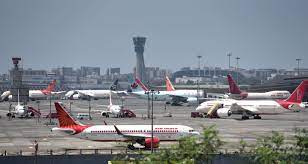
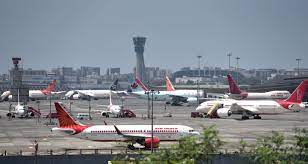
India could have more than 90 carbon-neutral airports by 2030. Photo: Getty Images
He also highlighted that although aviation is a high-profile sector that attracts a lot of attention, its contribution to greenhouse gases and carbon emissions is relatively small – at 2%. Still, keeping the sector’s carbon footprint in check is one of his top priorities.
___________________________________________________________________________________________________________________________
Read Also: Climate science is supporting lawsuits that could help save the world
____________________________________________________________________________________________________________________________
Delhi and Kochi airports are leading the way
The aviation ministry wants to achieve net-zero emissions by 2030, and two airports – Delhi (DEL) and Kochi (COK) – are already leading the way with their initiatives.
In June, it was reported that Delhi airport was planning to replace all of its regular fuel-consuming airside vehicles with electrical vehicles (EV), including vehicles used on runways, taxiways, and aprons to support operations for flight movements. By the end of that month, it was also being powered entirely by hydro and solar energy.
Delhi airport is not run entirely on hydro and solar power. Photo: New Delhi Airport
Delhi airport has been pursuing its environmental ambitions for quite some time now. In 2020, it became the first in the country to be free of single-use plastics, and a year later, it was praised for becoming the first in the world to clock 1,000 TaxiBot movements.
In 2015, Cochin International Airport in the southern state of Kerala became the first in the world to use solar energy for all its energy needs. In fact, the Indian government is now encouraging all airports to install green energy-generation equipment to fulfill all their energy requirements via renewable sources.
Changing ecosystem
By 2030, Indian airports will likely see 400 million annual passengers, twice as much as the current 200 million. Along with a 2030 target of net-zero emissions, the infrastructure on the ground also has to be improved and increased.
Get the latest aviation news straight to your inbox: Sign up for our newsletters today.
Scindia noted that going forward, the ecosystem in aviation needs some tweaking and added that it should not be about airlines and airports but about flying and training organizations, cargo, ground handling, and drones.
______________________________________________________________________________________________________________________
Read Also: Most Polluted Major City on Earth – Delhi
______________________________________________________________________________________________________________________
He said that earlier, the notion was that there had to be some base and capacity to be able to venture out and ask for an airport to be in a city because the economic growth that powers the city and its environment becomes the basis for an airport’s location. Today, that has changed, which means where there are airports, there is economic growth.
Scindia recently also expressed his desire to develop an aviation hub in India and said that the government is trying to create an ecosystem to support such a development in the future.
NOTE – This article was originally published in simpleflying and can be viewed here
Tags: #airports, #carbon, #climate, #climatechange, #environment, #footprint, #getgreengetgrowing, #gngagritech, #greenhouse, #greenstories, #netzero, #neutral




