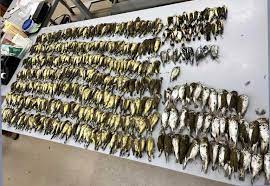
Light pollution is increasingly turning out to be threatening for migrating birds and is causing mass fatalities around the world, a new study has revealed.
According to media reports, around 1,000 migrating birds died in Chicago on Oct 4 and 5 after colliding with illuminated buildings. This incident raised concerns about how ‘stopover’ cities are increasingly becoming less hospitable for migrating birds.
According to a new study published in Nature Communications, finding a hospitable stopover is essential for mass bird migration to happen. It’s just like you embark on a long road journey, thus requiring stopovers to refuel and rest on the way.
_______________________________________________________________________
Read Also : How to Eat a Healthy, Balanced Diet Without Overthinking It
________________________________________________________________________
Weather radar data used to map bird stopover density
Scientists used weather radar data to map bird stopover density and found that birds were landing more in the area which was illuminated with artificial lights.
The study pairs more than 10 million radar observations with landscape and other place-based information to try to explain why birds choose to rest where they do. Out of 49 predictors, light pollution was the No. 2 predictor of stopover density.
City lights—an ecological trap
City lights lure birds into what can be an ecological trap, said lead author Kyle Horton, an assistant professor in Colorado State University’s Department of Fish, Wildlife and Conservation Biology.
________________________________________________________________________
Read Also : Education along with Research drives Growth & Development of Human Society
________________________________________________________________________
Buildings that lead to collisions, less habitat, scarcer food, and more people and cats can make cities less-than-ideal rest stops for migrating birds, the study found.
Possible solutions
Scientists are divided regarding what should be the best way to tackle this menace—implement massive changes in urban centres to make them more hospitable or simply take steps to not let birds enter cities in the first place by running targeted light-out campaigns?
Some say a fine balance should be struck.
“We don’t often think about light as a pollutant, but it checks all the boxes of what pollution is,” Horton said.
Light pollution doesn’t negatively impact birds only but also humans.
It can disrupt humans’ circadian rhythms, leading to health problems, including depression, insomnia, cardiovascular disease and cancer. For now, we have a simple solution to this crisis, observes Horton.
“If we turned off all lights tonight, there would be no birds colliding because of lights tonight,” Horton said. “The impact is immediate and positive for birds.”
NOTE – This article was originally published in wionews and can be viewed here