
getty
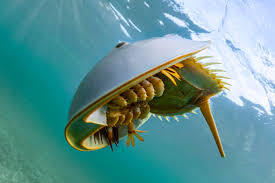
Horseshoe crabs (family Limulidae) are among Earth’s oldest living animals. They’ve survived for hundreds of millions of years, endured mass extinctions and remained remarkably unchanged throughout the process. Even today, they continue to play a vital role in science and medicine.
From the long-dead swamps of the Paleozoic epoch to the bustling coasts we know today, these creatures have endured where countless other species have vanished. But what’s truly remarkable isn’t just their longevity. It’s how little they’ve changed and how crucial they remain to science and humanity.
This Animal Is A Living Fossil
Horseshoe crabs occupy a rare space in our understanding of evolution. Paleontologists have found fossils of horseshoe-crab-like arthropods stretching back hundreds of millions of years. While the exact lineage of the modern species we know of today isn’t identical to that of 400+ million years ago, the similarities are striking.
Today’s horseshoes still have the exact same broad body plan, the same curved shell and the same long spike-like tail. Fossil evidence from around 310 million years ago shows that even their brain structures resemble those of modern specimens, which suggests deep continuity in both their form and function.
Scientists refer to this remarkable consistency as evolutionary stasis: a situation where a species’ morphology changes very slowly — or, in some cases, not at all — over geological time. A detailed 2022 study of horseshoe crab fossils reveals that, while diversity in form appeared at two key points in the distant past, once a durable blueprint emerged, it remained largely stable through subsequent epochs.
________________________________________________________________________
In other words, their evolution didn’t stop. In reality, they simply stopped needing to reinvent the wheel. If a design works, natural selection won’t try to fix what clearly isn’t broken.
An Animal With Blue Blood That Changed Medicine
As astonishing as their fossil history is, their contribution to modern medicine may be even more so. This is because horseshoe crabs don’t have the same red blood that we do; instead, their blood is copper-based and vividly blue.
Inside this ancient blue elixir, researchers have discovered specialized cells called amebocytes that react to bacterial toxins in an extraordinary way. Specifically, when these amebocytes encounter dangerous endotoxins, they clot around them. It’s a primitive immune defense, but it has immense practical value.
That reaction is the basis of the Limulus Amebocyte Lysate (LAL) test. Scientists realized that the horseshoe crab’s clotting response could be used as a biological detector. By extracting the lysate (the cell contents) from horseshoe crab amebocytes, they created a reagent that clots in the presence of endotoxin. A sample is mixed with the lysate. If endotoxins are present, the lysate reacts by forming a clot or causing a measurable change.
Since the test’s development in the 1970s, it has been used worldwide to ensure that vaccines, injectable drugs and implantable medical devices are free from bacterial contamination.
A 2017 study of biomedical testing techniques underscored how unique these horseshoe crab blood cells are; no other organism’s blood responds as quickly or reliably to minute traces of endotoxin. This makes their blood invaluable in quality control processes for drugs and medical devices. Millions of such tests are run every year, safeguarding public health and preventing life-threatening infections.
Why Evolution ‘Stopped’ For This Animal
The phrase “hasn’t changed in 300 million years” might lead you to believe that horseshoe crabs are frozen in time, but that isn’t quite the case. Evolution doesn’t have a direction or a goal “in mind” as it shapes an organism; it simply shapes organisms to be fit for their environment. This means they don’t necessarily always have to evolve to be different from how they were.
Horseshoe crabs have so effectively mastered their ecological niches — sandy, shallow seafloor and swampy mangroves — that natural selection has ultimately favored stability over radical change. They’re perhaps the greatest living evolutionary example of stabilizing selection, where extremes are weeded out because the existing trait range works best.
The horseshoe crab’s design has remained competitive through ice ages, sea-level changes and mass extinctions, which proves just how well it works. They’re:
- flexible enough to forage
- tough enough to survive predators
- hardy enough to weather environmental shifts
That said, this doesn’t mean nothing has changed about them genetically over 300 million years. Modern genomic research reveals ancient whole-genome duplications and rearrangements in the horseshoe crab lineage, which is a pattern seen commonly in long-lived species.
These changes, as subtle and invisible as they may be externally, show that evolutionary processes are indeed active at the molecular level, even if their morphology has remained conserved.
A Conservation Crisis Beneath This Animal’s Shell
Despite surviving for hundreds of millions of years through asteroid strikes and ice ages, horseshoe crabs now face some of their greatest threats from humans.
Across North America and Asia, horseshoe crab populations are rapidly declining. Of the four living species, the American horseshoe crab (Limulus polyphemus) is listed as Vulnerable, and the tri-spine horseshoe crab (Tachypleus tridentatus) is listed as Endangered on the IUCN’s Red List. Sadly, data on the other two — the coastal horseshoe crab (T. gigas) and mangrove horseshoe crab (Carcinoscorpius rotundicauda) — are currently too limited to classify.
Human-driven habitat loss, pollution and intense harvesting for fish bait and for biomedical bleeding are all contributing factors. While pharmaceutical companies traditionally return the crabs to the water after extracting a portion of their blood for LAL tests, mortality rates after bleeding can exceed 15–30% in some estimates. Survivors may also be weakened, which makes them less likely to spawn successfully.
This is why the biomedical industry’s reliance on horseshoe crabs is now sparking ethical debates. Although LAL testing has undoubtedly saved countless human lives by ensuring the safety of vaccines and other critical medicines, continuing to harvest hundreds of thousands of ancient animals each year raises serious sustainability questions. This is especially the case now that their populations are dwindling.
________________________________________________________________________
Why This Animal Matters
The story of the horseshoe crab highlights a paradox of evolution. We’re often inclined to envision evolution as a process characterized by change: new species, new traits, new adaptations.
But horseshoe crabs show how stability itself can be a form of evolutionary success. Their body plan, immune system and ecological role have been resilient through eons of geological and climatic upheaval. However, success in the geological sense evidently has not, nor could it ever, immunize a species against rapid, human-induced changes.
Today, they stand at the intersection of ancient evolutionary history and cutting-edge biomedical science. Their blue blood literally determines the quality of life-saving medicines. Their plight raises deep questions about:
- how much more value and respect we should be placing in ancient lineages
- how much we are willing to change entrenched industrial practices
- how science can evolve in ways that respect both human health and biodiversity
In the end, the horseshoe crab reminds us that some of the oldest, most successful designs in nature still have lessons to teach, but only if we’re willing to listen.
Some animals trigger fascination, others fear — how does your mind respond to a crab? Find out with this science-backed test: Fear of Arthropods Questionnaire
Curious what your inner creature is — whether it’s a crab, wolf or something entirely unexpected? Take the Guardian Animal Test for an instant answer.
NOTE – This article was originally published in Forbes and can be viewed here