Known for its arid climate and low rainfall, accelerating temperature extremes, intensifying sandstorms and the decline of oil-based economies as the world shifts to renewable energy are complicating the climate situation in the Middle East, classified as an “area at risk from climate change” by the Intergovernmental Panel on Climate Change (IPCC) and the World Meteorological Organisation (WMO).
________________________________________________________________________
Read Also: 21 High-Protein Plant-Based Recipes If You’re Trying To Eat Less Meat
________________________________________________________________________
Among the world’s most vulnerable regions, the Middle East, like North Africa, is characterised by the paradox that it is and will continue to be the most affected by climate change, even though it has not contributed much to it.
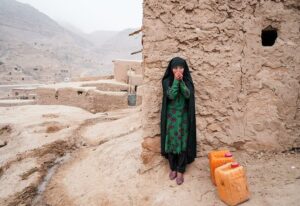
While some regions of the world – especially the more developed ones – are experiencing more moderate effects, climate disruption is being experienced violently in the Middle East, as in Iraq, where sandstorms have doubled in the last decade, causing businesses to close and sending thousands of people to hospital. Afghanistan is also suffering from one of the worst droughts in the region, forcing young people from rural areas to migrate to the cities in search of work. “Many of those who have lost the livelihoods they once earned in agriculture or tourism will move to the cities in search of work,” says Karim El Gendy, an environmental research associate at the UK’s Royal Institute of International Affairs.

The water-starved Middle East region is experiencing a temperature rise twice the global average, with an average rise of 0.45 degrees Celsius per decade since the 1980s, according to climate experts.
With a population of about 500 million, the Middle East also faces a water crisis, as land deserts, mountain snow becomes scarce and water resources are depleted.
With increasingly hot summers and temperatures exceeding 50 degrees Celsius in several countries – Iran, the United Arab Emirates, Kuwait – US economist Jeffrey Sachs warns that this is “a region that is already dry and will continue to dry”, raising fears of water insecurity and displacement. “We see the impacts right in front of us,” says former World Bank environmental consultant Lama Al-Hato.
________________________________________________________________________
Read Also: Switching to a plant-based diet? Keep an eye on your micronutrients
________________________________________________________________________

According to the latest report published in March by the International Monetary Fund (IMF), the region’s weak adaptive capacity, in terms of economies and infrastructure, correlated with regulations that are too often not implemented, are the reasons why the region is failing to tackle this problem. Moreover, the non-ratification of the Paris Agreements – aimed at keeping global warming below 2°C or even 1.5°C above pre-industrial levels – by a large number of countries in the region, such as Yemen, Libya, Iraq and Iran, is not conducive to the implementation of climate change mitigation and adaptation actions. Dutch atmospheric chemist Jos Levieveld predicts that, if no action is taken in the region, temperatures could rise by up to 6°C above pre-industrial levels, with cities reaching 60°C in summer.
In addition, climate change would have geopolitical and diplomatic consequences, particularly with regard to the management of the water resources of the Jordan, Euphrates, Nile and Tigris rivers. These climate consequences could thus constitute “the roots of future conflicts”, in the words of Laurent Fabius, then president of COP21, in 2015 in Paris.

In the face of these risks, climate change threatens the stability of the Middle East and North Africa region and prompts the countries of these regions to act to reduce the dangerous repercussions. In this context, Morocco and Egypt are multiplying clean energy initiatives, with Rabat announcing an energy programme based on the deployment of green hydrogen. However, adapting infrastructures and economies is costly and would cost 3.3 per cent of the region’s GDP every year for 10 years, according to the IMF. In fact, more than mitigation, real public policies to adapt to climate change must be put in place, such as the construction of coastal protection, the creation of a more efficient water use system or the reinforcement and improvement of awareness campaigns.
_______________________________________________________________________
Read Also: Biochar could be the solution to crop burning that Indian farmers were waiting for
________________________________________________________________________

The 27th Climate Change Conference, better known as COP 27, scheduled for November in Sharm-el-Sheikh on Egypt’s Red Sea coast, will be an opportunity for the Middle East to press developed countries for greater financial support – through international funding – to help them combat the climate risks of which they are the main victims.
However, despite the promise of $500 billion in aid to developing countries over five years to tackle climate change, developed countries themselves may be facing a credibility challenge, as European countries have revived coal production to cope with rising global energy prices in the wake of Russia’s invasion of Ukraine.