https://www.engineersgarage.com/tech-articles/nanotechnology-and-its-role-in-agriculture/
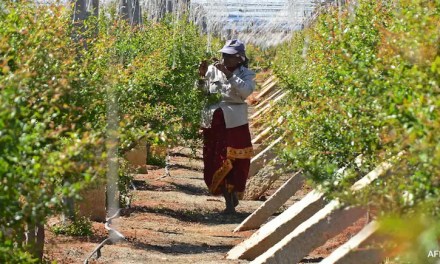
Over the past few years, the agriculture industry has become quite advanced and it is constantly on the lookout for any new innovations that can help make the product better. Farmers want to make their agricultural production better than their fellow competitors so that they can make their own sales. Who doesn’t love farm-fresh fruits and vegetables? They are certainly better than the Genetically Modified Organisms that we get as they are cheaper and healthier.
_______________________________________________________________________
Buy Organic Products Online at best prices at http://www.getgreen.co.in .
________________________________________________________________________
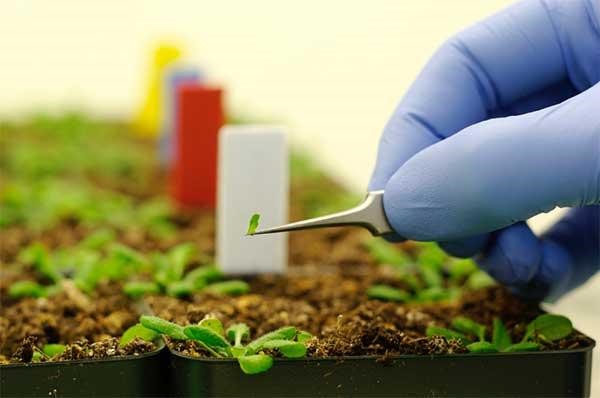
Farmers have been on the lookout for trying to find more ways to make their job easier without disrupting the quality of their production. That is where nanotechnology came into play. Nanotechnology basically means creating or manufacturing materials or devices on the scale of atoms or molecules. At such microscopic sizes, the physical and chemical properties of substances change, making them easier to manipulate.
Nanotechnology is one of the rising new inventions in recent years, mainly due to the fact that it is considered safe for the environment. The manufacture of nanotechnology is safer because it uses very few raw materials and it does not produce any harmful gases, thereby keeping the environment clean. Farmers can use Nanotechnology in their farms if they have an open farm system (one in which energy and matter are freely exchanged).
https://www.azonano.com/article.aspx?ArticleID=5647
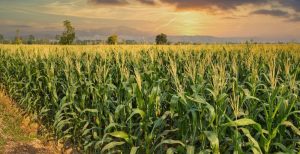
One of the main environmental concerns of agriculture is the overuse of fertilizers, insecticides, and pesticides. Using nanotechnology, farmers can reduce the use of these chemical-filled applicants without compromising on the quality of their produce. Some of the ways in which nanotechnology can help in agricultural production are:
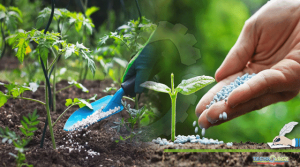
- Using nano-modified fertilizers and pesticides to improve crop production without deteriorating the soil quality and without producing any adverse effects on the environment or to the crop production.
- Using nanosensors on the field to protect the crops and to be alerted when the crop has some kind of disease or residue from agrochemicals.
- To help in poultry production, sensing if the farm animals have diseases, and overlooking the animal breeding process.
- Managing the fields post-harvest.
- Bringing back the quality of deteriorated soil, making it fit for crop production.
Using nanotechnology in fertilizers has helped crop development greatly and it prevents weeds from growing as well. Farmers no longer need to spray large amounts of insecticides and pesticides on crops which makes it safer for pollinators like bees to fertilize the crops and making for better produce.
_______________________________________________________________________
Read Also : Have a fussy eater at home? Add these colourful fruits and veggies to their…
________________________________________________________________________
https://www.technologytimes.pk/2020/12/17/role-of-nanotechnology-in-agriculture-a-review/
A huge problem in the agriculture industry is the spreading of diseases, viruses, and fungi among the crops. Like we read earlier, nanosensors can sense when a certain plant is diseased and alerts the farmer before the disease can spread among the other crops and plants. There are some nanoparticles that can even be used in disease management thereby controlling and removing the disease making the plant better.
Carbon nanotubes, when added to seeds like tomato and soybean can improve the germination index of the plant and its growth. Nanoparticles are manufactured in such a way that they can help each plant yield better produce and grow better. This reduces the farmers’ work as well because all they have to do is plant the seeds, water them, and harvest the crops when ready. Nanoparticles can do the rest. They can even inform the farmer about any disease, about the soil quality, and what the plant needs.
All of us might have noticed that when we keep uncovered food in our houses, in a few minutes, there are flies all around it so we have no other choice but to throw it out. Using nanotechnology, we can include a nanoparticle-mediated gene or induce DNA transfer in plants to produce crops that are insect resistant and can last longer without getting spoilt.
We have already heard about biomass in our early school days. It basically means putting food waste into a plant and letting it decompose in the absence of air and oxygen. The resultant product is a fuel that can be used for our household purposes along with some very nutritious fertilizer for our plants. On a farm, there is bound to be a lot of food, plant, and animal waste with which we can produce a lot of biomass. Using nanotechnology, this process can be enhanced and sped up greatly which is very efficient.
_______________________________________________________________________
Read Also : Have a fussy eater at home? Add these colourful fruits and veggies to their…
_______________________________________________________________________m
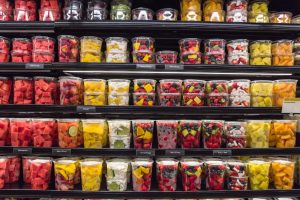
Most of the farm-fresh produce does not make it in time to the market because of the way it is packaged. Some packaging material cannot keep the freshness of the product and it will get spoilt, becoming a loss for retailers. Using packaging material made from nanoparticles can help retain the freshness and also prevent UV radiation from entering and thereby protecting the food. This can also increase the shelf life of this farm-fresh produce.
https://nano-magazine.com/news/2019/4/20/how-nanotechnology-could-change-food-packaging
Various types of nanotechnology are being tested by scientists from all over the world in order to help make the agricultural industry safer and greener. In agriculture, the nanoparticles are made up of biopolymers like proteins and carbohydrates which are completely safe for human health as well as for the environment. The whole agricultural industry can be revolutionized by the use of nanoparticles. From enabling crops to absorb more nutrients from the soil to help with packaging, nanotechnology is slowly becoming the future of agriculture. Its microscopic size makes it easier for us to manipulate it and it doesn’t produce any negative side effects on the environment, making nanotechnology in agriculture green and safer for our future.
-Sharon Ajith -04/06/2021
Tags: #agriculture, #agro, #farm, #farming, #getgreengetgrowing, #gngagritech, #greenstories, #Nanotech, #nanotechnology, #soil