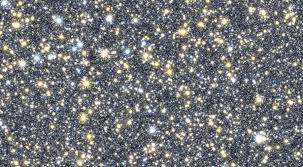
NASA is gearing up for humanity’s deepest-ever peek into the heart of our Milky Way Galaxy. For this, it will make use of its Nancy Grace Roman Space Telescope, which will monitor the vast expanse of space for “tell-tale flickers” for secrets that may change our understanding of the world “out there”.
What does Roman Telescope expect to find?
As per the NASA website, the Roman Space Telescope will monitor “hundreds of millions of stars,” looking for “telltale flickers that betray the presence of planets, distant stars, small icy objects that haunt the outskirts of our solar system, isolated black holes, and more.”
_______________________________________________________________________
Read Also : Worst mass extinction event in Earth’s history was caused by global warming analogous to...
________________________________________________________________________
Scientists expect that the telescope will “likely” establish a record for the farthest-known exoplanet. This, they say, may offer us a “glimpse” into unknown galactic neighbourhoods that may be home to worlds different from the 5,500 known to us.
What is the Roman Telescope?
Roman Telescope is NASA’s long-term monitoring system. As per NASA, it “represents a boon to what scientists call time-domain astronomy” or the study of how the universe changes over time.
The telescope “will join a growing, international fleet of observatories working together to capture these changes as they unfold.”
Its Galactic Bulge Time-Domain Survey will focus on the Milky Way. For this, it will use infrared vision to peer through clouds of dust that can potentially block the view of the crowded central region of our galaxy.
_______________________________________________________________________
Read Also : Things You Can Do to Reduce Global Warming
________________________________________________________________________
Roman plans to capture this by taking an image every 15 minutes around the clock for about two months. This process will be repeated six times over Roman’s five-year primary mission, which will total more than a year of observations.
Scientists will also conduct stellar seismology studies on a million giant stars. This will be done by analysing the brightness changes a star undergoes when sound waves are echoed through its gaseous interior. This will help them learn about the star’s structure, age and other properties.
NOTE – This article was originally published in wionews and can be viewed here
Tags: #climate, #galaxy, #getgreengetgrowing, #Glimpse, #gngagritech, #greenstories, #humanitys, #nasa, #planets, #RomanSpace, #scientists, #space