About the delta area
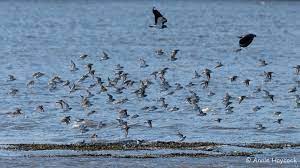
Given its location on one of the main migratory routes in Europe, it’s not surprising that thousands of water birds stop in this wetland in order to feed and rest. Important numbers of waterbirds (at a European level) gather here during the winter. It’s not just the sheer number of individual birds that is impressive. A total of 299 species of birds have been documented in this area – that is, 66% of all bird species observed to be present in Greece. Of those 299 species, 106 nest here.
________________________________________________________________________
Read Also : 8 Nutrients and 16 Foods to Boost Your Mood — What to Eat to…
________________________________________________________________________
Parts of the area were designated a Ramsar Site in 1975 – when it was described as an extensive river delta including brackish lagoons, saltmarshes, and large areas of mudflats. Vegetation consists of scrub, riparian forest, wet meadows, reedbeds, and halophytic communities. 30 freshwater fish species occur in the river. An extremely important area for nesting and migrating waterbirds.
Thanks to its considerable ecological importance, this area is included in the Natura 2000 network of European ecological regions. The largest part of this protected area has been listed as a National Park since 2009 – it comprises 33.800 hectares, including the deltas and the estuaries of four rivers, the Lagoon of Kalochori and the Alykes Kitrous, the wetland of Nea Agathoupoli and the riverbed of Axios, reaching upstream to the Elli dam.
The importance of the delta area goes well beyond just the wildlife. It offers multiple benefits to man, for example a water for water supply and irrigation, it protects the inhabited and rural areas from flooding, regulates the climate, provides food, as well as allowing for research, education and recreation.
There is a lot more useful information on the Axios National Park website.

When to visit
Winter and spring are generally considered the best times to visit for birds. However, the autumn period is great for passage migrants – I visited in September, and it was pretty spectacular – 100 species in four days of just enjoying being there rather than trying to see as many species as possible. The greatest numbers of birds are seen in winter. The rice fields are flooded in late spring, providing food for the breeding birds, especially herons, egrets and cormorant. Avoid the summer it can be blisteringly hot, and generally unpleasant except at dawn and dusk.
There was certainly an abundance of dragonflies, mostly Sympetrum species, in September. However, the best time for plants, butterflies and insects in general is probably a bit earlier in the year.
At almost any time of year, the weather can change between hot and cold from one day to another. The Meltemi, a cold wind coming off the mountains to the north, is responsible for this. While the Meltemi can make the heat more bearable, at other times a warm and windproof coat is worth packing.
________________________________________________________________________
Read Also : Foods to eat as you age
_______________________________________________________________________
Note that most of the area is farmland criss-crossed with dykes and dirt roads used by farm vehicles. Most of the roads are drive-able in dry weather, but can be slippery (and treacherous) after rain, and there is a good chance of getting bogged down after prolonged wet weather. Even those that have tarmac are often damaged by heavy tractors and farm machinery.

Sousliks are a kind of ground squirrel. They fill a similar niche to rabbits in western Europe and marmots in the Alps, in terms of eating grass and digging burrows. They were once widespread across eastern Europe, but are becoming scarce. The Axios Delta is one of the best places to see them.
Best places to visit
Kalochori Lagoon
Kalochori village is easily accessible by bus from Thessaloniki, and footpaths lead from there to the lagoon. In winter there are flamingos, great flocks of them. And from autumn to spring there are plenty of waders (shorebirds) too – avocets, black-winged stilts, Kentish plovers, to name just a few. In recent years, water buffalo have been introduced to the area.
Gallikos river estuary
Avocets, black-winged stilts, common terns and little terns breed on the Gallikos estuary, which is accessible via footpaths from the Kalochori area, or further upstream. It also provides breeding areas for smaller birds – Cetti’s and other warblers – and herons. Ospreys and other raptors, and a whole variety of waders stop by on migration, and then there are wildfowl in winter.

Axios River – Mavroni river mouth – Loudias Estuary – Aliakmonas Delta
As I was researching this area, making notes from my experiences and trying to update them from various websites, I discovered a page on the Axios Delta website that suggests several worthwhile routes through this main expanse of the delta, and what you might see on each.
Most of it is a rice-growing area. Rice fields attract lots of amphibians and fish, and these in turn attract lots of herons, as well as other waterbirds. The herons are particularly numerous – a census in 2015 estimated that this mixed colony of little egrets, night herons, squaccos, as well as cormorants, pygmy cormorants, spoonbills and glossy ibises (below), held over 2,500 nests!

Nea Agathoupoli
Nea Agathoupoli is at the western end of the main part of the national park. From the village, a track leads north to an observation tower from where you can overlook the Aliakmonas delta. The tower is open only for limited periods, but there is plenty to be seen from the track as you pass scrub, salt flats, drainage channels, orchards, and a variety of other crops. Beyond the tower, the track links with a network of other tracks (of varying quality) across the area, so plenty of opportunity for finding birds and other wildlife.
This area is host to thousands of mallard, teals, pochards, wigeon, mallard, pintail, gadwall and shoveler in winter. Herons, glossy ibis, shelduck, Kentish plover, Dalmatian pelican and white-tailed eagle are also seen here. And it’s also good for spur-thighed tortoises, water snakes, green lizards and dragonflies.

Alyki Kitrous
Alyki is Greek for saltpans, or salinas. The lagoon and saltworks at Kitrous are some 20km south of the main part of the national park. This site seems to be particularly good a migration periods. Access to the actual saltworks is limited, but you can walk around the lagoon and along the shore.

So, there you have it
My guide to the Axios Delta National Park.
For my first visit in 1989, I had only sketch maps provided by other birdwatchers – in particular, Dave Gosney’s Finding Birds in Northern Greece. The book has been updated since then, but now, with the availability of Google maps and aerial photos, I get a much clearer image of where to go and what I missed previously.
The area was declared a national park in 2009, and now has a national park information office and visitor centre at Chalastra, so I expect that on my next visit, I’ll learn a lot more about the place.
NOTE – This article was originally published in naturewatchingineurope and can be viewed here
Tags: #birds, #climate, #climatechange, #europe, #forest, #getgreengetgrowing, #gngagritech, #greenstories, #plant, #waterbirds, #weather