We are continually inundated with grim warnings about the impending environmental and climate catastrophe. Act immediately, or face a worldwide calamity never seen before, we’re informed. While the proffered answers – solar panels, heat pumps, and eating less meat – are undoubtedly important, they are largely unimaginative and uninspired – and disconnected from a larger system of ideas through which they may acquire actual meaning.
The five books listed below provide a different viewpoint. They provide a new way of perceiving and responding to nature, in contrast to the naive concept that all we need to do is apply a set of technology and lifestyle modifications.
________________________________________________________________________
Read Also : Teeth from Siberian mammoths yield oldest DNA ever recovered
________________________________________________________________________
Should Trees Have Standing? (1972)

https://www.abebooks.com/9780913232088/Trees-Standing-Legal-Rights-Natural-0913232084/plp
According to Christopher Stone, no law can be made until we begin to question its non-existence. And, just as it was previously “unthinkable” for businesses to be granted the same rights as individuals, living beings and ecosystems are now also “unthinkable.” Nature does not have any rights; only those who own or exploit it do. Stone, on the other hand, contends that certain natural phenomena, such as trees, forests, and rivers, should be considered as individuals and given “rights.”
This revolutionary concept is gaining traction. Ecuador and Bolivia became the world’s debut countries to designate nature as a legal person in their constitutions in 2008 and 2009. In 2017, New Zealand acknowledged the Whanganui River as a legal person.
In the 2010 edition of the book, Stone expands on these ideas, asking if the climate should be given legal status as well. This is challenging, but not impossible, according to him, albeit it would necessitate a legal system that extends beyond the existing nation-state framework.
Gaia (1979)
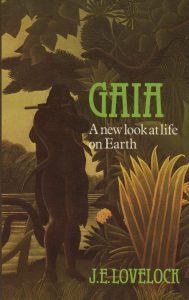
https://www.amazon.com/Gaia-New-Look-Life-Earth/dp/019217665X
In his book from 1979, James Lovelock proposes a completely new concept of the world as a self-regulating system capable of correcting any substantial changes that threaten to make it livable, such as rises or declines in global temperatures or ocean salinity.
For example, Lovelock demonstrates how the environment has aided in lowering atmospheric carbon dioxide levels to compensate for a continually warmer sun. As a result, global temperatures have remained within a livable range.
But, in the end, Gaia’s significance resides not in its bold scientific assertions, but in the way it opens up the potential of bringing science and spirituality, the real and meaningful, together. What does it mean to be a part of Gaia?
Biomimicry (1997)
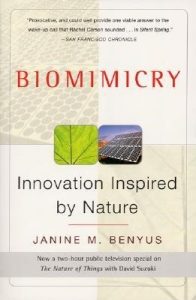
https://www.goodreads.com/book/show/432853.Biomimicry
Few people doubt that technology will play a significant role in attaining sustainability. However, we tend to focus on specific technologies – such as electric automobiles or biodegradable packaging – rather than rethinking technology as a whole. Janine Benyus, for example, believes that sustainability necessitates a whole new approach: innovation inspired by nature, or “biomimicry.”
________________________________________________________________________
Read Also : ELEGANT & EFFICIENT: BEST PRACTICES IN AGRICULTURE
________________________________________________________________________
The book delves into the practise of mimicking nature to solve human design problems, with numerous case studies demonstrating how biomimicry can be applied to almost any field of innovation, from solar energy generation based on natural photosynthesis to cereal farming inspired by the Kansas prairie.
The book’s most profound message, though, is that it encourages us to see nature not merely as something we learn about, but also as something we learn from. In such situation, we must stop thinking of ourselves as the exclusive possessors of wisdom and knowledge and instead acknowledge nature’s brilliance.
Braiding Sweetgrass (2013)
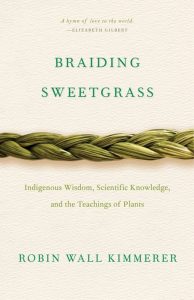
https://www.amazon.in/Braiding-Sweetgrass-Indigenous-Scientific-Knowledge/dp/1571313567
Robin Wall Kimmerer, like Benyus, believes that nature has a lot to teach us. Benyus, on the other hand, is focused in technological innovation, whilst Kimmerer is interested in larger teachings.
The book’s central issue is how to “weave” indigenous wisdom with scientific knowledge, a mission to which the author has dedicated much of her life as a Potawatomi citizen and professional biologist.
Sweetgrass, a fragrant herb utilised in ancient medicine and basketry, is Kimmerer’s most spectacular example.
Whereas Kimmerer’s biologist colleagues assumed that harvesting sweetgrass always caused it damage, a biology student of hers devised a meticulous experiment that proved what the Potawatomi had long suspected: harvesting sweetgrass actually spurs rapid development.
These plants remind us that people are not apart from nature, but rather a part of it, and that with the appropriate tactics, we can help other species thrive alongside our own.
The Climate of History in the Planetary Age ( 2021)
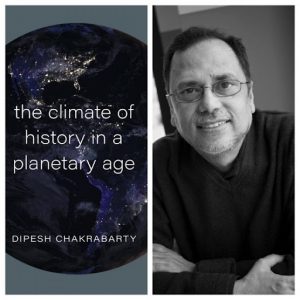
http://www.thevisualist.org/2021/04/dipesh-chakrabarty-the-climate-of-history-in-a-planetary-age/
Dipesh Chakrabarty suggests a fundamental shift from thinking about “global” to “planetary” climate change when addressing the significance of climate change through the prism of history.
________________________________________________________________________
Read Also : Foods to eat as you age
________________________________________________________________________
While the world is preoccupied with tackling a “global” problem, Chakrabarty contends that we fail to consider what “global” means to us today. He adds that the term “global” is fundamentally a human-centric concept that is inextricably related to postwar globalisation and modernity.
The “planet,” on the other hand, deconstructs this human-centric notion, enabling nonhuman viewpoints and interests to be considered. Most significantly, it opens the door to new universal values being discovered.
Chakrabarty further emphasises that the acceleration of global warming is inextricably tied to anti-colonialist modernization movements such as Chairman Mao’s Great Leap Forward in the mid-20th century. This was an economic and social programme aiming at bringing China up to speed with the rest of the world via vigorous industrialization and technical progress.
Only by transcending our fixation with continual expansion and progress, according to Chakrabarty, will we be able to meet the task of assuring planetary sustainability.
Tags: #climate, #climatechanges, #climatecrisis, #environment, #forests, #getgrowing, #gngagritech, #greenstories, #lifestyle, #rivers, #solarpanels, #trees