

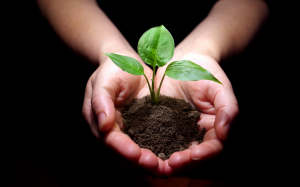
Many countries and farmers have started to shift to organic farming practises in an attempt to fulfil global food requirements and in an effort to alleviate the problems alluded to above. There are officially 2.3 million certified organic farmers in 172 countries. More significantly, agricultural land under organic farming is gradually growing. However, organic farming accounts for just 1% of the total agricultural land.
As an entirely natural and sustainable farm management activity, organic farming is focused on specific principles. Organic farming, in other words, is not only an agricultural practise, but also a theory of living along with nature. Organic farming, as a holistic approach to farm management, seeks to establish a method of food production that is socially, environmentally and economically sustainable.
More specifically, organic farming is focused on the management of the agro-ecosystem rather than on external inputs such as pesticides, artificial fertilisers, additives and genetically modified organisms. Due to the government’s centred efforts, cultivable land under organic farming increased from 11,83 lakh hectares in 2014 to 29,17 lakh hectares in 2020. Over the years, organic promotion activities have contributed to the growth of state-specific organic labels, increased domestic production and exports of organic goods from the North East.
Taking note of the progress of the organic initiatives, the vision document provides for a target of 20 lakh hectares of increased area coverage by 2024. Awareness initiatives, the availability of sufficient post-harvest infrastructure, marketing facilities, premium prices of organic goods, among others are sure to motivate farmers towards organic farming, thus growing the region’s organic coverage.
Let’s take a look at the schemes of the government to promote organic farming: –
NATIONAL PROJECT ON ORGANIC FARMING
Under the National Organic Farming Project (NPOF) scheme, aid for the establishment of bio-pesticide/biofertilizer production units and agro-waste compost production units is provided as a back-end grant through NABARD for up to 25 percent and 33 percent of financial expenditure up to a limit of Rs. 40 lakhs and Rs. 60 lakhs respectively.
A total of 56 nos. biofertilisers production units and 17 nos. of fruit/vegetable waste compost units have been built in the country under NPOF. Government has promoted the incorporation of the use of chemical fertilisers and organic manures, including biofertilizers, in order to increase the yield of major crops.
PARAMPARAGAT KRISHI VIKAS YOJANA (PKVY)
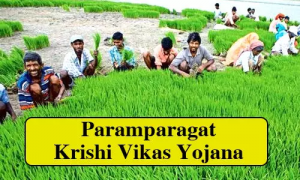
The Paramparagat Krishi Vikas Yojana (PKVY) – Conventional Farming Development Program was introduced in 2015. Under the Centrally Funded Scheme (CSS), the National Sustainable Agriculture Mission, this is an extended part of Soil Health Management (SHM) (NMSA). PKVY aims to help and encourage organic farming, reduce reliance on fertilisers and agricultural chemicals and in turn boost soil quality while increasing yields. Organic food, thus created, will be connected to modern marketing tools and local markets.
The revised PKVY encourages organic farming through the implementation of a cluster approach to organic villages and a Participatory Certification Guarantee Scheme. Education, training, certification and marketing of clusters are provided under the scheme. Assistance of Rs. 50,000 per ha/3 years is given, of which 62 per cent (Rs. 31,000) is provided as an opportunity for a farmer to obtain organic inputs.
PKVY is introduced in a three-year time frame in accordance with the specified 36-month migration cycle of PGS-India from traditional to organic farming. PKVY thus supports organic farming through a cluster approach to PGS certification. PGS Certification allows producers to certify, label and sell their goods domestically for their organic produce.
Under Paramparagat Krishi Vikas Yojana, farm groups will be inspired to take up organic farming (PKVY). A cluster of 50 acres of land will be formed by 50 or more farmers to take up organic farming under the scheme. In this way, 10,000 clusters covering 5.0 lakh acres of organic farming will be established over three years. Farmers would not be held responsible for certification expenses. In three years, each farmer will be given Rs. 20,000 per acre for seed to harvest crops and transport produce to the market.
MISSION ORGANIC VALUE CHAIN DEVELOPMENT FOR NORTH EASTERN REGION
The Mission for Organic Value Chain Growth in the North-East Area (MOVCD-NER) is the Central Sector Scheme, a submission by the Ministry of Agriculture and Farmers’ Welfare of the States of Arunachal Pradesh, Assam, Manipur, Meghalaya, Mizoram, Nagaland, Sikkim and Tripura during the 12th Plan Era of the National Mission for Sustainable Agriculture (NMSA).
The scheme promotes certified organic farming by third parties of niche crops in the North East through Farmer Producer Organizations (FPOs) with an emphasis on exports. For organic inputs, including organic manure and bio-fertilizers, among other inputs, farmers receive assistance of Rs 25.000 per hectare for three years. The system also provides assistance for the formation of FPOs, capacity building and post-harvest infrastructure up to Rs 2 crore.
The purpose of the scheme is to improve certified organic production in the value chain mode in order to connect farmers with customers and to encourage the growth of the whole value chain, beginning with inputs, plants, registration, the construction of collection, aggregation, marketing processing and brand building facilities.
The key objective is to mobilise commodity clusters and promote capacity building, managing and the development of on-farm input production facilities, practise kit training and the facilitation of farmers’ certification services. Furthermore to promote the creation and linking of enterprises (local enterprises/farmer producers) capable of producing and running selection, aggregation and post-harvesting processes, exchanging organic goods and supplying farmers with the requisite resources and working to expand their demand.
CAPITAL INVESTMENT SUBSIDY SCHEME UNDER SOIL HEALTH MANAGEMENT SCHEME
Under this scheme, the state government, government agencies for the establishment of mechanised fruit and vegetable market waste, agro-waste composting units up to a maximum limit of Rs 190 lakh per unit are provided with 100 percent assistance (3000 Total Per Annum TPA capacity). Similarly, up to 33% of the cost limit for individual and private agencies is Rs 63 lakh per unit as capital expenditure is provided.
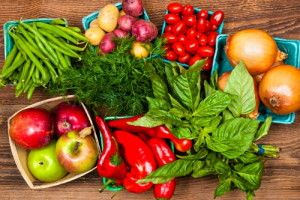
Almost one third of our horticultural produce, especially fruit and vegetables, is wasted, mainly due to inadequate cold storage and other storage facilities. In view of this a capital expenditure subsidy programme has been launched for the construction/expansion/modernization of cold storage and storage for horticultural goods. It will help to minimise the losses suffered by farmers, particularly small and marginal farmers, after harvest. The National Bank for Agriculture and Rural Development (NABARD) is implementing the scheme in partnership with the Ministry of Agriculture’s National Horticulture Board (NHB).
NATIONAL MISSION ON OILSEEDS AND OIL PALM
India is one of the world’s largest edible oil consumption and producing nations. In India, 9 different oilseeds such as groundnut, rapeseed, castor, niger, safflower, sesame, sunflower, soybean, mustard and linseed can be produced in a separate agricultural setting. During the 12th Five Year Plan, the National Oilseeds and Oil Palm (NMOOP) Mission was launched to extend the oil palm areas and increase the production of edible oils. The National Mission on Oilseeds and Oil Palms has played a vital role in driving the development and productivity improvement of oilseeds and the expansion of the oil palm & Tree Borne Oilseeds (TBOs) in the region.
The Mission offers financial assistance at a rate of 50 per cent to Rs 300 per hectare for various components, including bio-fertilisers, Rhizobium culture supplies, Phosphate Solubilising Bacteria (PSB), Zinc Solubilising Bacteria (ZSB), Azatobacter, Mycorriza and vermi compost.
NATIONAL FOOD SECURITY MISSION
The goal of this Development Manual for the National Food Security Mission (NFSM) is to create an enabling framework for improving the implementation of the Centrally Funded Scheme (CSS) at the cutting edge, leading to enhanced outcomes in both nature and scope. It will also serve as a guide for the implementation of the scheme by the District Collector and key District-level officials, facilitating the rapid learning of the scheme, the modalities of implementation, the functions and responsibilities of the various functionaries and stakeholders.
Under the NFSM, financial assistance is given for the promotion of bio-fertilisers (Rhizobium/PSB) at a cost of 50 per cent limited to Rs 300 per hectare. According to international resource data from the Research Institute of Organic Agriculture (FiBL) and the International Federation of Organic Agriculture Movements (IFOAM) Statistics 2020, India is 9th in terms of certified agricultural land with an area of 1.94 million hectares (2018-19).
Read Also : Incredible benefits of organic farming you must know
Tags: #agriculture #organicfarming, #crops #organic #organicvegitables #organicseesds, #getgreengetgrowing, #gngagritech, #green, #greenstories, #Hydroponicfarming #indianfarmers #agriculture#hyrdoponicfarmers, #organicfarming, #organicvegitables #organicfarming #organicindia #besthealth #getgreengetgrowing, #youngfarmer #kitchengarden





Very Nice information thank you so much. Hope <a href=”https://oneclickfarm.com/7-government-schemes-for-promoting-organic-farming”>Government</a> Schemes help boost organic farming