The existence of life on Earth is said to be by chance, and our planet could have been just like any other world in the solar system if not for a few unlikely events happening at the right time. Enumerable geochemical and physical transformations turned the planet into a lively paradise we see today, but a few random events kick-started the chain of life!
_______________________________________________________________________
Read Also : THE TRASH MOUNTAINS BEING TURNED INTO SUSTAINABLE FASHION IN RUSSIA
________________________________________________________________________
A vital element that makes aerobic life like ours thrive on this rock is a gas: oxygen. Earth’s atmosphere did not always have sufficient oxygen to support life. There were episodes when oxygen was present for a short time before fading again. Scientific studies show that it was only about 2.4 billion years ago when the gas began to spread widely in our atmosphere.
But this story behind the emergence of oxygen in large numbers remains a mystery, and several scientific shreds of evidence have given credit to various sources.
Moreover, mysteries thicken over the possible trigger for the emergence of short intervals of oxygen. They also could have led to the abundant presence of the gas we see today. A study published earlier this month attributed Earth’s slow rotation to the eventual increase in atmospheric oxygen concentrations. Now, another study has proposed an alternative hypothesis.
First whiff of oxygen

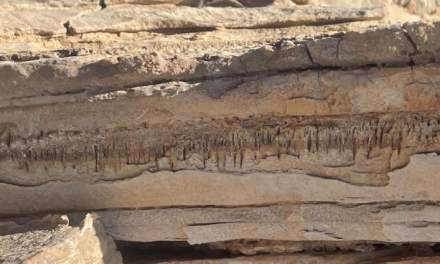
(Roger Buick/University of Washington)
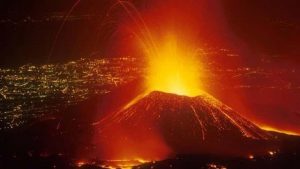
The new study credits volcanoes for this mega boon of oxygen on Earth, adding to other potential clues. The study hypothesised that volcanoes could be responsible for making Earth an oxygen-rich planet about 2.4 billion years ago. The study also shows that about 50 to 100 million years before this excessive oxygenation event, there was a presence of oxygen in the atmosphere for a short duration.
_______________________________________________________________________
Read Also : Decoding sustainable fashion: Shift to slow design models, change in consumer mindset imperative, say…
________________________________________________________________________
This short oxygen phase eventually paved the way to oxygen being abundant in the Earth’s atmosphere. It remained a perplexing problem as to what exactly caused the birth of oxygen for such a short term. In this new study, the team has identified volcanoes as the most probable source. The eruptions could have boosted the population of oxygen-producing microbes, leading to the first traces of sustained oxygen in Earth’s atmosphere.
Mercury hints at the volcanic source
The team explored 2.5-billion-year-old rocks from the Mount McRae Shale formation in Western Australia to investigate the earliest sources of oxygen. This rock belongs to the period just before the Great Oxygenation Event. The rock analysis revealed the presence of mercury, which is typically released from volcanic explosions.
Usually, volcanoes spit out large amounts of mercury into the upper atmosphere, where it lingers for a longer duration—per se one to two years—before falling onto Earth’s surface. There are several geological records of that time that support volcanic activity.
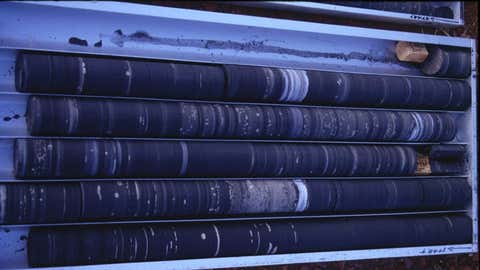
(Roger Buick/University of Washington)
“Sure enough, in the rock below the transient spike in oxygen, we found evidence of mercury, both in its abundance and isotopes, that would most reasonably be explained by volcanic eruptions into the atmosphere,” said co-author Roger Buick, a UW professor of Earth and Space Sciences.
The study shows this spike in mercury levels for a few million years just before the short-term presence of oxygen. And from this originates a complex process pf answering the question: how volcanic eruption led to a spike of oxygen in the atmosphere?
_______________________________________________________________________
Read Also : Sustainable Fashion, Revamp Your Wardrobe With Some Conscious Choices
________________________________________________________________________
Feeding oxygen-producing microbes
It is common knowledge that volcanic emissions lead to the formation of nutrient-rich lava and volcanic ash fields. These nutrients are usually washed away via winds and rain into oceanic bodies. Further, the presence of nutrients fuels the growth of oxygen-producing cyanobacteria and other single-celled life forms.
“During weathering under the Archaean atmosphere, the fresh basaltic rock would have slowly dissolved, releasing the essential macronutrient phosphorus into the rivers. That would have fed microbes that were living in the shallow coastal zones and triggered increased biological productivity that would have created, as a byproduct, an oxygen spike,” explains Jana Meixnerová, one of the authors of the study.
In the short span, the eruption possibly might have led to an explosion in the population size of marine microorganisms, resulting in the gradual increase in atmospheric oxygen concentration gas by converting carbon dioxide and water into oxygen. Thanks to such enumerable processes, the Earth has now turned into the ‘chosen one’ in the entire solar system!
NOTE – This article was originally published in Weather and can be viewed here
Tags: #earth, #getgreengetgrowing, #gngagritech, #greenstories, #hypothesis, #life, #oxygen, #planet, #scientific, #solarsystem