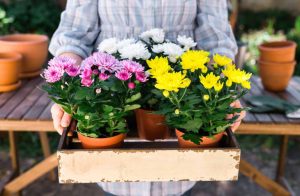
Think of the word “mum.” In your mind you’re probably seeing images of basic pom chrysanthemums, like the shrubby ones that have flowers in fall shades of orange, yellow and red. These “garden” mums are cheap nursery finds and can be tossed after the first hard frost kills them. Yes, those types of mums are well loved (and widely used), but did you know that garden mums aren’t the only kinds of chrysanthemums that you can grow? These fall-blooming perennials are extremely resilient and easy to grow, making them the perfect fit for any kind of gardener. Mums aren’t just for setting on your stoop in the fall, they’re the perfect bedding plants. While they have the semi-bad reputation for simply being basic and boring, mums are anything but.
________________________________________________________________________
“Buy Organic Products Online at best prices at http://www.getgreen.co.in “.
________________________________________________________________________
Chrysanthemums, universally called “mums” for short, are popular fall-blooming perennial plants that are native to northeastern Europe and Asia, but are naturalized on a global scale. While these plants have been traced way back to the 15th century, they’ve continued to grow in popularity over the years with over 20,000 cultivars in current existence. That’s a lot of mums! They are generally used for ornamental purposes but some varieties are used to make chrysanthemum tea, which is popular in China. There has been a recent resurgence of heirloom varieties that have become very popular in cutting gardens because of the bloom’s long vase life.

When should I plant my mums?
Even though mums are late summer, early fall blooming plants, it’s best to plant them in the springtime. It’s easy to get caught up in the last-minute fall mum-buying craze, but if you want mums to be a perennial fixture in your garden they need to be able to establish their roots before the cold of winter sets in. Planting them in the fall doesn’t give the plants enough time to root down in their new spots and therefore struggle to adapt to cold temperatures. If you’re only in it for the fall decor it’s not going to matter, but if you want to make a solid investment in these beautiful easy to grow perennials, plant them in the spring.
Where should I plant my mums?
Mums should be planted in partial to full sun. If you’re trying to decide between the two light exposures, always choose full sun for mums. This helps the plant maintain its energy during the blooming cycle as well as produce new buds, which is important if you want to see color up until the first hard frost. Generally mums do not like shade, though there are a few shade “tolerant” varieties that you can find if you look hard enough.
Can I plant chrysanthemums from seed?
Technically yes, you can grow mums from seed. However, the process can take four to five months and can be very hit or miss when it comes to success. Most of the mums you see at the nurseries are grown from cuttings. If you are an experienced gardener and enjoy the process of starting seeds in the winter, you should definitely try your hand at growing mums from seed. If you’re a novice or are short on time, stick with buying established plants from a nursery.
______________________________________________________________________
Read Also : What Gets Measured Gets Managed: How Sustainability Reporting Can Help Save The Planet
_____________________________________________________________________
 How do I grow chrysanthemums?
Once you’ve squared off a sunny spot in your garden and have decided that you’d like to plant mums there, it’s time to get started. Other than sunlight, the second most important thing about growing mums is that they do not like sitting in water. Your garden plot needs to be well-draining soil or your plants will quickly develop root rot.
Mums do not need deep holes, only deep enough to cover the root ball of the plant. Depending on your soil, it could be beneficial to add compost to the holes as you’re planting for an extra boost. Mums love fertilizer! After you have them in the ground, water the plants in. During the growing season keep the soil damp, but not wet, like the rest of your garden.
If you want to grow your mums in pots or containers, carry on! Put them in a sunny spot and water them daily during the growing season. Remember to water them at least once a day. Mums that are potted in containers dry out very fast. Once the plants dry out, the blooms will start to die off. Mums also like to be fertilized often. Follow the instructions on your favorite fertilizer.
Do I need to pinch the buds off my mums?
Mum growers know that it’s beneficial for your plants to pinch back the earliest buds of the season. Simply reach down in the plant and pinch off the new buds. Continue to do this until the end of the first week of July. This will push the plant to produce bigger, fuller flowers later in the season. No one wants their mums to bloom in the spring or early summer.
When should mums bloom?
If you’re pinching early buds back like you should, your plants should start blooming a few weeks into September. It’s important to remember that your plant’s blooming season is going to depend on your first killing frost. If you live in an area that has a very early first frost, your blooming season will be short. However, if you live somewhere that the temperatures are more mild, you could have a plant that blooms all the way through Thanksgiving.

How do I overwinter mums?
If you live in a colder climate, it’s the best choice to leave the dead foliage on the plants and mulch heavily around each plant after the killing frost. Some growers who live in the extremely cold areas of the country dig up their mums every winter and keep them in a cool, damp place until the last frost of winter. Proper overwintering will ensure that your plants come back year after year.
_____________________________________________________________________
Read Also : The circular economy can help save the planet – if we start innovating now
Can I have chrysanthemums indoors?
The short answer to this question is no, mums cannot grow successfully indoors. If you want to grab a few simply for seasonal decor purposes they would do fine for a month or so.

What varieties of mums are the most unique for my garden?
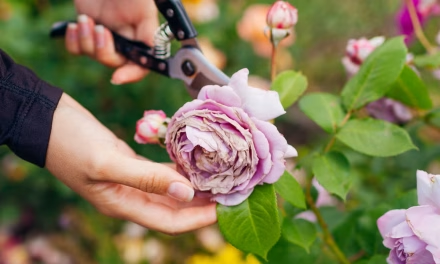
Heirloom mums are definitely having their moment. Growers love them because of their show-stopping blooms and florists love them for their long vase life. There are so many varieties of mums to choose from, but the five on this list are my absolute favorites. Some of them look like dahlias while others have humongous blooms that flare out like the legs of a spider. Note that all varieties of mums are toxic to dogs and cats, according to the ASPCA, so keep them away from pets.
“Fuji Anastasia Green”: This variety boasts a bold green color and gigantic blooms. Fuji Anastasia Green can be difficult to find in order to plant in your garden, but sometimes the chase is just as fun as the payoff!
“Coral Charm”: I love the salmon color of the blooms but I love the longevity of their vase life even more. Once cut (and treated properly) and put in a vase, I’ve found that the flowers from this variety can last up to three weeks.
“Fleur De Lis”: The “Fleur De Lis” mum is definitely a showstopper. This variety is sought out yearly by growers and is in high demand. It is an extra-large purple spider mum that reminds me of the very best fireworks that money can buy.
“Peter Magnus”: These blooms have a pinkish-purple tint to them and grow as adorable little poms. They are extremely similar to the shape of a smaller dahlia bloom.
“Senkyo Kenshin”: This spider mum is a gorgeous peach color and has unique looking petals. You’ll find that the blooms can grow larger than three or four inches in diameter. They make for a stellar focal flower in arrangements.