

According to a recent global report on Wednesday, exposure to outdoor and indoor air pollution has led to more than 1.2 million deaths in India in 2017.
The “State of Global Air 2020” study estimated that a South Asian child’s average lifespan
growing up at current high air pollution levels would be decreased by two years and six months, while the global life expectancy loss is 20 months.
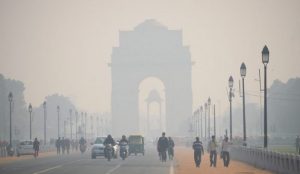
Although reporting that air pollution is the world’s fourth-largest cause of death, the study says India’s largest death risk factor followed by high blood pressure. However, the report notes the success of the “Pradhan Mantri Ujjwala Yojana Household LPG” program, which has helped dramatically increase access to clean energy, especially for rural households, and has helped to reduce household air pollution exposure.”Overall, air pollution is now the fourth biggest cause of death in all health threats”the study said.
Air pollution is now the fourth-largest cause of death among all health threats, ranking only
below high BP, tobacco use and low diet, “said the study released by the Health Effects Institute, an independent, non-profit research institute financed jointly by the US Environmental Protection Agency, industry, foundations and development banks.
Although the report identifies air pollution as a significant risk factor for India, the Indian
Government has in the past rejected numerical estimates, stating that while studies have
established such pollution as a cause or contributing factor to ill-health, there is insufficient
evidence to make predictions or create direct linkages for deaths. The HEI, which for the first time carried out a systematic study of the global effect of air pollution on newborns, found that “outdoor and household particulate matter pollution” led to the deaths of nearly 5,000,000 infants worldwide, including 1,16,000 infants in India, in their first month of life.
The study noted that almost two-thirds of these deaths were related to the use of solid fuels such as charcoal, wood, and animal dung for cooking and that the most recent child deaths were due to complications from low birth weight and pre-term birth. While it said that India’s National Clean Air Policy had spurred action on air pollution sources across India, it said that the levels for outdoor PM 2.5 are still stagnating. It noted that more than half of these deaths were associated with outdoor PM2.5 in India.

This study comes as COVID-19—an infection that puts people with heart and lung disease at high risk of death — has claimed more than 110,000 lives in India. While the relation between air pollution and COVID-19 is not fully known, there is strong evidence linking air pollution to increased heart and lung disease. There is growing concern that exposure to high levels of air pollution during the winter months in South Asia and East Asia could worsen the effects of COVID-19.
Researchers analyzed concentrations of six contaminants, PM10 and PM2.5, carbon monoxide (CO), nitrogen dioxide (NO2), ozone (O3), and sulfur dioxide ( SO2) between March 16 and April 14 from 2017 to 2020 in 22 cities across India. The research – “Effects of Restricted Pollution during Covid-19 on Air Quality in India” – was published earlier this month in the peer- reviewed scientific journal Elsevier Public Health Emergency Series.
The PM2.5 concentration reduction was a limit in most areas, according to the report. India saw a 43 percent decline in PM2.5, 31 percent in PM10, 10 percent in CO, and 18 percent in NO2 during the lockdown compared to previous years. While there were marginal improvements for SO2, there was a sharp increase (17 percent) in the ozone concentration. Climate-affected ozone has risen slightly (10-20 percent) across northern, western, and central India, but the east has seen a mammoth 89% rise compared to previous years.
An independent scientist, who was not part of the report, said that the lockdown helped define new background air quality levels for various areas but warned about a rise in air pollution after the lockdown. “The analogy with the World Health Organization (WHO) safe limits is no longer reasonable, and we will know after the lockdown that we will never hit the lowest level of 10 micrograms per cubic meter, even though all anthropogenic sources are on hold. There is now a need for regional air quality standards based on land-use trends and socio-economic conditions” said Dipankar Saha, former Deputy Director of the Central Pollution Control Board. “To improve the economy when the lockout is called off, pollution will increase again, but we must understand that activities need to be opened up in a staggered manner. Exceeding expectations by 10-20 percent is appropriate, but rising levels above 150 percent of the safe limit would nullify all positive developments witnessed during the lockdown.
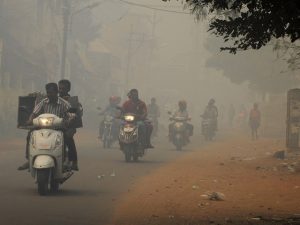
The United Nations Environment Program (UNEP) study published in May last year found that the air pollution-related mortality rate was highest in Sub-Saharan Africa and Central and Southern Asia, with 187 and 170 deaths per lakh of population, respectively.
The report noted that coal-fired power plants in India have repeatedly missed the Ministry of the Environment’s emission deadlines.
The Indian National Clean Air Program (NCAP), which aims to reduce pollution levels by 20-
30% by 2024 across 122 non-reach cities, recognizes PM as the primary pollutant. However, the study proposed that secondary contaminants, such as ozone, should also be considered.
Final Words
India already has a National Clean Air Policy in 102 cities, which is expected to expand to more cities in 2020. The program connects nodal research institutions with state pollution authorities to have access to the latest scientific technologies and pollution-reduction expertise. India has only to look east for ideas. In some cities, China improved its air by 32% by reducing pollution from coal-fired power plants and moving from coal to natural gas. The scientific community will significantly accelerate air quality progress by participating in research that helps determine the effectiveness of interventions.
According to WHO Neira, the answers are already available to policymakers. Here is the
question, how many lungs or quality of life are you prepared to tolerate or even sacrifice our brain capacity.
Tags: #air, #climate, #environmental, #getgreen, #gngagritech, #greenstories, #india, #indoorpollution, #life, #outdoorpollution, #Pollution








Appreciate it for this post, I am a big big fan of this site would like to keep updated.