President Franklin D. Roosevelt once said that “the nation that destroys its soil destroys itself.”
He’s far from the first human to connect soil health to national development. Mesopotamia became a major hub of the ancient world thanks to naturally high levels of nitrogen and potassium. Waves of migration that settled the world were largely shaped by the appearance of highly fertile podzols in pockets of soil around the world. Formed over several millennia from decomposing steppe vegetation, podzols contain high levels of ammonia and phosphorus. More immediately, Russia’s centuries-old desire for control over Ukraine has been motivated, in part, by the prevalence of an extremely fertile type of soil known as chernozem, or black earth.
________________________________________________________________________
Read Also: How the pandemic has accelerated the next generation of farming
________________________________________________________________________
In modern agriculture, soil amendments have taken the place of geographical luck. Potash, a naturally occurring salt, is a highly effective fertilizer and the world’s largest industrial use of potassium.
72 million metric tons: Worldwide production of potash in 2021
31.3%: Canada’s share of global potash production in 2021, followed by Russia with 20.8%, and Belarus with 18%
What came first, potash or pot-as(h)-sium?
Potash has long been used as a common component in soapmaking and textile production, largely due to how easy it is to make. Make a fire, collect the ashes, let them soak in a pot of water, strain out that water, and let it evaporate in the sun. A few hours later, you are left with a crystalline substance known as potash.
However, it wasn’t until English chemist, Humphry Davy, tinkered with potash in 1807 that scientists figured out what it was actually made of. During an experiment in which Davy connected electrodes from a battery to the crystal material, the potash began forming tiny metal globules under the ash, which then instantly combusted and caught fire.
Without realizing it, Davy had discovered potassium, a previously unknown element, secretly hidden in a farming fertilizer that had been used for thousands of years. He named the new element after potash: pot-as(h)-sium
The first US patent ever filed was for a mechanism to make potash. Issued in 1790 to Samuel Hopkins, Patent X1 was filed for an improvement “in the making of Pot ash and Pearl ash by a new Apparatus and Process.” The process involved isolating lye—produced when ashes are mixed in water—before boiling the solution to produce potash salt. It was filed on July 1, in New York City and aimed to make production more efficient, and thus, cost-effective.
________________________________________________________________________
Read Also: Dumped Milk, Smashed Eggs, Plowed Vegetables: Food Waste of the Pandemic
________________________________________________________________________
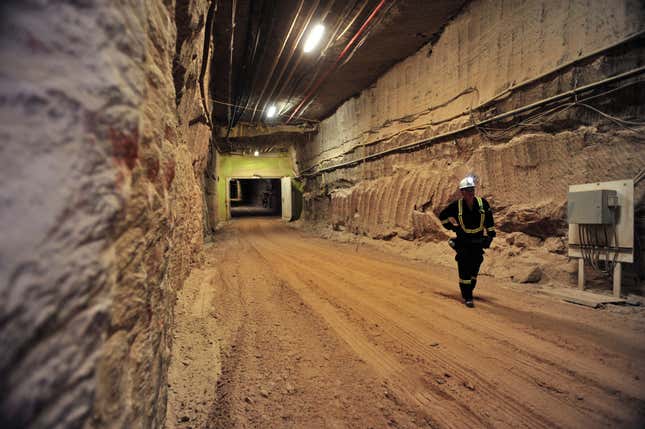
Potash mining
Potash, or simply the residue of ash from woodfires, has long been known to improve soil fertility, but due to the relatively small amounts of potash created by using ashes and evaporation, it was not widely used as fertilizer. Creating the substance was a laborious, time-intensive process, meaning it didn’t make financial sense for widespread use.
This changed at the end of the 19th century when the first major potash salt deposit was found in Stassfurt, Germany, near the eastern end of the Harz Mountains. In 1851, while looking for rock salts, miners discovered potash salts like carnallite, sylvanite, and kainite that could be easily melted down into fertilizing crystals.
Within a decade, the world’s first potash factory had opened in Stassfurt, demonstrating the potential large-scale production of the fertilizer and leading to a potash mining boom across Europe.
Now, there are countless potash mines spread around the world. The production’s immense scale, and potash’s relative abundance, has helped turn the potassium salt into one of the world’s largest sources of fertilizer.
NPK stands for?
A. Never Pay Kings
B. Nitrogen, Potassium, Calcium
C. Nitrogen, Phosphorus, Potassium
D. New Potassium Kahoots
The answer is buried in the highly fertile soil at the bottom of this email.
“The soil is the great connector of lives, the source and destination of all. It is the healer and restorer and resurrector, by which disease passes into health, age into youth, death into life. Without proper care for it we can have no community, because without proper care for it we can have no life.”
What else is potash used for?
In addition to being an ingredient in fertilizers, potash has a number of other uses.
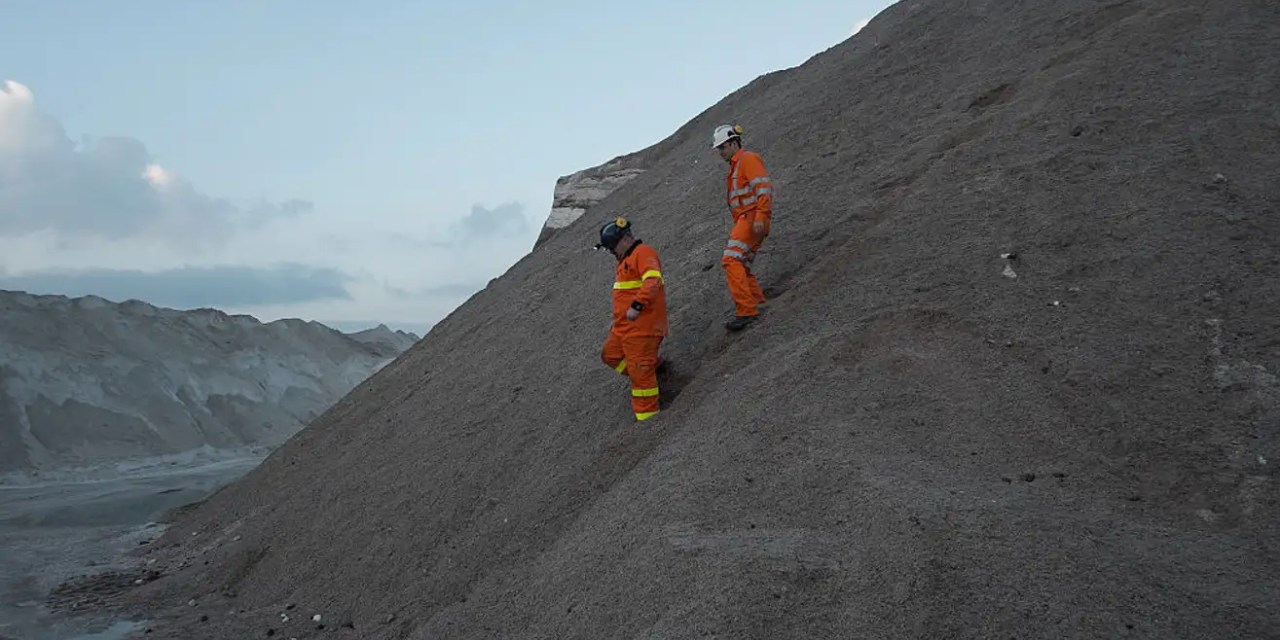
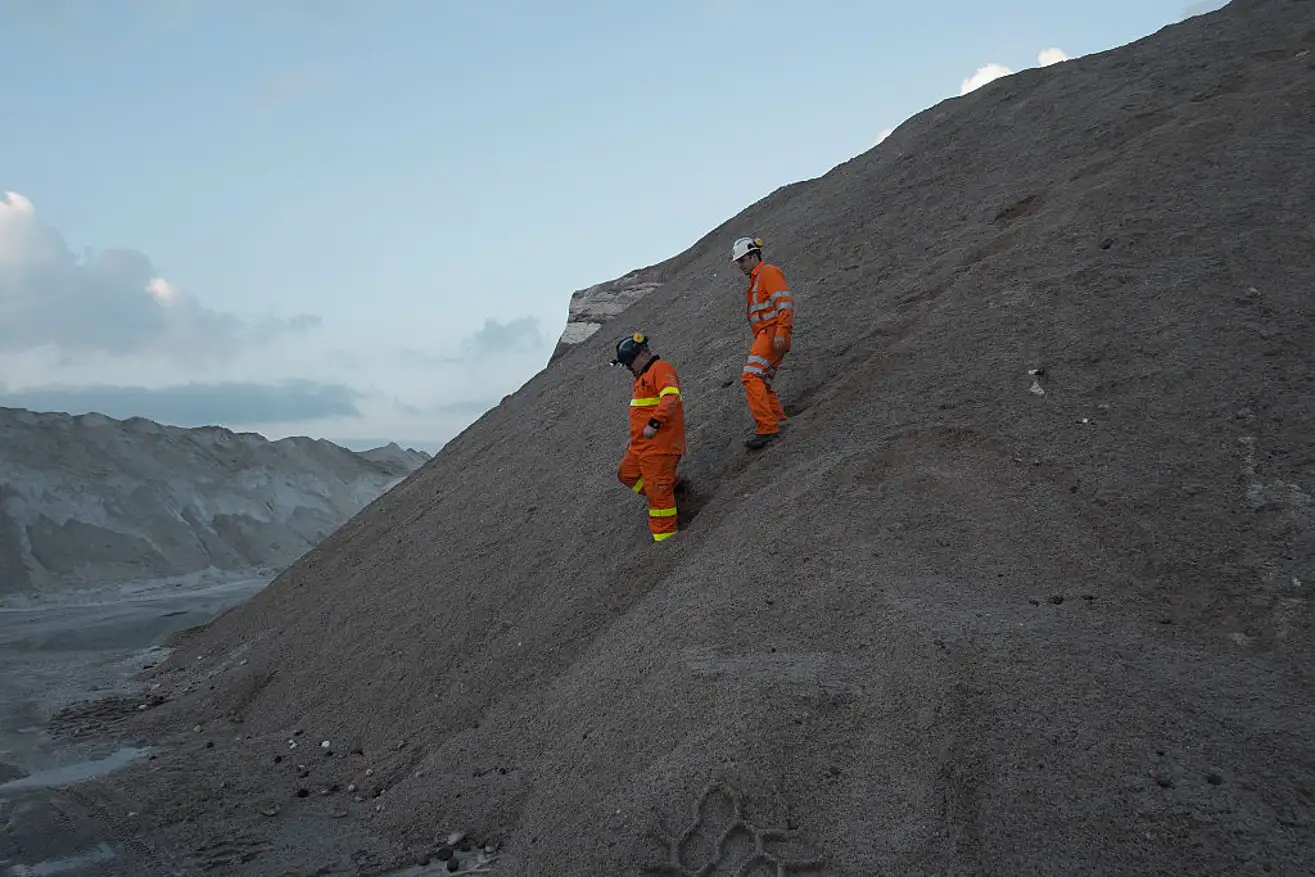
🧂 Road Salt: Potash is a major source of road salt. While not as efficient at low temperatures as sodium chloride, potash is commonly used as a component in larger salt mixes used to de-ice roads. Because it occurs naturally, it is considered better for the environment than some rival road salts.
💊 Pharmaceuticals: A caustic form of potash can be consumed as a treatment for hypokalemia, a type of potassium deficiency.
🫙 Glassmaking: Potassium carbonate, the primary component of potash, is used as a strengthening agent in the production of glass. It can help control the process of melting sand, adding transparency and strength to the material.
🧼 Soap: Potassium carbonate is also used to make a type of soap that combines ash with vegetable oil. It is a less aggressive alternative to most soaps, and can also be used as a fungicide and insecticide, as it can block the respiration of fungi and insects, suffocating them.
These pools help support half the people on Earth
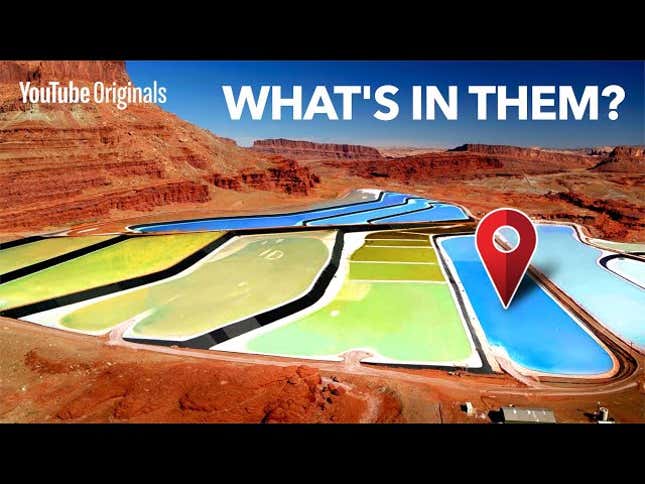
An in-depth explanation of the importance and history of potash, filmed at a major mine in Utah.
_______________________________________________________________________
Read Also : Moon ‘wobble,’ climate change may drive coastal flooding in 2030s: Nasa scientists
________________________________________________________________________
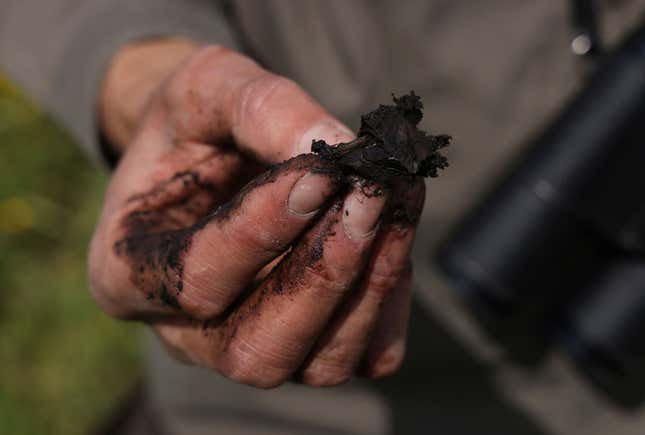
How often do you touch dirt?
- Daily
- Weekly
- Monthly
- Almost never
In last week’s poll about indoor air, about 56% of you said you think about your indoor air quality once in a while, and 29% of you think about it multiple times a day. With the Canadian wildfire smoke rolling in, we hope you’ve got some air purifiers and N95 masks on hand.
Today’s email was written by Diego Lasarte, who, despite living in New York City, tries to submerge his hands in fresh dirt at least once a week, and edited and produced by Annaliese Griffin (badly needs to weed her garden).
The answer to the quiz is C. Nitrogen, Phosphorus, Potassium the primary make-up of most fertilizers, for both home gardeners and large scale farms.