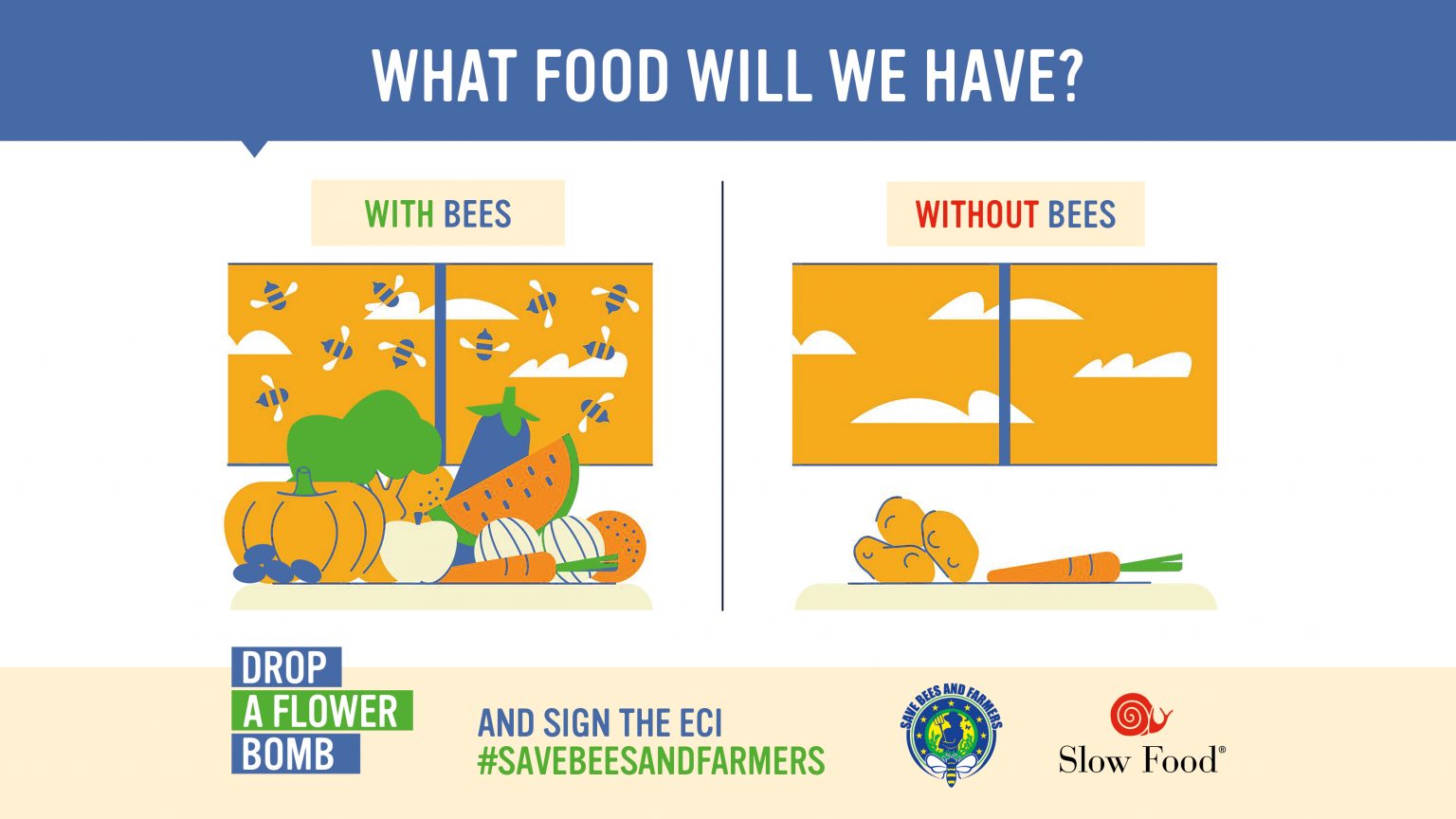
Let’s start with a simple fact: bees and pollinators play a crucial role for the planet, for the protection of biodiversity and for agriculture. They are an integral part of our food system because they pollinate the cultivated plants that end up as food on our tables.
_______________________________________________________________________
Buy Organic Products Online at best prices at https://www.getgreen.co.in .
_______________________________________________________________________
We are talking about the reproduction of more than 80% (about 300,000 species) of wild plants and 75% of our crops (more than 300 species) that depend on pollinating insects. Today, therefore, there would not be so many fruits and vegetables that we eat every day if there were no pollinators to feed the extraordinary process of flower pollination.

The value of this service is enormous: if pollinators were to be paid to produce the food we consume, the cost to society would amount to some 260 billion euros every year[1]
Now we say this with current awareness, so much so that we can put an economic value on it. But, the importance of bees and pollinators was well known by ancient farmers who knew how to respect the presence of hedges and flowers that attracted and gave nourishment to those insects that would become very useful in pollination.
_______________________________________________________________________
Read Also : Why Angelina Jolie Is Betting on Women to Save the Bees
________________________________________________________________________
Not defending bees and the environment in which they live is almost like failing to recognise that they are the apex of a natural process that ensures the subsistence of living beings in a context of major climate change. We pretend to ignore this and only talk about it when the arguments touch on economic interests which, in the world of agricultural production, are far removed from care for the land and the environment.

This is why it is so important for the European Union to adopt a law that can protect bees and pollinators and help farmers in the ecological transition that involves eliminating synthetic pesticides (by 80% by 2030, starting with the most dangerous ones, to reach 100% by 2035) and restoring biodiversity by reviving the natural ecosystems of agricultural areas.
_______________________________________________________________________
Read Also : Protecting Bees and other pollinators’ for Our Own Survival
________________________________________________________________________
This is an achievable goal, but it needs the contribution of all European citizens. It is our right and our duty and we should not shirk it!
Tags: #apiary, #bee, #beehive, #beekeeper, #beekeepers, #beekeeping, #bees, #beesofinstagram, #bienen, #flowers, #getgreengetgrowing, #gngagritech, #greenstories, #honey, #honeybee, #honeybees, #honeycomb, #insects, #macro, #nature, #naturephotography, #pollinators, #savethebees