As global seaweed production accelerates as a climate-resilient and high-value bioresource, India faces a critical opportunity to integrate seaweed cultivation into its blue economy, nutrition security, and climate strategies

Image Source: Pexels
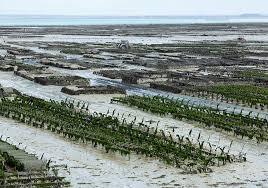
The production of seaweed, a climate-resilient, nutrient-dense, and high-value bioresource for the blue economy, has tripled since 2000, reaching 32.4 million tonnes in 2020, worth US$13.3 billion. Asia accounts for 97 percent of global seaweed production, driven primarily by China’s offshore farming, mechanised processing, and industrial-scale cultivation. Seaweed offers a unique advantage: rapid growth without fertilisers, antibiotics, freshwater, or a large land area, at a rate 10 times that of terrestrial plants, enabling comparable biomass yields with less than one-tenth the land area. It improves water quality, enhances carbon absorption, mitigates ocean acidification, and promotes nutrient uptake.
Nutritionally, seaweed is rich in bioactive compounds with antimicrobial, antiviral, antioxidant, antitumor, anti-inflammatory, and antidiabetic properties. It provides key vitamins, over 54 bioavailable trace minerals, and high protein content, making it useful in the food, feed, pharmaceutical, and cosmeceutical industries, as well as a strategic resource for national health and nutrition missions, including mid-day meal schemes, biofortification, and nutrient supplementation for women and children. Beyond food, seaweed is also utilised in aquaculture as a feed additive, shelter, and a water quality enhancer. After China and Japan, seaweed production is expanding in Europe, with Norway leading its production, aiming to reach 8 million metric tonnes by 2030. Norway has integrated the industry into the Norwegian Fish Export Act in 2023, scaling offshore carbon capture and implementing a licence for seaweed cultivation.
Seaweed offers a unique advantage: rapid growth without fertilisers, antibiotics, freshwater, or a large land area, at a rate 10 times that of terrestrial plants, enabling comparable biomass yields with less than one-tenth the land area. It improves water quality, enhances carbon absorption, mitigates ocean acidification, and promotes nutrient uptake.
India, despite its long coastline and rich marine resources, contributes less than 1 percent to global seaweed production due to challenges such as fragmented governance, inconsistent markets, and poor infrastructure. However, building on this global surge, India is now developing a comprehensive policy framework to address these challenges and integrate seaweed cultivation into its economy and nutrition targets.
________________________________________________________________________
India’s Progress and Value Chain Potential
India’s seaweed economy has the potential for exponential growth under a strong policy framework. Valued at INR300-500 crore, the sector is targeted to reach 9.7 million tonnes by 2030. This ambition is supported by government schemes such as the Pradhan Mantri Matsya Sampada Yojana (PMMSY 2020) with INR640 crores earmarked for the seaweed value chain, Technology Information, Forecasting and Assessment Council (TIFAC) (2021) Seaweed Mission, and initiatives by individual state fisheries departments and research institutions, including the National Institute of Ocean Technology (NIOT). The sector demonstrates strong socio-economic potential, with an estimated INR2 billion in turnover and 765,000 days of employment, which supports 40,000 coastal families. Techno-economic assessments[1] indicate that an investment of US$128 million can scale up India’s seaweed (kappaphycus) farming potential to 26,000 hectares, generating US$96 million in revenue and 108,300 full-time jobs. Seaweed farming can also provide up to 63 percent higher economic returns than traditional aquaculture, which provides approximately 17 percent returns. The revised National Biofuel Policy (2018) highlights its potential as a viable feedstock: a 10-million-hectare seaweed cultivation could yield 460 million tonnes of biomass and 6.7 billion litres of bioethanol.
Techno-economic assessments indicate that an investment of US$128 million can scale up India’s seaweed (kappaphycus) farming potential to 26,000 hectares, generating US$96 million in revenue and 108,300 full-time jobs.
Moreover, the seaweed sector has a high market value globally, including the US$5 billion seaweed-based food industry, US$213 million in seaweed-derived hydrocolloids, US$132 million in agar and US$240 million in carrageenan. Leading pharmaceutical, agribusiness, and cosmetics companies, including Unilever, Cipla, and The Body Shop, BASF, and Godrej Agrovet, use these compounds in wound dressings, tablets, jellies, toothpaste, gels, shampoos, stabilisers, and thickening agents. Indian startups, such as Zerocircle, are developing biodegradable plastic from seaweed sourced from the coastal states of Tamil Nadu, Maharashtra, and Gujarat.
However, despite these promising opportunities, India’s seaweed industry is yet to realise its full potential.
Scaling India’s Seaweed Economy: Challenges and the Way Forward
Achieving the 9.7 million tonne seaweed economy target will risk remaining merely aspirational unless India addresses multiple socio-economic challenges, including poor market integration, limited income sources for farmers, a fragmented value chain, and the absence of an organised governance framework. Currently, seaweed falls under multiple ministries, each with different rules and priorities.
A key constraint of India’s Kappaphycus seaweed farming is its focus on a single product, such as carrageenan or biofuel, instead of maintaining a diverse product portfolio, which creates financial risk. Similar initiatives in Bangladesh show the same tendency. A more resilient model, followed by Algea (company) and Utari Seaweed Cooperative, diversifies revenue by targeting byproducts in biofuel, food, feed, pharma, and nutraceuticals. Scaling up such diversification requires a policy framework emphasising coordinated governance, state-of-the-art infrastructure, research and innovation, and stable markets.
Achieving the 9.7 million tonne seaweed economy target will risk remaining merely aspirational unless India addresses multiple socio-economic challenges, including poor market integration, limited income sources for farmers, a fragmented value chain, and the absence of an organised governance framework.
________________________________________________________________________
The following measures could help advance India’s seaweed economy:
- Establishing a cohesive policy framework: India’s seaweed sector requires a governance framework that integrates infrastructure, innovation, finance, and community development, and is supported by strong institutional coordination. Learning from successful attempts in Odisha, the expansion plan for seaweed cultivation across 384 coastal sites demands state-specific policies that adapt to social and ecological variations, clear guidelines for cultivation zones and permanent anchoring systems, and a regulatory framework tailored to local coastal communities. These policies must adopt a multistakeholder approach that involves industries, local communities, and government. As algal foods and bioactives emerge as a prominent category, a dedicated regulatory framework must also address composition, quality, yield, processing, and market regulations. For effective translation of policies, a strong interdepartmental coordination across multiple ministries is essential.
- Building efficient infrastructure: To achieve the national target of 9.7 million tonnes of production by 2030, seaweed farming must be expanded to offshore and large-scale facilities with climate-resilient designs, improved post-harvest technologies, processing systems, and decentralised cold chain facilities. Strengthening the seaweed supply chain would require establishing designated cultivation zones, decentralised nurseries for high-quality seeds, climate-resistant strains, aggregation points, efficient storage, and farm-to-factory logistics. Sustained funding must be directed to research institutions such as CSIR-CSMCRI, NIOT, and ICAR-CMFRI to encourage the development of improved seaweed varieties and value addition technologies, coupled with environmental safety measures, including waste-disposal protocols and Life Cycle Assessment (LCA). Coastal communities, particularly women, must be supplied with appropriate and affordable equipment such as bamboo, nets, and ropes.
- Creating a stable market: The lack of standard pricing, an unstable market, reliance on import pricing, and a buy-back mechanism drive significant price volatility in the seaweed sector, leading to instability in farmers’ incomes. Establishing a minimum procurement price (MPP), along with relaxed export restrictions, sustainability safeguards, biosecurity measures, and climate adaptation frameworks, would ensure economic stability and reduce market fluctuations. Developing a standard Measurement, Reporting and Verification (MRV) framework is vital for tracking seaweed quality and quantity and securing funding. Targeted investments in coastal value-addition clusters, micro-enterprises, processing hubs, and startups are essential for a stable market environment.
- Deploying state-of-the-art technologies: India’s capacity to produce high-value seaweed-based products is constrained by limited access to infrastructure for the extraction, processing, and purification of bioproducts, underscoring the need for policies that promote advanced technologies. Scientific seaweed farming has demonstrated the potential to provide a stable monthly income of INR25,000-30,000 for coastal communities. Policies must thus support the development of stress-tolerant seaweed varieties and scientifically managed, climate-resilient farm designs, suitable for India’s coastal areas. Planning tools such as hydrodynamic modelling and transport studies can reduce climate risks, while appropriate site selection can help scale operations and improve productivity. Dedicated innovation funds, research grants, and academia-industry collaboration can bridge the funding gap, which remains a key barrier. In parallel, a data-driven approach that geotags seaweed cultivation sites and geospatially tracks biomass from farm to factory can effectively advance seaweed farming.
- Strengthening community engagement: Strengthening coastal community engagement is central to building an inclusive and resilient seaweed sector. Coastal communities should be actively involved in seaweed farming and value addition activities, with targeted policies for skill development and technical training, particularly for coastal youth and women. In Chilika Lake, Odisha, 100 trained individuals, mostly women, are involved in seaweed cultivation, earning up to INR10,000 per month from a 10-acre area. Establishing institutional mechanisms such as self-help groups (SHGs), cooperatives, and community-based initiatives across coastal regions can promote community-owned, value-added centres to support local enterprises.
Conclusion
Initiatives such as PMMSY and import guidelines are positive steps towards regulating imports and ensuring quality. With the right policies and community-led growth, India can unlock the full potential of its seaweed industry. Advancing this sector will drive economic growth, enhance nutrition security and climate resilience, and foster inclusive growth for the blue economy.
NOTE – This article was originally published in ORF Online and can be viewed here