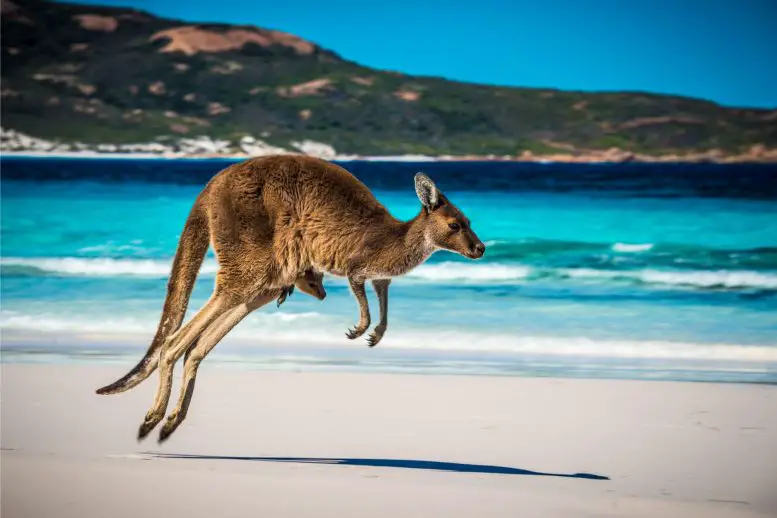
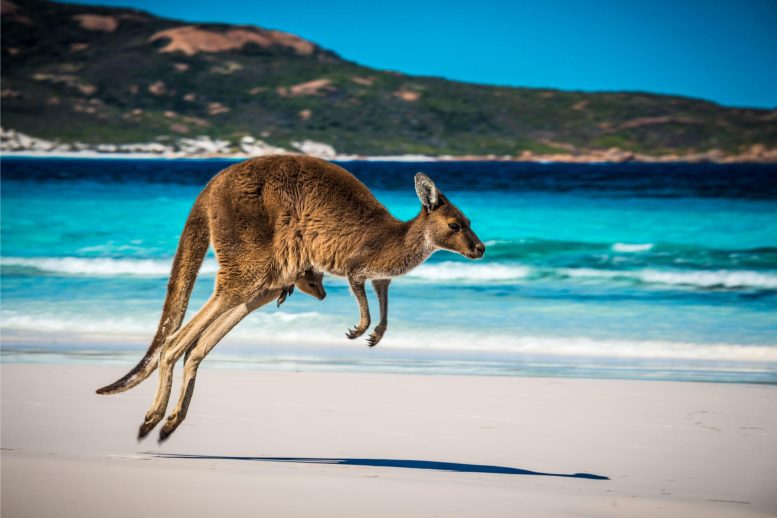
Extinct kangaroos displayed more diverse locomotion patterns than their modern counterparts, including quadrupedal bounding, climbing, and slower hopping, according to a review by researchers from the University of Bristol and the University of Uppsala. The study suggests that the high-speed endurance hopping seen in modern kangaroos was likely rare or absent in their ancestors, with many extinct species adopting alternative forms of movement, such as bipedal striding.
According to a comprehensive analysis by scientists from the University of Bristol and the University of Uppsala, extinct kangaroos didn’t hop like their modern counterparts do.
Despite the popular view of hopping as a hallmark of kangaroo evolution, the researchers pointed out that several types of large kangaroos from the relatively recent past probably utilized different modes of locomotion. These may have included bipedal striding or moving about on all four limbs.
________________________________________________________________________
Read Also : Big nations must stretch further to limit climate change, says John Kerry
________________________________________________________________________
In the review, published in Alcheringa: An Australasian Journal of Palaeontology, the team shows that there are other ways to be an evolutionary successful large kangaroo and that large-bodied kangaroos weren’t only specialized in endurance-hopping.
The review is an extensive discussion of the fossil evidence of the locomotion of kangaroos and their relatives (including wallabies, tree-kangaroos, rat-kangaroos, etc.) over the last 25 million years, and presents new analyses of limb bone and ankle bone metric data that add weight to previous locomotor hypotheses.
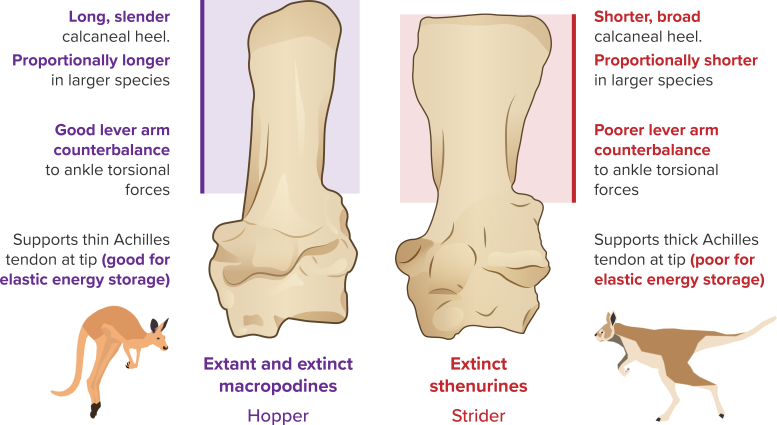
Illustration showing the difference in calcaneal heels between hopper and strider. Credit: Nuria Melisa Morales-Garcia
Together they indicated that the higher speed-endurance hopping, typical of modern large-bodied kangaroos, was probably rare or absent in all but a few large-bodied lineages, including the direct ancestors of modern large kangaroos like red and grey kangaroos. However, the diversity of kangaroo gaits disappeared with the Late Pleistocene extinctions of larger animals (in Australia as well as on other continents).
________________________________________________________________________
Read Also : The Science of Climate Change Explained: Facts, Evidence and Proof
________________________________________________________________________
While almost all kangaroos today, small and large, use hopping gaits to some extent, the fossil record reveals that the locomotory capabilities of some extinct kangaroos were comparatively diverse.
The earliest recognized late Oligocene–middle Miocene (25 to 15 million years ago) basal types of kangaroos most likely employed quadrupedal bounding, climbing, and slower speed hopping as their primary modes of locomotion. (All kangaroos today use quadrupedal locomotion at slow speeds, which manifests as pentapedal locomotion – using the tail as a fifth limb – in larger Climate change ‘unequivocal’ and ‘unprecedented,’ says new U.N. report
________________________________________________________________________
He explained: “Especially supported by this new data is the notion of bipedal striding rather than hopping in the sthenurines, as their calcanea lack the anatomy (a long calcaneal heel) that would help resist rotational forces at the ankle experienced during hopping, and suggests a more-erect limb posture rather than the crouched posture essential for hopping.”
Professor Janis concluded: “The assumption that increasing continent-wide aridity after the end of the Miocene selectively favored hopping kangaroos is overly simplistic. Hopping is only one of many gait modes employed by kangaroos both in the past and today, and the fast endurance hopping of modern kangaroos should not be regarded as some “evolutionary pinnacle’.
“What makes modern endurance-hopping kangaroos appear so unusual is the geologically recent extinction of similar animals who moved in different ways.
“We are perhaps then in need of a rival Australian airline that covers shorter distances than QANTAS and boasts a novel motif of a striding sthenurine!”
NOTE – This article was originally published in scitechdaily and can be viewed here
Tags: #animals, #climate, #climbing, #earth, #environment, #getgreengetgrowing, #gngagritech, #greenstories, #kangaroos, #nature, #reinforce, #slowerhopping