“The density of space junk peaks around 620 miles up, in the middle of so-called low-Earth orbit. That’s bad, because many weather, scientific, and reconnaissance satellites circle in various low-Earth orbits.” — Sam Kean

https://www.innovationnewsnetwork.com/images-of-space-debris/9760/
On 4th October, in the year 1957, the first human-made satellite- Sputnik 1 was sent into space. It was a day of rejoicing for all of mankind because this was the first time they realized that space travel was possible. Over the years, we sent many more satellites into our orbit and many more to the orbits of other planets as well. We were able to send rovers to the Moon and on Mars. The first human, fruit flies, cats, ants, frogs, monkeys, and even jellyfish have been to space.
“Buy Organic Products Online at best prices at http://www.getgreen.co.in “.
Almost every country has sent at least one satellite to orbit a planet or a rover to find out what it is like in the great unknown. Many of these satellites, rovers, and spaceships have come back to the Earth bringing back a few keepsakes from space. Space travel was really something that changed our lives and it showed us that we could surpass our limits.
One small detail that we tend to overlook would be the space debris. Also referred to as space junk, space trash, or space pollution, this debris is made up of bits and pieces of every satellite, space shuttle, or rocket we send into space. It is of no use to us or to the Earth but it is just trash that orbits the Earth accumulating more and more debris over the Earth.
It is not a smooth ride to get out of the Earth’s atmosphere. So, in the process, it is predictable that the entire spacecraft is not going to make it out in one piece. Space debris mainly consists of non-functional spacecraft or abandoned launch vehicles, broken parts of rockets and spacecraft, paint from the side of rockets and satellites, unburned parts from rocket motors, and so on.
Since October 4th, 1957, so much debris or trash has accumulated outside the Earth that when viewed from space, the amount of debris surrounding the Earth seems unimaginable. The entire planet is covered with so many broken pieces of rockets and spacecraft. Not only does space debris ruin the look of our planet, but it can also prove to be dangerous for other missions to space.
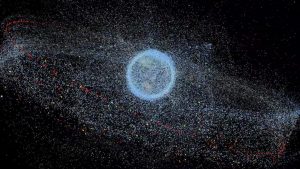
http://www.esa.int/ESA_Multimedia/Videos/2019/02/Distribution_of_space_debris_in_orbit_around_Earth
One of the main problems of space debris is that they can collide with each other and produce more debris. The atmosphere outside the Earth is not the same as that within the Earth. So, when two objects collide, they do so with a great force that can send the smaller broken pieces flying in every direction. These pieces travel with great force and it may strike against some important spacecraft that we use and it could destroy it. The severity of this issue was noticed a few years back when two large satellites were on the brink of collision. Because of the efforts of the International Space Station, they were able to undertake emergency maneuvers three times in order to avoid this collision.
Read Also : Severe Cold Conditions to Persist over Entire North India; Delhi-NCR Records Coldest December Day…
With this huge traffic jam of floating space debris outside our planet, it becomes difficult to send more satellites out into space without facing the risk of collision of these space shuttles with the debris. The risk is especially high in un-manned crafts which have to be controlled from the space stations down here on Earth. This is not an easy task. Even after the satellite is placed in its orbit, there is still a chance that another piece of debris or a meteor may collide with it.
For manned spacecraft, maneuvering away from broken debris is easier but it is still hard to move the spacecraft away from debris. Even then, minute particles can strike the surface which can be noticed when these spacecraft are brought back down to Earth.
Another main problem with space debris is that it can fall back on the Earth at any time without warning. It produces the same effect as a meteor hurtling to Earth’s surface may produce. Over the years, many people have been affected by this debris and they have even been hurt. One particular satellite brought with it a lot of radioactive debris which landed all over Northern Canada when it was re-entering the Earth’s atmosphere.
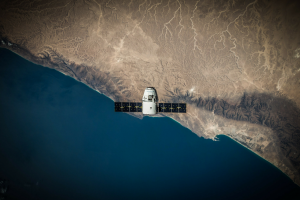
https://www.rubicon.com/blog/space-waste-debris/
We know that when a foreign object enters the Earth’s atmosphere, most of it burns up while entering which causes a huge amount of pollution to the atmosphere. Almost one piece of space junk falls onto the Earth almost every day for the past fifty years. Even though this junk does not really cause much harm, it is still a nuisance.
The government agencies and scientists have come up with many plans to deal with this problem that we face due to a large amount of space debris. The only problem is that most of these solutions are only theoretical and it is hard to put the plans into action because there is no guarantee that it will work and cleaning up space junk is not that easy. The main reason we cannot put these plans into action is that it costs a lot of money and not most agencies are willing to pay so much to clean up junk even though it is a necessity.
Read Also : Unlocking the Climate History Captured in Ice
To make things easier, the latest satellites are required to move to a graveyard orbit after their use is over so that they won’t be in the way when we want to send more spacecraft outside. So, at the end of their working period, these satellites can automatically move to their new orbit without it being of disturbance to other satellites. Because there is no plan to remove the waste already orbiting the Earth yet, there is not much we can do except hope that scientists and researchers soon come up with a solution to this growing problem of space debris.

-Sharon Ajith -29/05/2021
Tags: #ants, #bed, #cats, #climate, #earth, #frogs, #fruitflies, #getgreengetgrowing, #gngagritech, #greenstories, #humanity, #jellyfish, #monkeys, #scientific, #space