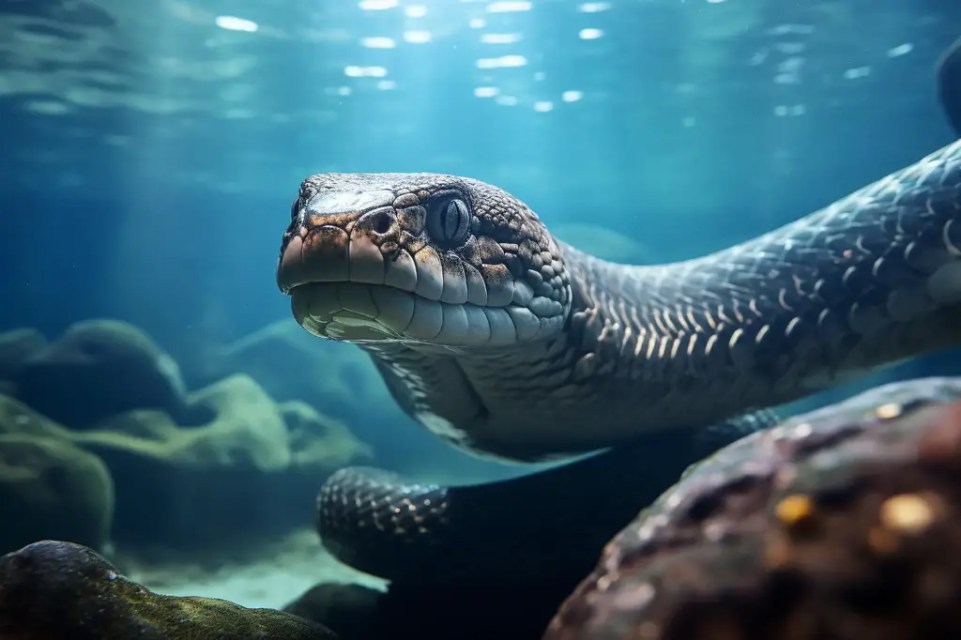

In a remarkable evolutionary development, a team of international scientists has discovered that sea snakes have enhanced their color vision due to their transition to brighter and more colorful marine habitats.
Scientists have discovered that sea snakes have enhanced their color vision due to living in vibrant marine environments.
An international team of scientists examining the genetic history of sea snakes has found that the The Industry of Recycling
________________________________________________________________________
“Two of these genes have the ancestral ultraviolet sensitivity, and two have evolved a new sensitivity to the longer wavelengths that dominate ocean habitats.
“The earliest snakes lost much of their ability to see color due to their dim-light burrowing lifestyle.
“However, their sea snake descendants now occupy brighter and more spectrally complex marine environments. We believe that recent gene duplications have dramatically expanded the range of colors sea snakes can see.”
The team examined published reference genomes to examine visual opsin genes across five ecologically distinct species of elapid snakes. They looked at the gene data of Hydrophis cyanocinctus, or the annulated sea snake, a species of venomous snake found in tropical and subtropical regions of Australia and Asia.
The team included scientists from The University of Adelaide, The University of Plymouth, and The Vietnamese Academy of Science and Technology. They published their findings in the journal Genome Biology and Evolution.
_______________________________________________________________________
Read Also : From Austria to Wales: The five best recycling countries in the world
________________________________________________________________________
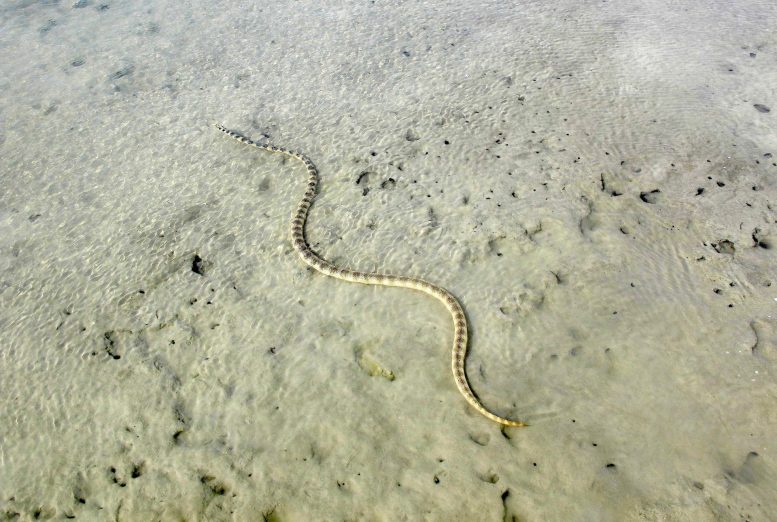
Hydrophis cyanocinctus. Credit: Parviz Ghezellou
Many animals have lost opsins throughout their genealogical history as they’ve adapted to new habitats, but it is very rare to see opsin gains.
“Humans have a similarly expanded sensitivity to colors, while cats and dogs are partially color-blind much like those early snakes,” said Mr Rossetto.
“It’s quite unique and interesting that these snakes appear to be gaining and diversifying their opsins, when other land-to-sea transitioned animals have done the opposite.”
“Basically, there’s only one other case within reptiles at all where we think this has happened.”
Newly gained color-vision opsins have also been recorded in the semi-aquatic Helicops snake.
_______________________________________________________________________
Read Also : Recycling For Profit: How This Hyderabad Woman Is Creating New Frontiers In Urban Waste…
________________________________________________________________________
Evidence of color vision in Hydrophis snakes was first published in 2020, but this new research shows it is the result of gene duplication rather than gene polymorphism. This means expanded color vision is more common among the species than first thought.
“With a polymorphism, it’s a bit of a lottery – only some individuals would have that extended color sensitivity. But now we know that there are multiple gene copies which have diverged, so color vision is expected to be seen in all members of these species,” said Mr. Rossetto.
Reference: “Functional Duplication of the Short-Wavelength-Sensitive Opsin in Sea Snakes: Evidence for Reexpanded Color Sensitivity Following Ancestral Regression” by Isaac H Rossetto, Kate L Sanders, Bruno F Simões, Nguyen Van Cao and Alastair J Ludington, 12 July 2023, Genome Biology and Evolution.
Funding: Australian Research Council Discovery Project
Tags: #climate, #climatechange, #environments, #getgreengetgrowing, #gngagritech, #greenstories, #Hydrophis, #nature, #remarkable, #scientists, #sea, #snakes