
What one of the most ancient species on earth can teach to one of its most recent newcomers
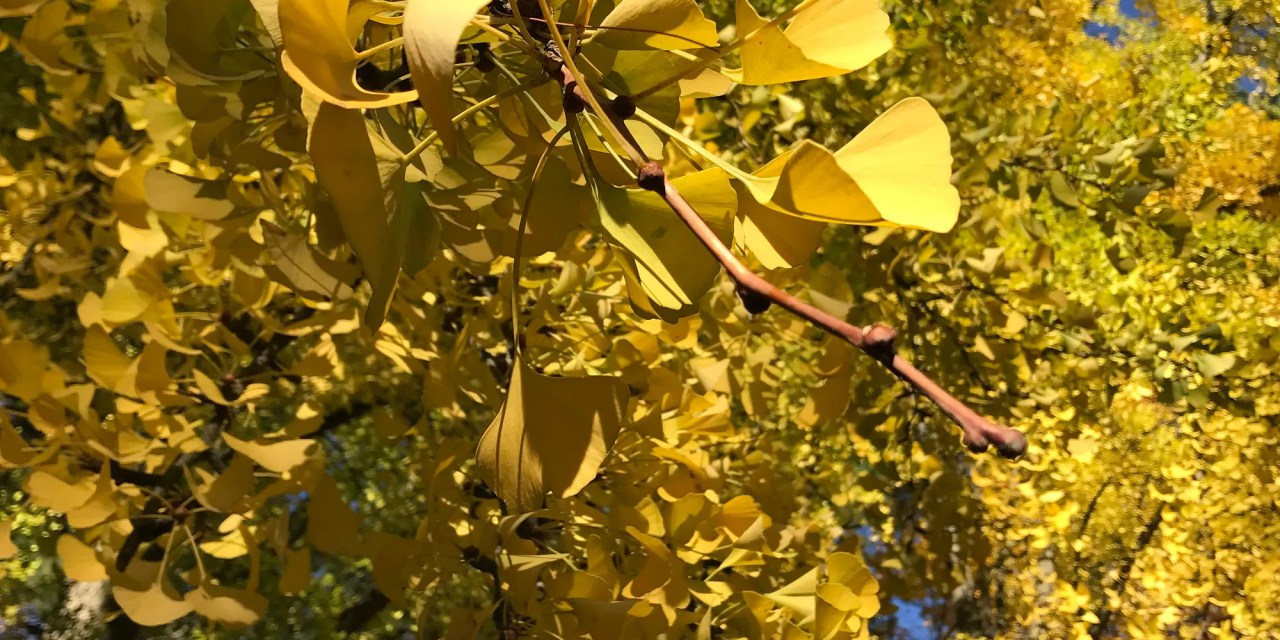
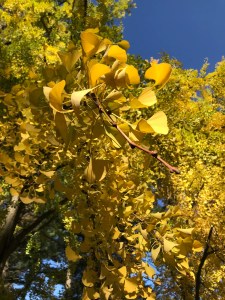
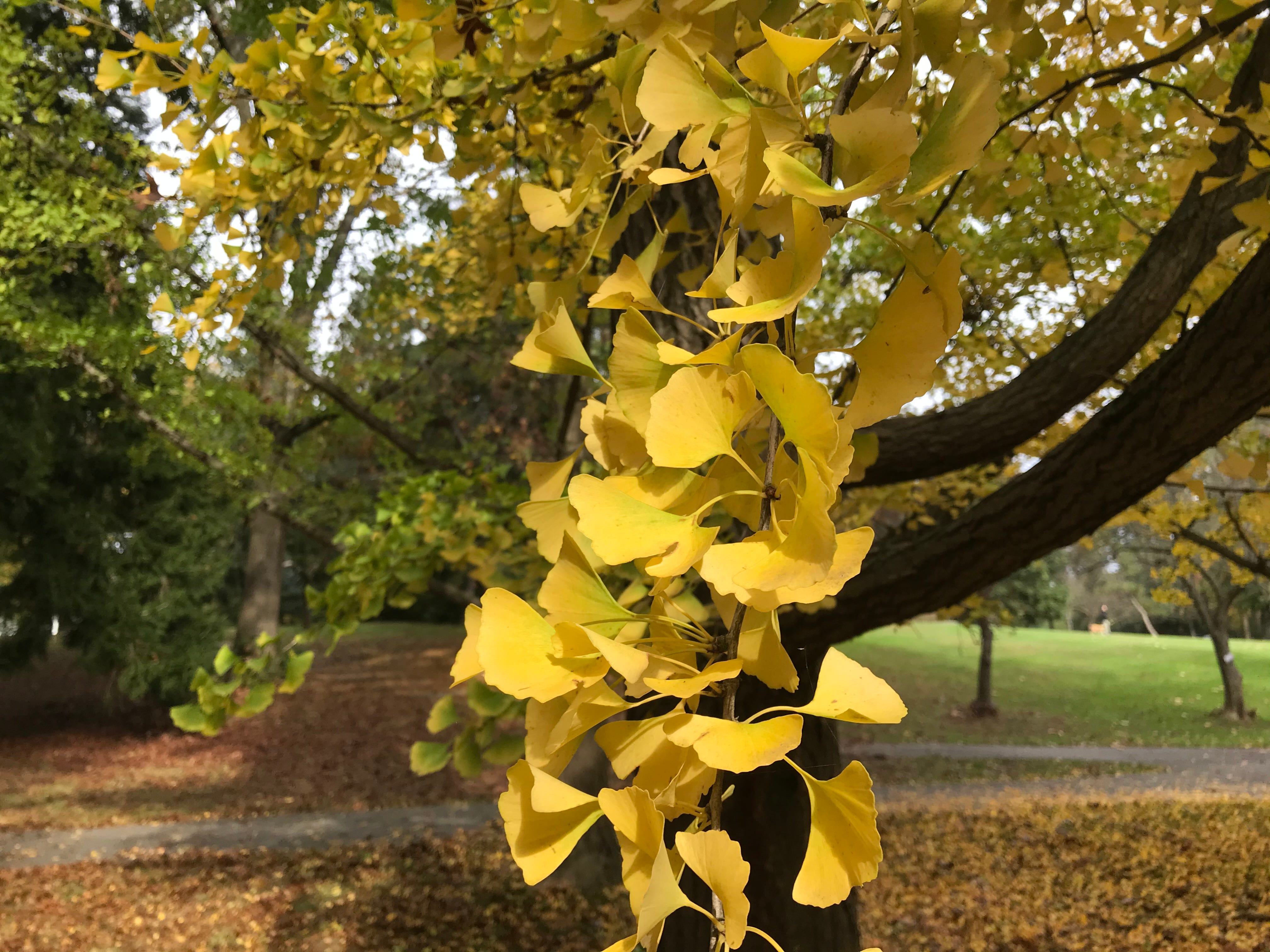
As millions of Americans grapple with disappointments and despair following the recent political developments at home, they need not look any farther than their neighborhood Ginkgo Biloba tree for inspiration and upliftment. In my town in Northern New Jersey, several Ginkgo trees were still resplendent with their stunningly bright yellow foliage as recently as last week, as if they hung on to their leaves this late in the season just to cheer up countless of Americans in anticipation of their imminent sense of doom and gloom.
A tree like no other
Perhaps no other tree could serve as a better inspiration for hope, resilience, vitality, love, beauty and strength than the Ginkgo. Considered a living fossil, the Ginkgo is the only surviving member of a family of trees which flourished about 200 million years ago. It has outlived the dinosaurs, asteroid impacts, ice ages, continental drifts, earthquakes, fires, and even atomic explosions. Following the atom bomb explosion in Hiroshima in 1945, several Ginkgo trees within a short radius of the blast were able to weather its catastrophic impact. Initially thought to have been completely incinerated, they resumed sprouting new buds in a few months. Called “Hibakujumoku” (atomic-bombed trees), these surviving trees are still standing and continue to be a symbol of hope, resilience and rebirth even in the darkest of times.
“Perhaps no other tree could serve as a better inspiration for hope, resilience, vitality, love, beauty and strength than the Ginkgo”
Once widespread in the wild across much of the earth, the Ginkgo managed to survive in pockets of China through various global upheavals and cataclysms. From China Ginkgo made its way to Japan and Korea early in the last millennium. It’s a much-revered icon in all three Far Eastern cultures standing as a living symbol of longevity, renewal and wisdom. Confucius was believed to have preached under a Ginkgo tree. Ginkgo trees adorn many temples, monasteries and shrines in the Far East, attracting pilgrims and visitors from far and wide.
Ginkgo makes its return to the West after several million years
After going extinct in North America about 7 million years ago and in Europe about 2 million years ago, Ginkgo made its way back to the West only in the 18th century. Engelbert Kaempfer, a German doctor and botanist working for the Dutch East India Company, discovered the species in Japan in 1691. Based on his research, he put together the first botanical description of the Ginkgo tree for the western world in his work “Amoenitatum Exoticarum” (Lemgo, 1712). He was believed to have brought back several specimens of the tree from Japan, and the first cultivated Ginkgo outside Asia was planted in the Utrecht Botanical Gardens (De Oude Hortus) in the Netherlands in 1730.
England’s oldest Ginkgo at Kew Gardens
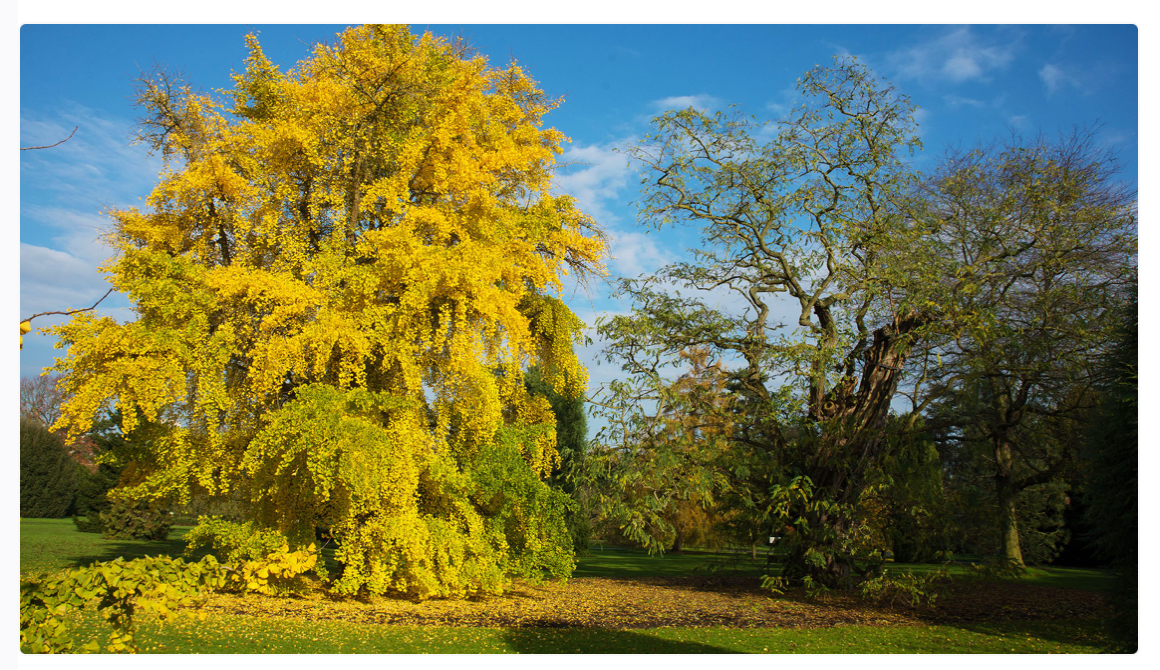
In England, London nurseryman James Gorden was the first person to cultivate the Ginkgo in 1758, and one of his plantings found its refuge in Kew Gardens in 1762, only three years after the botanic gardens came into existence. The Ginkgo is still standing strong at Kew and is part of the five iconic trees at the gardens that are collectively known as the ‘Old Lions.’
_______________________________________________________________________
Read Also : Pandemic travelling: More sustainable choices for Indian travellers in 2021
________________________________________________________________________
The oldest Ginkgo in America
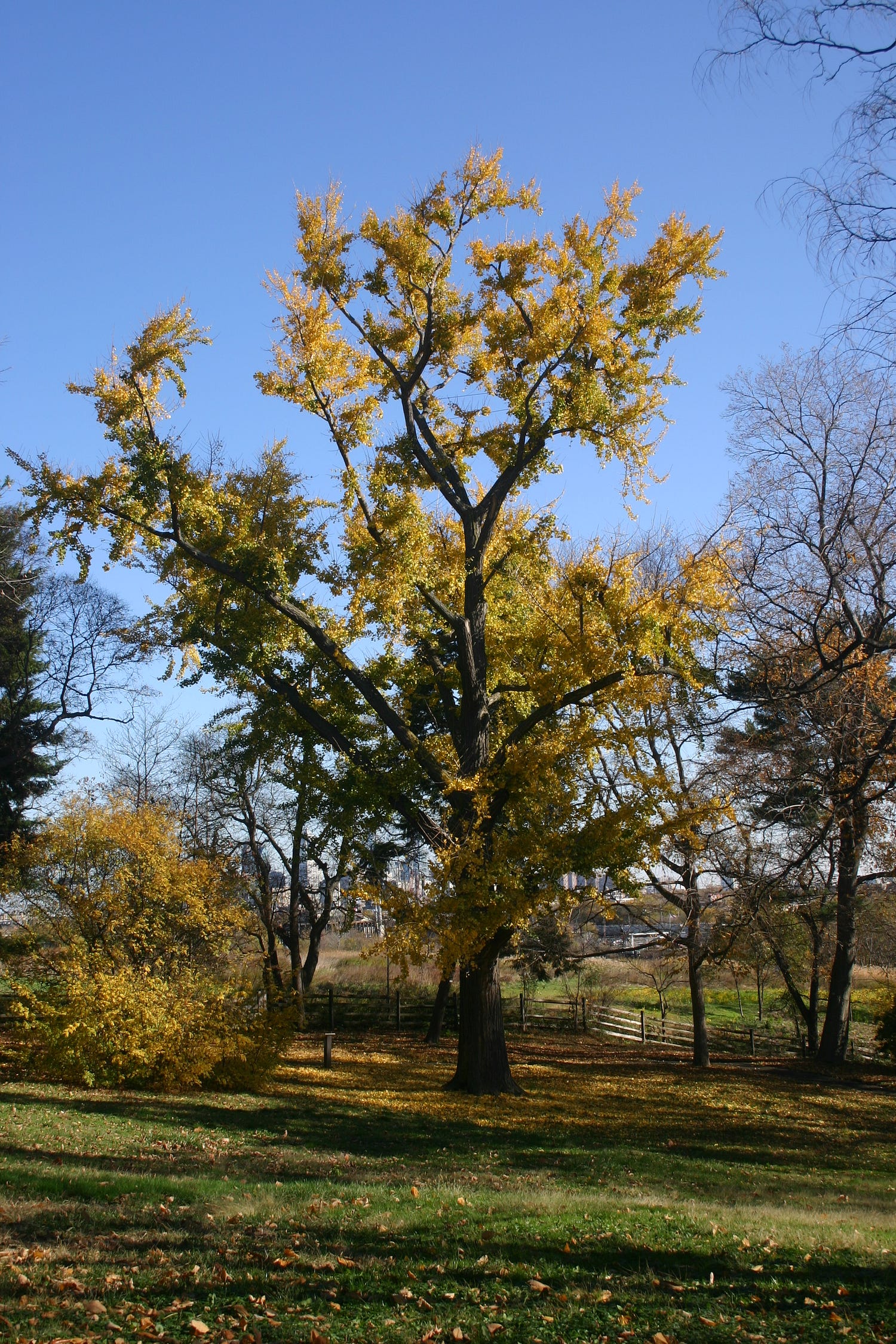
In America, William Hamilton, an eminent botanist and plant collector from Pennsylvania, was the first to source Ginkgo trees in London. Hamilton collected three ginkgo plants from London in 1785 and sent them back to the States in 1785. Hamilton gifted one of these plants to his botanist and horticulturist friend William Bartram who planted it in the family-owned Bartram Gardens, the oldest botanical garden in the country. Almost three centuries on, the tree is still gracing the garden as the oldest and only surviving original Ginkgo tree brought to America.
Taxonomy of the Ginkgo
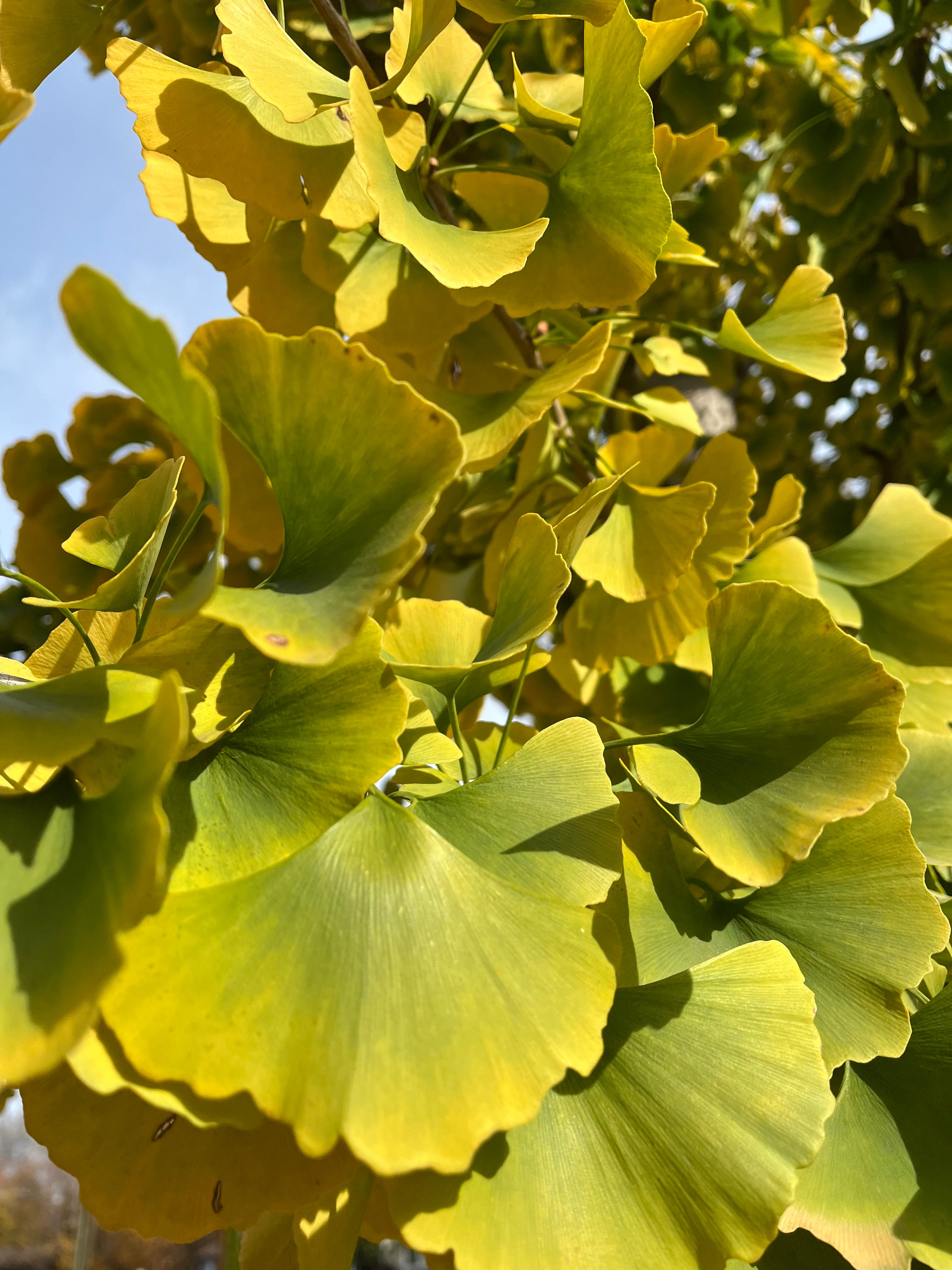
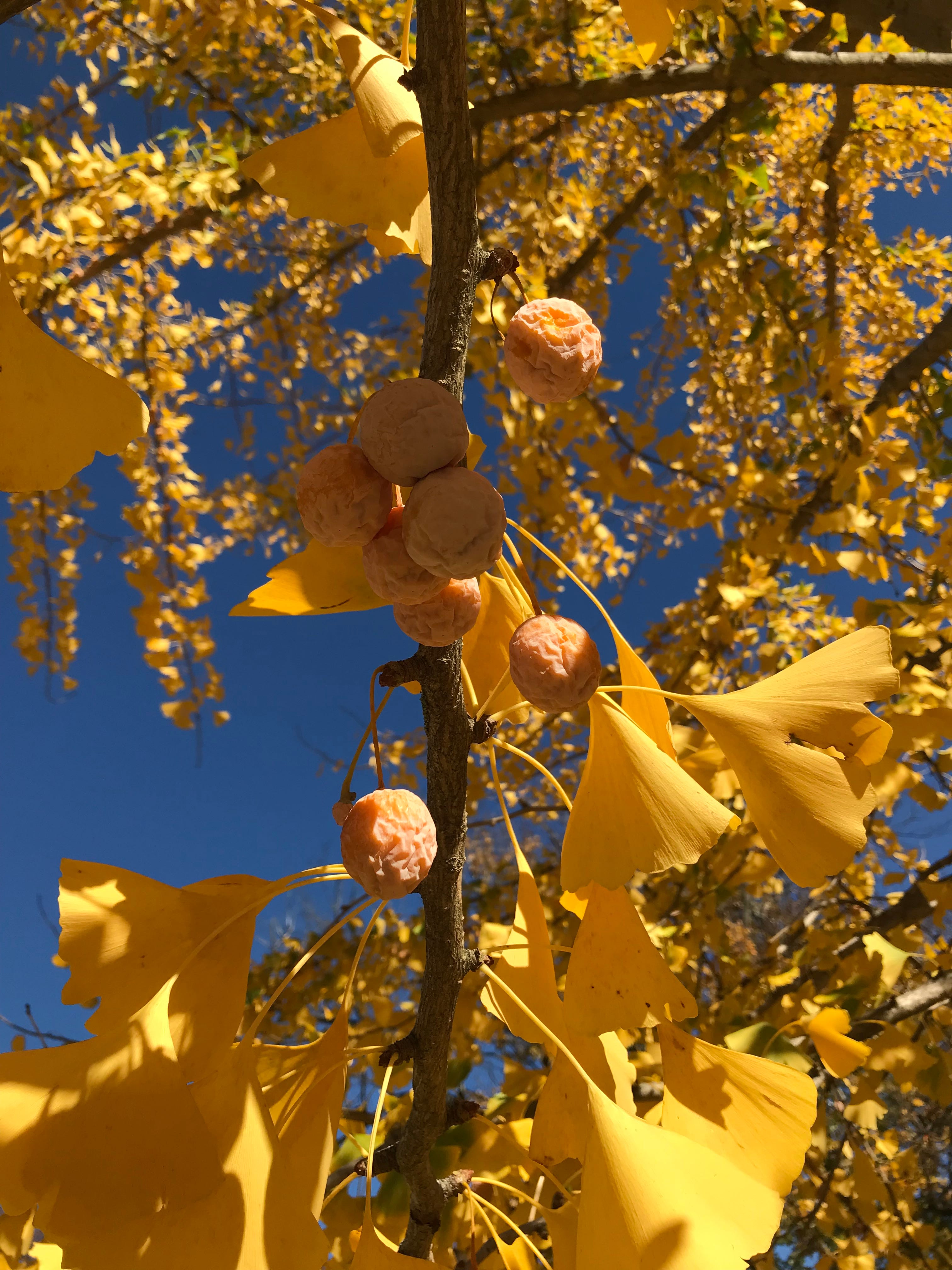
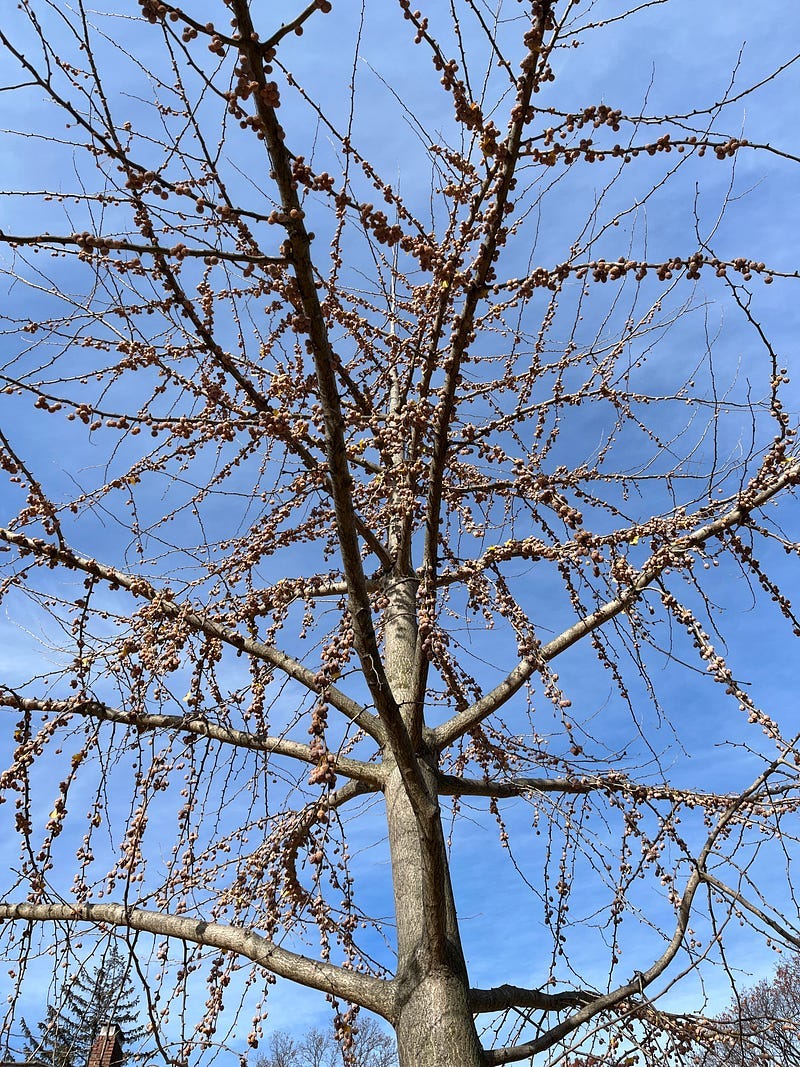
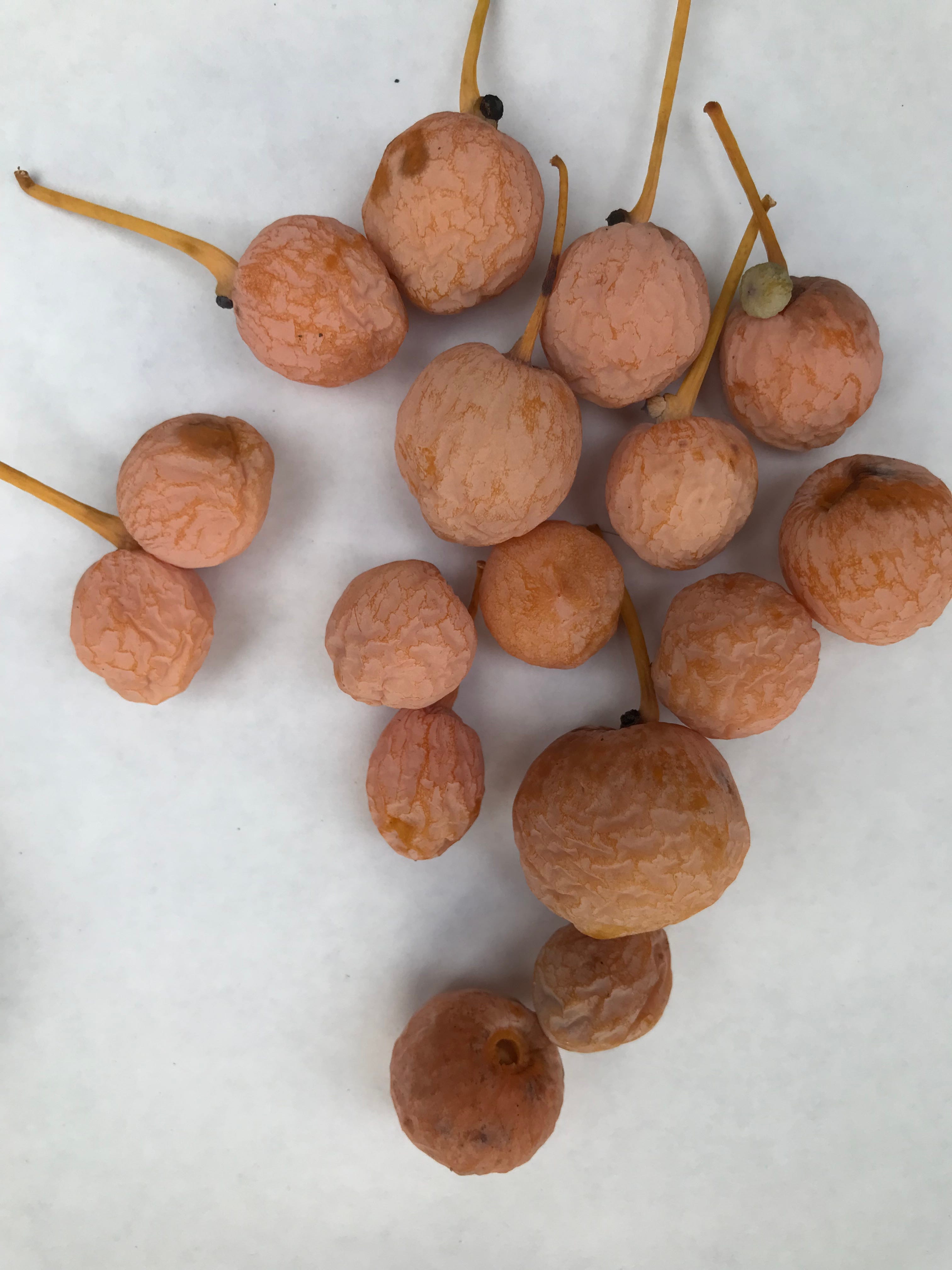
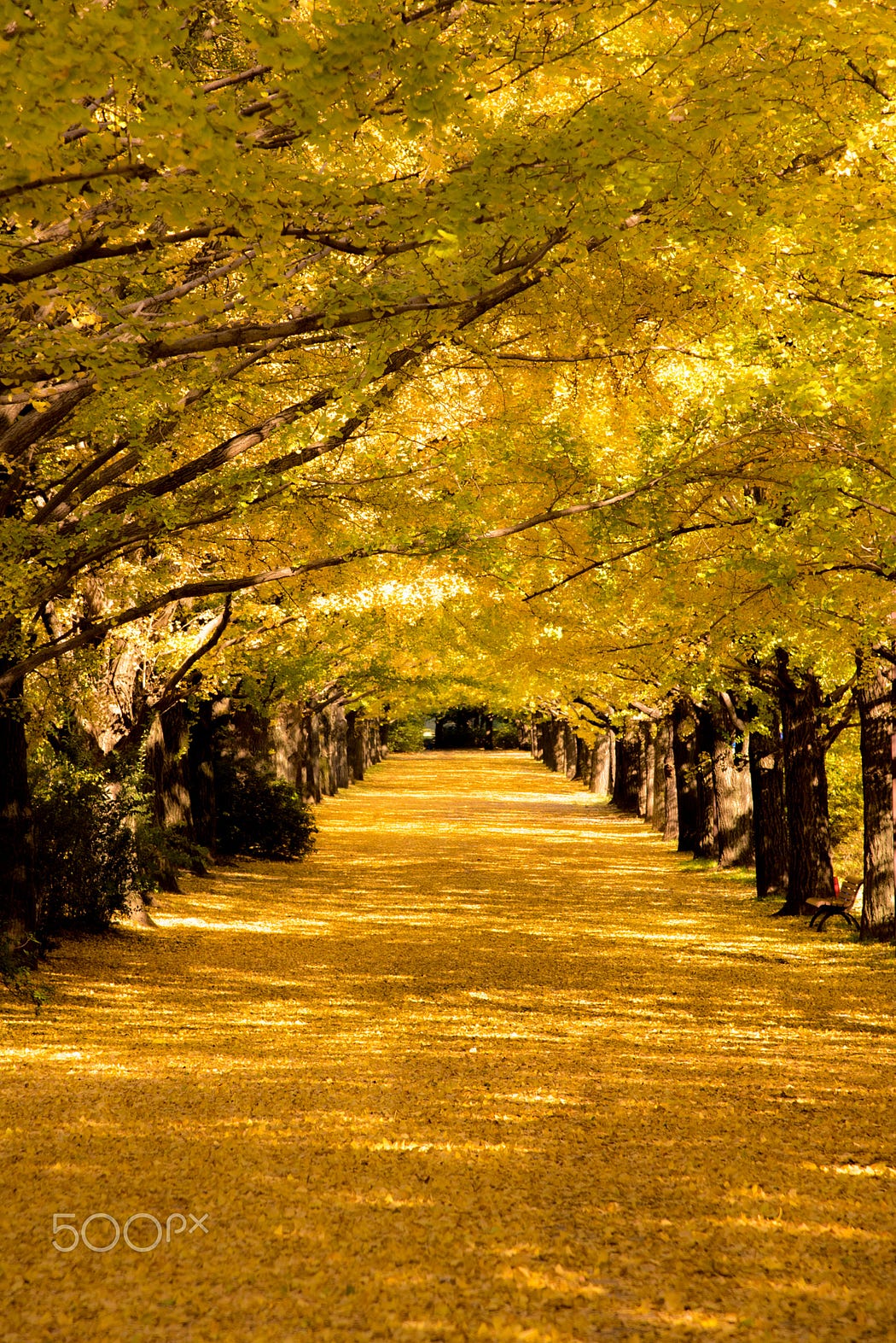
A large, deciduous pyramidal-shaped tree, the Ginkgo could grow up to about 100 feet tall with sparing branches extending sideways. It has distinctive fan-shaped leaves that are often divided into two lobes with diverging veins. Ginkgo trees are also referred to as maidenhair trees as their leaves resemble the foliage of a maidenhair fern. As seen above, Ginkgo’s leaves turn golden yellow in the fall enhancing the richness of autumn colors. Ginkgos are dioecious with male Ginkgos releasing pollen in the spring which in turn fertilizes female Ginkgos. Following their fertilization, female Ginkgos produce seeds/nuts covered by fruit-shaped soft cones in the fall. One unique twist in the growth of Gingko trees is that it takes about 20 years before they reach sexual maturity and display gender-specific characteristics.


Ginkgo nuts: From growth to foraging to cooking
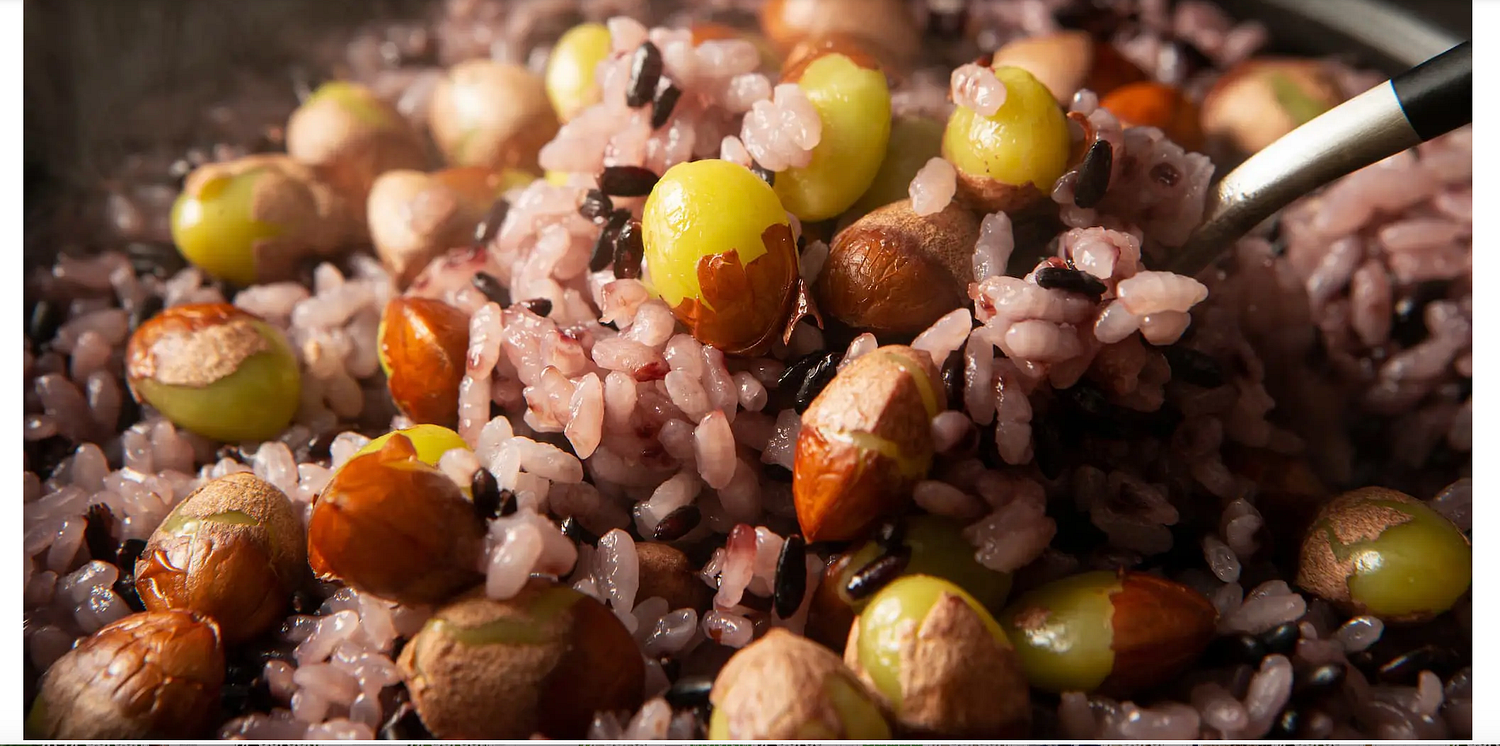
Ginkgo nuts have been a popular ingredient in cuisines in China, Japan and Korea for centuries. They have also been popular among Asian American communities in the United States. The nuts are used in various dishes fried, sautéed or steamed. They have a long history in traditional Far Eastern medicine as a cure for a range of ailments including senility, asthma, kidney and bladder disorders. Ginkgos’ religious association has made the consumption of their seeds even more sought after.
In Western countries, by contrast, extracts of Ginkgo leaves instead of their nuts have become popular for their supposed capacity to enhance cognitive and vascular conditions. This interest in Ginkgo extracts has led to multi-billion-dollar business worldwide. Scientists and medical professionals however tend to be skeptical about their effectiveness in boosting human well-being.
Consumption of Ginkgo nuts in Western societies is generally avoided. A main reason for this is that once they mature and hit the ground in the fall, the soft outer cover breaks open releasing a strong smell that turns many people off. It’s also believed that overconsumption of gingko nuts could be potentially toxic. Thus the overwhelming preference in most western countries has been to plant only male ginkgo trees. Unfortunately, this is a disturbing trend and might create a serious imbalance in favor of the male ginkgos, with potentially reproductive implications.
_______________________________________________________________________
Read Also : Top 10 Tips for Sustainable Travel
________________________________________________________________________

One of the most widely planted trees in the world today
Along with their unique look and fan-shaped leaves, Ginkgos contain various biological compounds that make them fire, pollution, and pest resistant, all while requiring low maintenance. These characteristics have made Ginkgos one of the most widely planted trees in urban and suburban settings in various parts of the world today.
Hallmarks of Immortality: Ageless Ginkgo
According to a study published in the Proceedings of the National Academy of Sciences (PNAS), ginkgo trees don’t decline much as they age. While with age humans and members of other species easily succumb to disease, the immune system of a 1,000-year-old ginkgo tree, according to the study, is no different than that of a very young Ginkgo. This ability to fend off aging is a big reason for the long life of Ginkgos.
Millenium-old Ginkgos
There are several examples of thousand year old Ginkgos in China, Japan and Korea. Li Jiawan Grand Ginkgo King in China’s Guizhou province is estimated to be more than 4,500 years old, making it the oldest Ginkgo in the world. According to China Daily, the trunk of the tree is so large that it takes about 13 adults with stretched hands to encircle it.
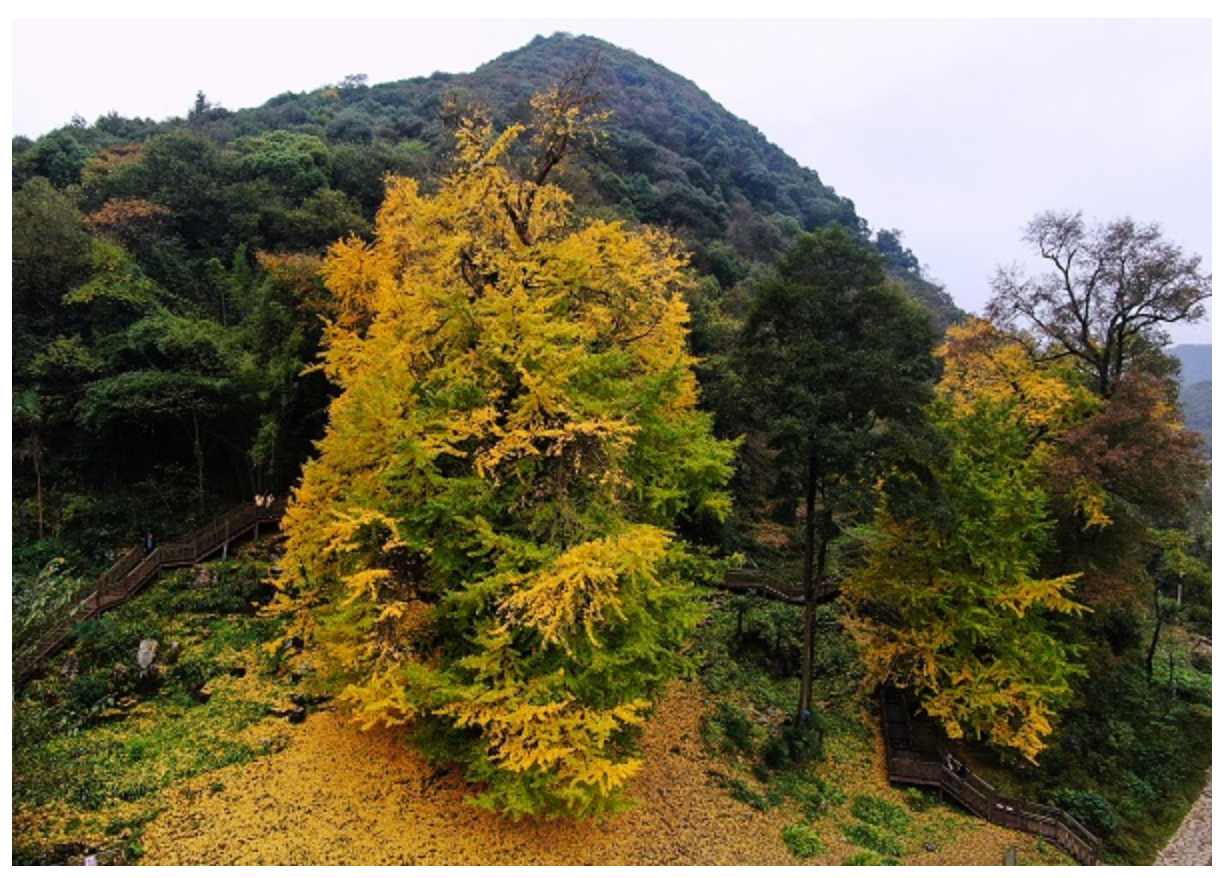
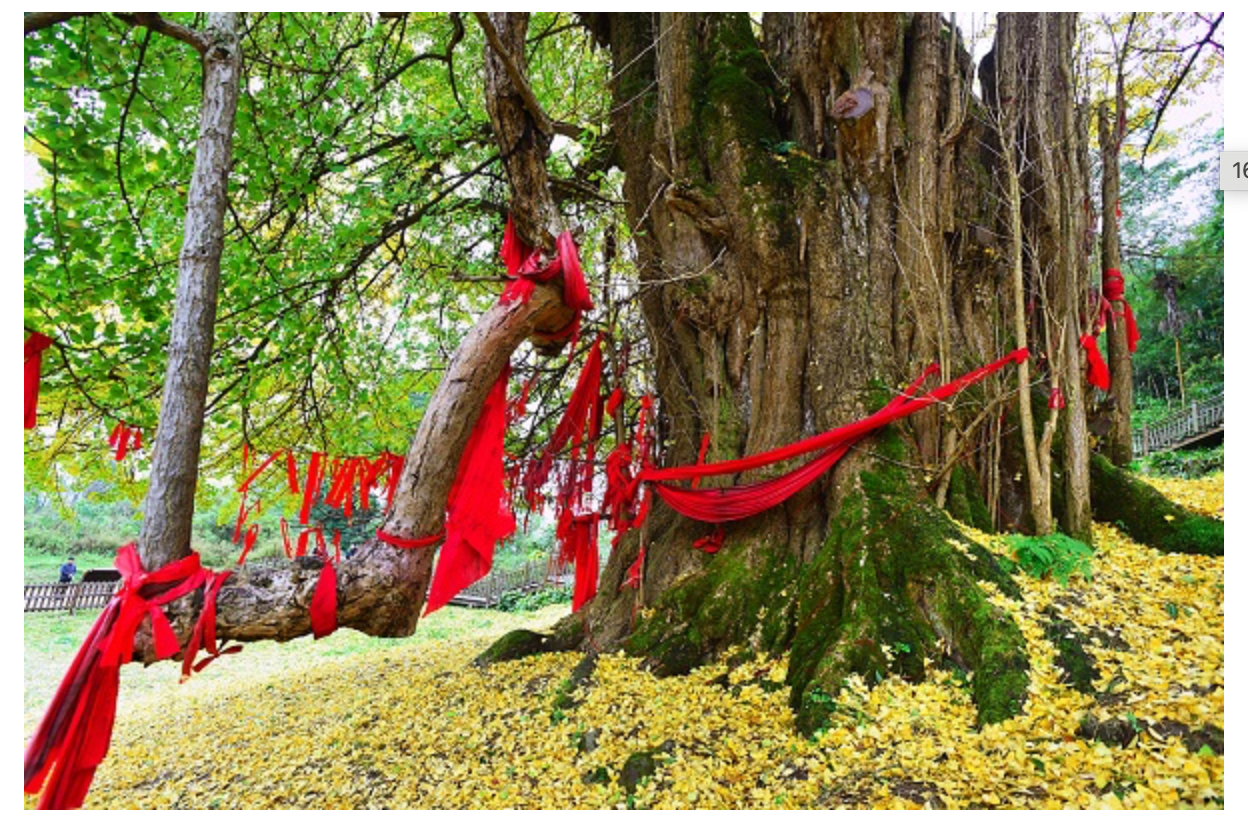
The Gu Guanyin Buddhist temple in the Zhongnan Mountains of China’s Shaanxi Province is home to a 1,400-year-old Ginkgo biloba tree. Towering over the temple, every autumn the tree creates a stunning canvas of color against an ordinary backdrop. It has been a prime destination for tourists and spiritual seekers alike.

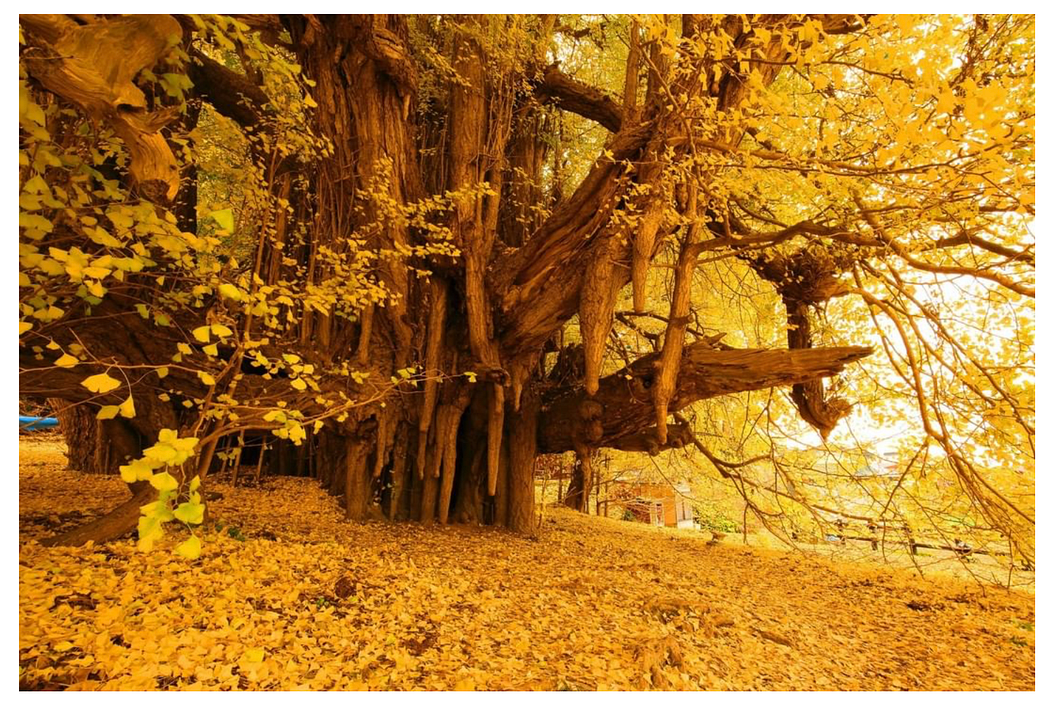
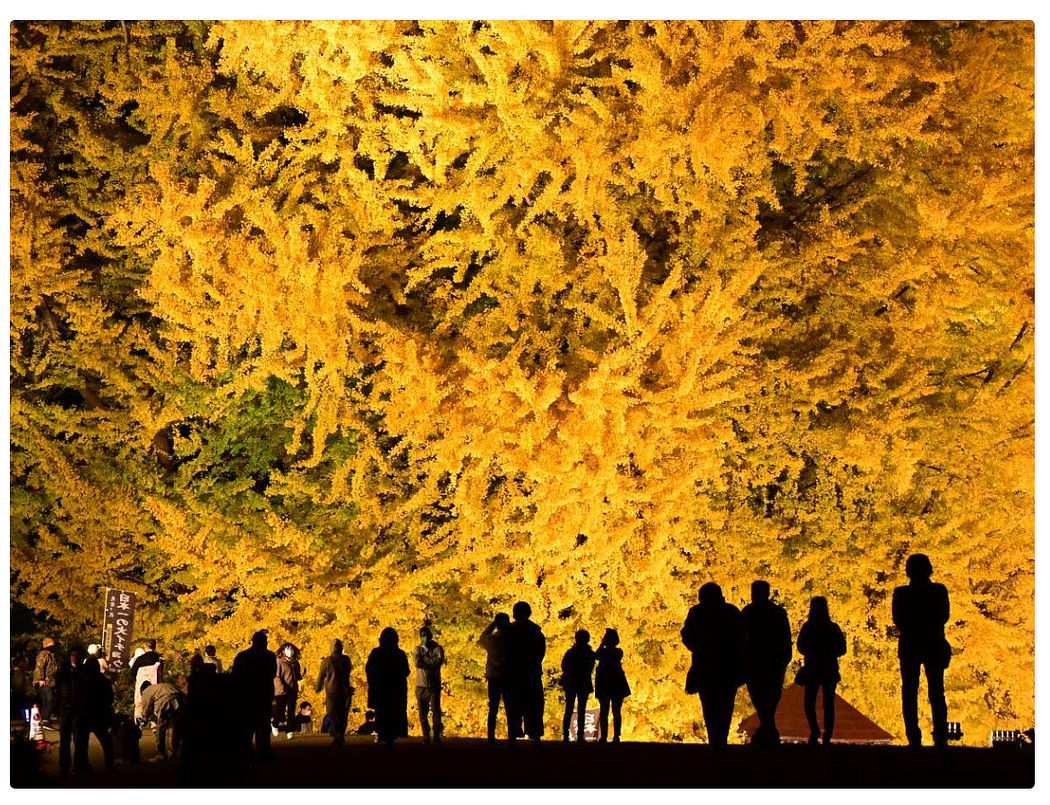
In Japan, the Kitakanegasawa Ginkgo tree in Fukaura, Aomori, is estimated to be 1,000 years old and is a nationally designated natural monument. It has a trunk circumference of 22 meters (72.1 feet) and a height of about 31 meters (101.7 feet). Nicknamed “Big Yellow,” it is fully illuminated during peak season in mid-to late November and has turned into a major must-visited destination for many Japanese and foreign tourists.
________________________________________________________________________
Read Also : Not So Fast: Why India’s Plan to Reintroduce Cheetahs May Run Into Problems
________________________________________________________________________
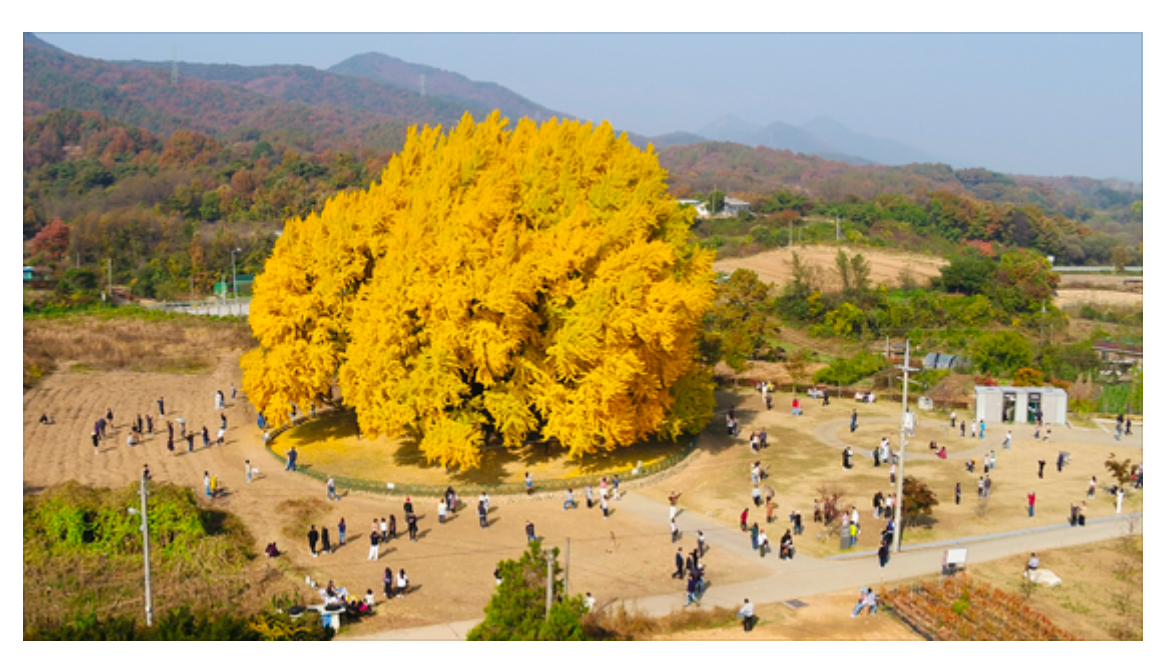
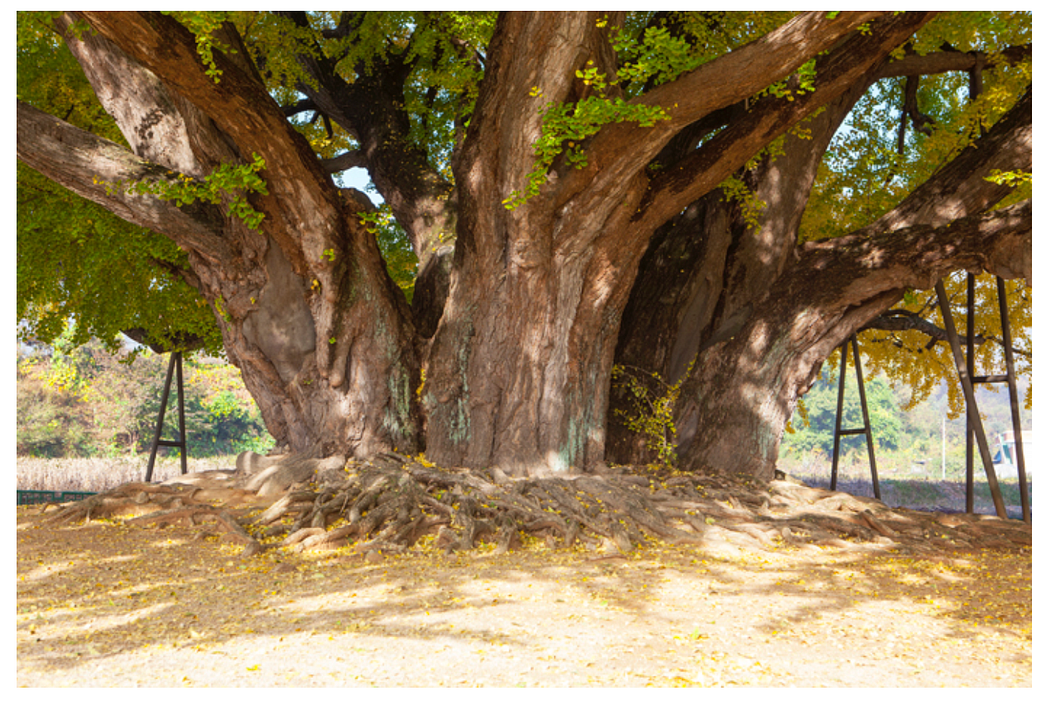
In Korea, a giant Ginkgo in Bangye-ri, Wonju, Gangwon is believed to be over 850 years old. Designated as a natural monument on January 31, 1964, it is a national tourist destination. The tree is 32 meters tall (104 feet) and has a perimeter of 16.27 meters (54.7 feet).
Non-binary gender characteristics
As we learnt earlier, Ginkgos are dioecious trees with male or female reproductive organs. But Ginkgos are also unique in the sense that their sexuality is not cast in stone. Noted scholars of the plant have recorded instances of individual branches on gingko trees having changed sex from male to female. They have also found instances where older Ginkgos are capable of reproducing asexually. Many old Ginkgos, some of these experts have documented, can produce roots underneath big branches. Once these descending aerial roots reach the ground they get embedded in the soil and over time turn into a tree with a trunk of its own. A survey of wild Ginkgos in Tianmushan in Eastern China led by Peter del Tredici of Harvard University and his Chinese colleagues discovered that as much as 40% of all mature Ginkgos in one single location were multi-stemmed.
Goethe and Ginkgo
The finding that Ginkgos could possess both female and male identities and can reproduce asexually adds an interesting insight into how the German polymath Johann Wolfgang von Goethe (1749–1832) saw in the Ginkgo a union of two parts that went beyond the conventional binary spectrum. In a poem titled “Ginkgo biloba,” written in celebration of his friendship to Marianne von Willemer, Goethe ruminates that the two-lobed leaf of the Gingko represents the fusion or coming together of two parts into one, representing the inseparability of two seemingly disparate parts. “Is it but one being single,” asks Goethe, “Which as same itself divides?” “Are there two which choose to mingle,” continues Goethe, “So that each as one now hides?”
Goethe pasted two Ginkgo leaves at the end of the poem reinforcing visually how he and von Willemer likewise bonded together. It was an intense, honest and symbolic expression of his feelings to a recently married wife of a friend.
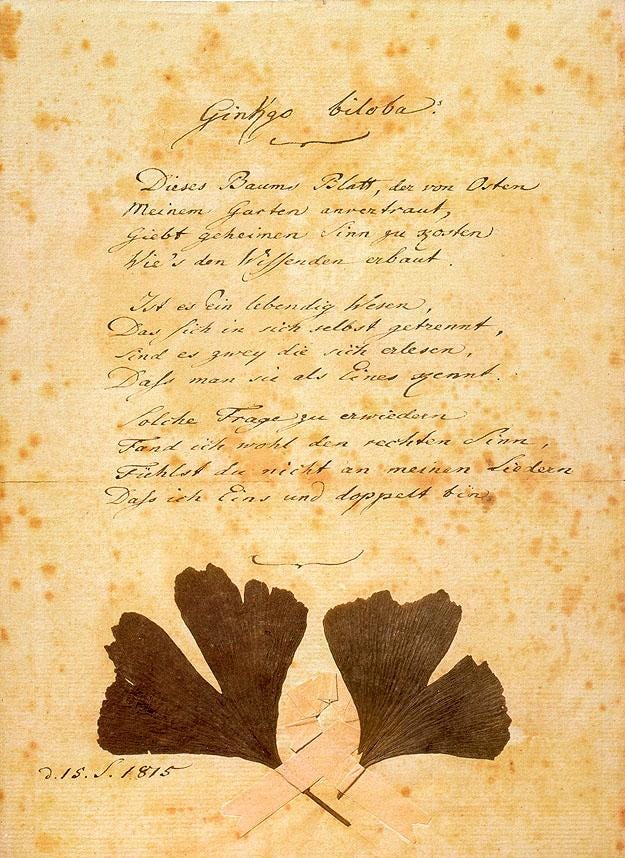
The English translation of Goethe’s poem Ginkgo Biloba by John Whaley reads as follows:
In my garden’s care and favour
From the East this tree’s leaf shows
Secret sense for us to savour
And uplifts the one who knows.
Is it but one being single
Which as same itself divides?
Are there two which choose to mingle
So that each as one now hides?
As the answer to such question
I have found a sense that’s true:
Is it not my songs’ suggestion
That I’m one and also two?
It’s telling that Goethe seems to be implying at the end of the poem that Ginkgo is a validation of the essence of his writings which aspires for unity and harmony across societies and cultures. Not surprisingly, the piece was later published in a collection of lyrical poems titled “West–östlicher Divan” (West–Eastern Divan) in 1819, where the poet celebrates the idea of the unity of opposites, articulating that the East and West were simply two sides of the same coin. The work was influenced by Goethe’s readings of the mystical lyrics of the Persian poet Hafez (1320–1389), which center around the themes of love, union and transcendence.
Epilogue
Goethe’s poem dedicated to von Willemer was written in the wake of the Napoleonic Wars that ravaged Europe for a quarter of a century costing more than a million lives. He found in the Ginkgo a deep source of optimism and inspiration in one of the darkest of times.
Just like Goethe, we can also find in the Gingko a valuable guide to weathering the stresses and strains of an uncertain time. Just as the Ginkgo has stood tall through devastating changes and catastrophes, we should also have the courage to accept any unforeseen and unpredictable changes, learn from them, and eventually grow stronger and wiser in our sense of purpose and mission in life.
NOTE – This article was originally published in tschaudhuri.medium and can be viewed here




