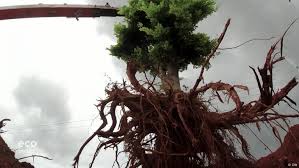
With each passing year, our planet is witnessing formidable shifts in seasonal cycles posing distressing consequences for humanity and its future. One such unsettling trend that researchers have observed has to do with more intense tropical cyclones.
Notorious for wreaking havoc with their extreme rains, powerful winds, and flooding, tropical cyclones, have been arriving sooner than before, a recent study showed
Intense tropical cyclones are one of the most formidable natural disasters known to humankind. While researchers have extensively studied changes in their characteristics, such as their numbers, intensities, and lifespans, not much is known of shifts in their seasonal timings.
________________________________________________________________________
Read Also: Is it possible to prevent Global Warming?
________________________________________________________________________
To investigate any alterations in their seasonal behaviour, the researchers pored through volumes of satellite data collected between 1981 to 2017, and found some surprising patterns.
Their analysis showed that our planet has been dealing with an earlier onset of such formidable storms. In fact, intense tropical cyclones have been arriving three days in advance per decade, since the 1980s!
More precisely, they have been emerging 3.7 days earlier in the northern hemisphere, and appearing 3.2 days early in the southern hemisphere. Interestingly, this shift corresponds only with the intense storms, milder cyclones don’t seem to be following this pattern.
________________________________________________________________________
Read Also: ‘Code red’: UN report sounds alarm over irreversible climate impact, warns global warming threshold…
________________________________________________________________________
Researchers link these shifts to earlier ocean warming, which is a consequence of global warming.
Primarily driven by greenhouse emissions, sea surface temperatures (SSTs) in many parts of the world’s oceans have been rising. Since tropical cyclones thrive on energy from warm ocean waters to intensify and develop, higher SSTs creating favourable conditions earlier than usual create a perilous situation, where storms not only strengthen very quickly but also show up sooner than expected.
Furthermore, an earlier onset of intense tropical cyclones also contributes significantly to an earlier start of extreme rainfall. This, in turn, leads to an increase in the yearly occurrence of rainfall events.
To understand the potential impact of early onset, the study team focused on two vulnerable regions, South China and the Gulf of Mexico. Both are heavily impacted by these storms, and extreme rainfall events compounded by their early arrival.
________________________________________________________________________
Read Also: Global Warming Kills 14 Per Cent Of World’s Corals In A Decade: Survey
________________________________________________________________________
Such extreme weather events often leave behind a trail of destruction, posing greater risks to life and livelihoods, and seems like they are about to get even worse. Models project that earlier-shifting trends will likely amplify even more in the future if emissions continue unabated.
In light of these findings, it is crucial to not only cut down emissions but also proactively prioritise adaptation and mitigation strategies for those on the frontline of the climate crisis.
The study was published in the journal Nature and can be accessed here.
NOTE – This article was originally published in weather and can be viewed here
Tags: #climate, #climatechange, #climatecrisis, #climaterisk, #cyclones, #environment, #flooding, #getgreengetgrowing, #globalwarming, #gngagritech, #greenstories, #rain