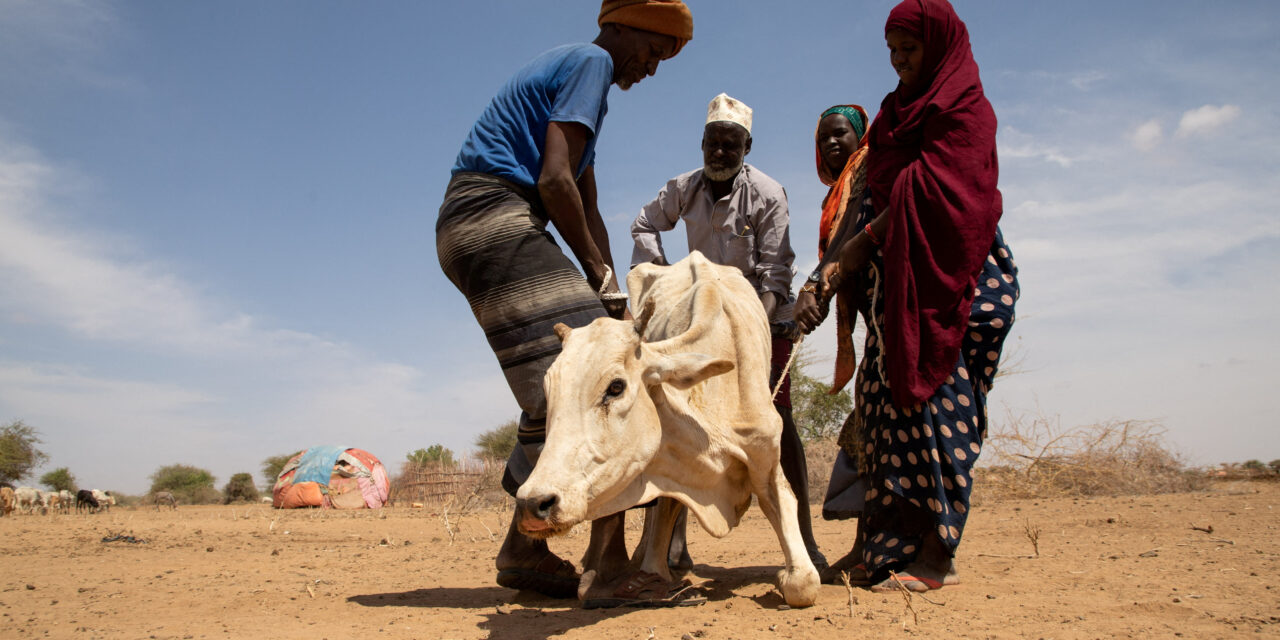

FILE PHOTO: Residents attempt to assist a cow affected by the effects of the drought situation in Adadle district, Biyolow Kebele in Somali region of Ethiopia, in this undated handout photograph. Michael Tewelde/World Food Programme/Handout via REUTERS THIS IMAGE HAS BEEN SUPPLIED BY A THIRD PARTY. MANDATORY CREDIT./File Photo
The United Nations Food & Agriculture Organization (FAO) has warned that conflicts and climate change are driving global food insecurity.
The organization warned of “mounting trends of chronic hunger, acute food insecurity and malnutrition” as its council kicked off a four-day meeting in Rome to discuss the issue.
________________________________________________________________________
Read Also : How to do Pranayam: Yoga Breathing Exercises You Must Include in Your Routine
________________________________________________________________________
The Russia-Ukraine crisis was cited as a catalyst for volatile global food prices, while extreme weather events, such as last year’s in Pakistan and below rainfall in East Africa, were highlighted as climate-related events that have devastated crops.
The council is FAO’s “executive organ” that meets in between sessions of the conference, which includes all FAO members and is held every two years.
Breadbasket of Europe
Russia’s ‘military operation’ in Ukraine since February 2022 has sparked extreme volatility in global food prices ever since. According to U.N. data, exports of grain to developing nations from Ukraine are still below pre-war levels, despite a deal brokered by the U.N. and Turkiye last year.
________________________________________________________________________
Also Read : This Farmer Won the Padmashri for His Zero Budget Natural Farming Model
________________________________________________________________________
Under the agreement, Russia has allowed exports of grain from Ukrainian ports on the Black Sea. The deal is set to expire on May 18 but Moscow has previously agreed to extend it at the last minute.
After a meeting of agriculture ministers in Japan over the weekend, the G7 nations called for the “extension, full implementation and expansion” of the agreement.
“We are deeply concerned about the devastating impact the war is having on food security globally, not least through price spikes in grains, fuel and fertilizers, which is disproportionately impacting the most vulnerable,” the ministers said in a joint statement after the meeting in Miyazaki, Japan.
Legacy of COVID-19
Even before the war in Ukraine broke out and disrupted global food supplies, officials at FAO had warned about rising hunger levels around the world. The organization estimates there were as many as 828 million undernourished people in 2021, an increase of 150 million since the start of the COVID-19 pandemic.
________________________________________________________________________
Read Also : WHO warns Coronavirus Crisis is Going to Get Worse and Worse! Global Infections rose above 13 Million!,
________________________________________________________________________
FAO defines undernourishment as not being able “to acquire enough food to meet the daily minimum dietary energy requirements, over a period of one year.”
According to FAO’s projections, almost 670 million people will still be undernourished in 2030, 78 million more than if the pandemic had not occurred.
NOTE – This article was originally published in newseu.cgtn and can be viewed here
Tags: #climate, #climatechange, #climatecrisis, #climaterisk, #FAO, #flooding, #food, #getgreengetgrowing, #globalwarming, #gngagritech, #greenstories, #rainfall, #russia, #ukraine, #weather