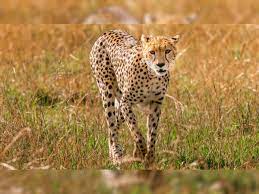
A sweet spot in animals like cheetahs, who can run fast, explains how they can reach such high speeds, a study revealed.
According to a study published in the journal Nature Communications, animals that can run fast tend to be medium in size. Lead author Dr David Labonte of the Imperial College London’s Department of Bioengineering said, “The fastest animals are neither large elephants nor tiny ants, but intermediately sized, like cheetahs. Why does running speed break with the regular patterns that govern most other aspects of animal anatomy and performance?”
The international research team developed a model to demonstrate how animal muscles move when on land and then assessed the constraints in how fast they can run.
_______________________________________________________________________
Read Also : 20 Immunity Boosting Foods You Need In Your Diet Today
________________________________________________________________________
The study suggested there are two limits to how fast animals can run. They are how fast and by how far their muscles can contract. Moreover, what limit they meet first determines their maximum running speed. An animal’s overall size determines this limit.
The first limit is the “kinetic energy capacity limit,” which determines how smaller animals have muscles that are restrained by how quickly they contract. The second is “work capacity limit,” which means how larger animals are restrained by how far their muscles contract.
Co-author Professor Christofer Clemente, from the University of the Sunshine Coast and the University of Queensland, said, “Animals about the size of a cheetah exist in a physical sweet spot at around 50kg, where these two limits coincide. These animals are consequently the fastest, reaching speeds of up to 65 miles per hour.”
Their model answers how some animals can run faster than others. It also determines how the muscles evolved in some animals. Moreover, it provides insight into why there are huge distinctions between certain animal groups. For instance, it explains why large reptiles like crocodiles are slower than large mammals.
_______________________________________________________________________
Read Also : 15 Magical Benefits of Eating Star Fruit (Carambola) on Your Skin And Body
________________________________________________________________________
Co-author Taylor Dick of the University of Queensland said, “Limb muscles are a smaller percentage of a reptile’s body, It means that have to hit the work limit at a smaller body weight and thus have to remain small to move quickly.”
“For large animals like rhinos or elephants, running might feel like lifting an enormous weight, because their muscles are relatively weaker and gravity demands a larger cost. As a result of both, animals eventually have to slow down as they get bigger,” co-author Dr Peter Bishop, from Harvard University, said.
NOTE – This article was originally published in wionews and can be viewed here
Tags: #animals, #cheetahs, #energy, #environment, #forest, #getgreengetgrowing, #gngagritech, #greenstories, #nature, #running, #speed, #wildlife