Up to 3,000 wind turbines and 60 million solar PV panels are planned for vast site in Western Australia
The world’s largest planned renewables project, which would spread thousands of wind turbines and millions of solar panels over an area larger than El Salvador, is seeking permission to begin building.
The Western Green Energy Hub (WGEH) slated for Western Australia was opened for public comment on a federal government platform last week.
_______________________________________________________________________
Read Also : WHAT TO EXPECT FROM THE WORLD’S SIXTH MA…
________________________________________________________________________
The developers say it could generate over 200TWh of renewable energy annually, depending on the mix and size of its wind and solar farms. This is “similar in magnitude” to Australia’s current total power generation, which stood at 274TWh in 2023.
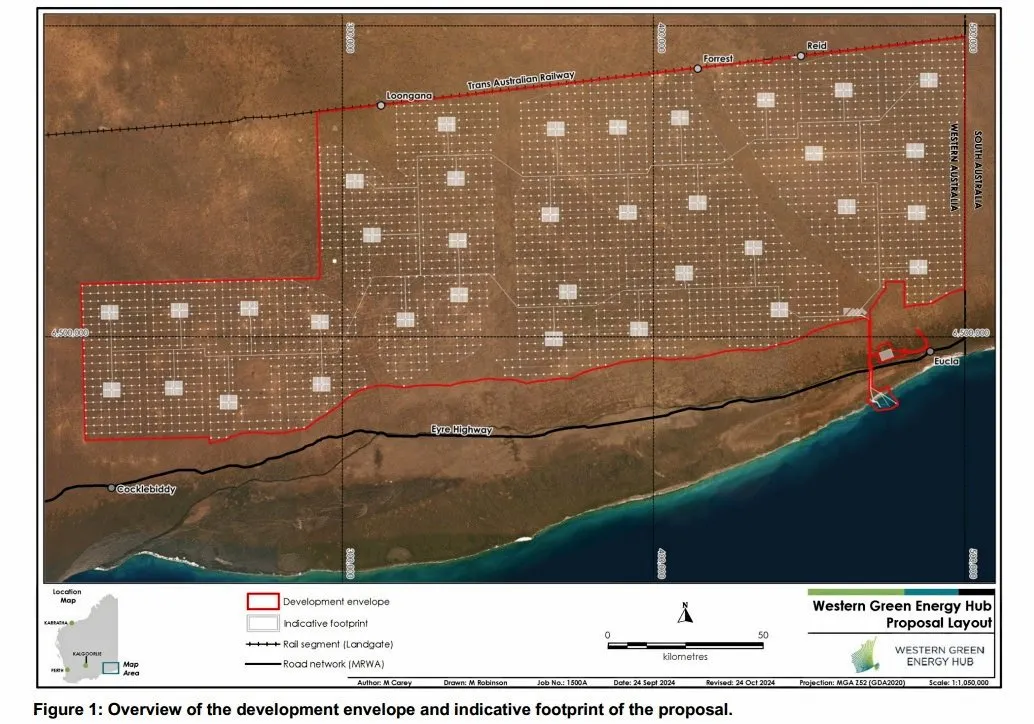
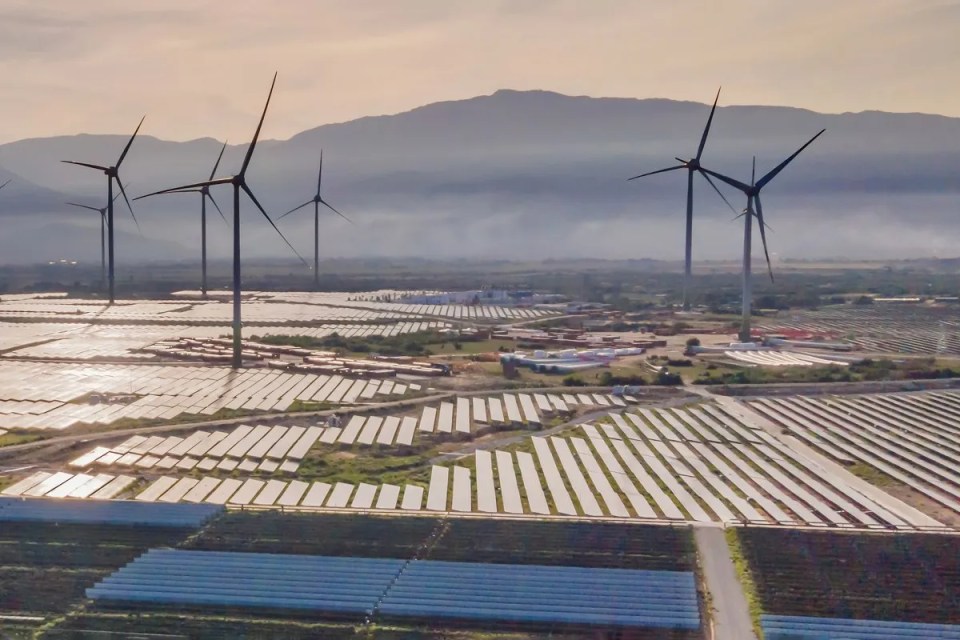
The developers now plan to erect up to 3,000 wind turbines – ranging from 7MW up to 20MW, far bigger than the largest current onshore models – and install up to 60 million PV panels spread out across 35 solar farms.
_______________________________________________________________________
Read Also : HUGE VOLCANIC ERUPTION DIDN’T CAUSE CLIM…
________________________________________________________________________
The project will also feature hydrogen electrolysers and data centres, as well as electrical infrastructure, pumping and cooling systems.
Other components of the proposed action will include a green ammonia (or other vector) production facility, workshops and fabrication facilities and worker villages, as well as an infrastructure corridor to the coast.
Green ammonia is proposed as the “base case” for product export, add the developers, and is the proposal’s exemplar export product for environmental impact assessment purposes.
_______________________________________________________________________
Read Also : WORST MASS EXTINCTION EVENT IN EARTH’S H…
________________________________________________________________________
The project will be developed in seven stages, which will ultimately result in the installation of up to around 35 different “nodes” of around 2-3GW each. The construction phase is expected to last for around three decades.