&imwidth=800&imheight=600&format=webp&quality=medium "World's longest evolution experiment started 37 years ago, but has already seen 80,000 generations")
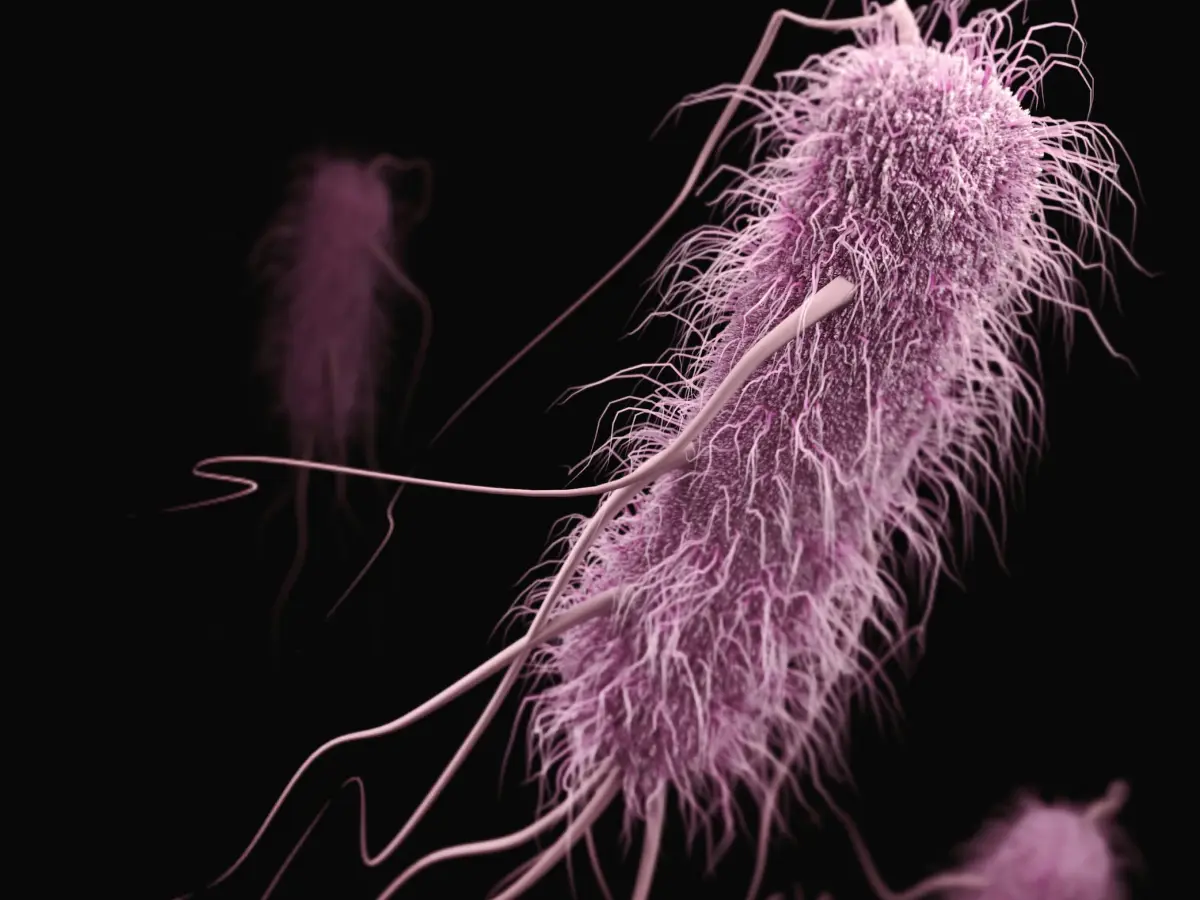
E. coli experiment started in 1988 to see evolution in real-time. Photograph: (CDC)
The “Long-Term Evolution Experiment” (LTTE) tries to answer questions about evolution and how the process of natural selection works, whether it is slow or fast and does the curve changes at certain points. It has been going on for nearly 40 years, but it has seen thousands of generations.
The longest-running evolution experiment in human history has been going on since 1988, and yet it has already seen 80,000 generations. The “Long-Term Evolution Experiment” (LTTE) involves Escherichia coli (E. coli) and tracking genetic changes in 12 colonies of the same strain of non-pathogenic bacteria.
Richard Lenski started the experiment at the University of California on February 24, 1988. It requires taking 1 per cent of the latest descendants of the ancestor strain and transferring them into a new dilute sugary solution, where they grow further. Lenski states on the website dedicated to the experiment that” bacteria easily grow 100-fold in a few hours.” They continue to sit there until the next day, and again, 1 per cent of each population is transferred into fresh medium.
________________________________________________________________________
“Bacteria reproduce by binary fission: one cell grows and, after it has doubled in size, divides to produce two daughter cells; the two daughter cells then replicate to make four cells; and so on,” Lenski mentions on the website.
This 100-fold growth translates to “about 6 and 2/3 doublings, or generations, each day.” Once 500 generations are achieved, the E.coli that won’t be used are frozen after being shielded by a cryoprotectant. The advantage of using E.coli is that it grows and mutates quickly, and the frozen strains can be thawed later for analysis.
The LTTE experiment decodes evolution by natural selection
Lenski says it is like “time travel in a scientifically meaningful way”. He says this helps them directly compare the current LTEE bacteria with their ancestors.
The evolved lines can be pitted against their ancestors to see how they have adapted and evolved by natural selection. The experiment is crucial as it throws light on certain processes that aren’t observable in nature.
________________________________________________________________________
Whether natural selection is slow or fast, does it dip at some point, how fit the organism gets and is there a limit to it, are some of the questions the LTTE experiment helps answer.
“Six of the 12 LTEE populations evolved to be so-called ‘hypermutators’ by 50,000 generations,” Lenski says. The 10,000th transfer of the experiment happened on March 13, 2017, and in August 2024, the LTEE populations passed 80,000 generations. The experiment is still on and will reveal a lot more about evolution in the near future.
NOTE – This article was originally published in WION and can be viewed here