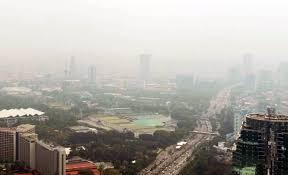

Polluted air contributed to 7.9 million deaths worldwide, or about one in every eight deaths. Those numbers come from the State of Global Air 2025 report, which tracks how breathing dirty air harms people in every region.(Air Pollution)
The work was led by Michael Brauer, a health scientist at the Institute for Health Metrics and Evaluation and the University of British Columbia (UBC).
His research focuses on how everyday exposure to polluted air drives patterns of disease and early death around the world.
The report uses the Global Burden of Disease, a worldwide study linking illness to shared risk factors. The report notes that the 2023 assessment is described as the most comprehensive version produced since the project began in 1993.
Across all ages, the 2025 report counts 232 million healthy years of life lost to air pollution in a year. Most of that burden comes from noncommunicable diseases, lasting conditions like heart disease and stroke that account for about 86 percent of pollution deaths.
Healthy years of life lost combine the time people die earlier than expected with years spent living with disease or disability.
For a city health department, that measure translates pollution into hospital visits, medications, missed school days, and workers who cannot stay on the job.
How air pollution harms the body
Scientists focus on PM2.5, tiny airborne particles smaller than 2.5 micrometers across that can travel deep into the lungs and bloodstream. This form of fine particulate pollution alone contributed to 4.9 million deaths in the span of a year.
Long-term exposure to PM2.5 raises the risk of ischemic heart disease, reduced blood flow to the heart muscle, and stroke.
These conditions can lead to chest pain, heart attacks, and sudden death when polluted air keeps irritating blood vessels year after year.
The air quality guideline, a World Health Organization limit for long-term PM2.5 exposure, sets safe levels at 5 micrograms.
SGA estimates that roughly 99 percent of people worldwide now breathe PM2.5 at levels above that guideline.
When polluted air is inhaled, particles can move from the lungs into the bloodstream, reaching the heart, brain, and other organs.
The estimated link is that exposure leads to about 626,000 dementia deaths and 11.6 million lost years of brain function in older adults.
How your city stacks up
Behind the global averages sit detailed maps that estimate pollution levels for every country and many cities. Typing a city name into that online tool reveals annual pollution levels and estimated deaths linked to dirty air there.
In these data, low income and middle income countries account for about 90 percent of all deaths the report attributes to air pollution.
That imbalance reflects both higher pollution levels and weaker access to health care, especially for older adults and young children.
About one third of people live where PM2.5 levels exceed an interim target of 35 micrograms per cubic meter set in the report.
It also finds that roughly 11 percent of the global population lives in countries that still have no national air quality standards at all.
Many high-income cities have reduced smog, yet the report still places them above the World Health Organization guideline once averages are calculated.
A city that sits under its own legal limit can still have pollution more than double the health-based level set by global experts.
Cleaning up air pollution
Air pollution is linked to chronic illnesses such as ischemic heart disease, stroke, lung cancer, diabetes, and dementia.
It also contributes to chronic obstructive pulmonary disease, a long-term condition that makes breathing difficult and can leave people short of breath even at rest.
Decades of evidence show that strong regulations can make a difference, as cities that switched to cleaner fuels and reduced coal based power have seen notable drops in pollution.
The same analytical tools used by public health researchers can track whether bus networks, low emission zones, or clean cooking programs lead to measurable improvements.
For individuals, staying informed begins with checking the local air quality index, a color-coded scale that shows daily pollution levels.
When levels rise, small choices like taking quieter routes or using a well-fitting mask can help lower exposure.
Recent estimates reveal that even clean-looking cities may have unhealthy air that carries hidden risks. These findings help residents and local leaders understand where their communities stand and how quickly pollution levels need to improve.
—–
NOTE – This article was originally published in Earth and can be viewed here