Imagine one day waking up and seeing that everything you have ever experienced in a moment has changed. Your whole life was spent in this house. The roads are very different, making it much harder to navigate and in new terrain you are.
Elements can easily injure you around you, and there’s no way to get free. This would be a horrific and frightening scenario and would kill many people. Yet, when their ecosystems are lost, this is what happens to animals and marine creatures every day.
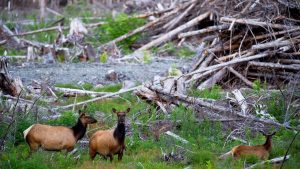
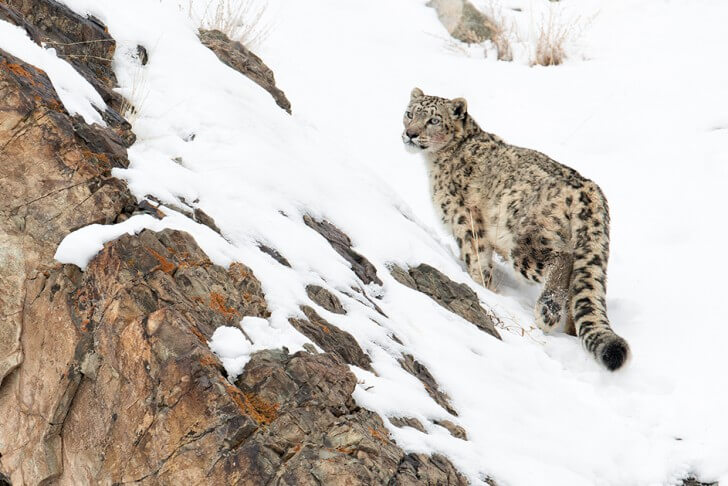
Many animal homes are lost as we deplete natural resources. Habitat loss, also known as habitat destruction, happens when we kill the natural habitats that animals depend on for survival.
________________________________________________________________________
“Buy Organic Products Online at best prices at http://www.getgreen.co.in “.
________________________________________________________________________
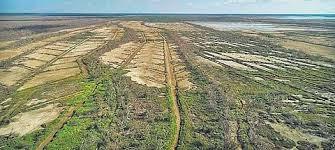
The loss of habitat usually occurs in one of three types. Habitat degradation occurs when trees and plants are entirely removed from the landscape, resulting in a drastic change in the landscape. A prime example of this is the cutting down of trees for mass deforestation.
When land is changed in ways that confuse animals and disturb their natural way of living, another kind of habitat loss occurs. It is known as habitat fragmentation and it happens in the heart of forests and other natural areas when roads and attractions are constructed.
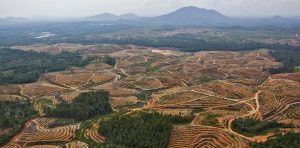
Natural Habitat Loss and Destruction Causes
Bearing in mind that habitat loss causes animal death and damages the environment, it is fair to ask why we continue to conduct behaviours, damaging biodiversity.
- Agricultural industry is one of the key causes. Unlike in the past, farming is now a complex industry that can be handled by large firms and requires mass production of food, which can be sold rapidly and for profit, in small plots of land for the cultivation of families and local communities. There is a need for more land for the production of food and additional land to fulfil these requirements.
- The vast majority of natural ecosystems are also destroyed to make way for human settlements. We decide to pave the way for large buildings and profitable attractions. In order to make room for people, habitats aren’t necessarily destroyed. They are also dismantled in order to keep us warm using the materials they produce. For example, trees are used to make a variety of paper goods, and wood is used to make furniture and other household items.
- Habitats are also losing space for more firms and to meet the requirements of big corporations. When you look at how many stores, houses and business sites there are, you can see that there are large numbers of properties. Many are still where natural habitats and wildlife once existed.
________________________________________________________________________
Read Also : ALOE E-CELL, THE FUTURE OF GREEN ENERGY
________________________________________________________________________
4. Wetlands include wetlands such as swamps and marshes. Wetlands are soil-covered land areas that are surrounded by water. Some wetlands emerge from the ground depending on the season, while others are permanent residents of a given location. Wetlands have their own habitat, which is distinct and complex. We fill wetlands and cover them up so that we can create stuff on top of them, unlike forests where we cut down trees and compress the ground from above.

Habitat Loss and Destruction’s Impact
We also forget the homes that are demolished in the process of making more room for people.
- Many animals are threatened because of habitat loss, which is the leading cause of extinction for many species. Animals are highly intelligent animals, but they are unable to defend themselves and care for their young when they are separated from their natural habitats.
- It must be level in order for the building to be safe and the building process to start in preparing land for houses and homes. This is why bulldozers typically go through wooded areas and clear trees. This transition occurs so quickly for animals that they have little time to adjust to such dramatic changes.
- Food and water are stored by animals in case of bad weather or when their food supply is out of season. In bad weather, natural shelters are near humans and protect hurricanes, severe rain and high temperatures. When it is displaced, the whole way of life of wildlife is changed. The homes of the predators are a safe haven for many species. Young livestock also have to be treated wildly in different ways. They have to defend themselves from defenceless predators and learn to pick up and hunt food.
- Ecosystems are the way nature brings together different species and the earth. Everything in the wild, and life is instinctual, is interconnected. All has a sense from grass blades to the highest trees. Both the land and each other would support animals. They become confused and lost when this balance is broken, and they endanger themselves. The end results are death and the non-reproduction of offspring on the species.
- Thinking about what happens on earth is also relevant. Many plants cannot survive anymore as the structure, purity and nutrient composition of the soil are instantly altered to remove them and their space to grow. Many plants can’t force themselves to grow because the land is too densely filled with human equipment, and if seeds aren’t sown elsewhere, the plant form will become extinct in the area.
- Runoff, because of the enormity of soil used in industrial agriculture, is also a concern which leads to pollution and habitat loss. Huge amounts of chemical-laden fertilisers, pesticides and other materials still need to be used for agriculture. These substances were once used to protect and encourage the growth of crops. The poisonous ingredients eventually accumulate into the ground and migrate into lakes, rivers, and seas, killing the water and animals in the process.
- The destruction of natural habitats, which leads to global warming and climate change, harms people. The more trees are removed, the more CO2 is released into the atmosphere, so that the earth warms up more rapidly. Different organisms, particularly in areas with drastic change, are being destroyed due to the rising temperature. As a result, we have increasingly uncomfortable temperatures and greenhouse gases in the atmosphere.
________________________________________________________________________
Read Also : Climate change: ‘Default effect’ sees massive green energy switch
________________________________________________________________________
Habitat Loss and Destruction Solutions
- By protecting natural resources, we will combat habitat loss and learn how to use them in widespread ways that do not require destruction of habitats. It is essential to regulate as well. Plans and legislation should be created to legalise how much human profit can be changed in a given region. In order to achieve biodiversity, we shall allow the wildlife more time to adapt and leave more areas unchanged with greater caution.
- We should also educate others about the value of biodiversity. Environmental education helps people appreciate the importance of nature and teaches ways for all to contribute to causes that aim to keep many different organisms alive.
- Awareness should be increased in addition to schooling. When the opportunity occurs, observers can make it a point to assist news practitioners by safely recording the process of habitat loss. Videos and photographs will help to vividly depict the tragic consequences of environmental degradation, eliciting emotional reactions that will motivate others to take action to conserve natural ecosystems.
- As easily as humans can devastate natural environments, we should be just as eager to restore and try and replace what has been lost. We should help finance the construction of areas that will act as a sanctuary for displaced wildlife instead of saving areas that cannot be saved. These safe havens are designed to look like natural environments, allowing plants and animals to thrive without fear of destruction. Environmentalists from all over the world have worked to create these sanctuaries in order to protect biodiversity from extinction.