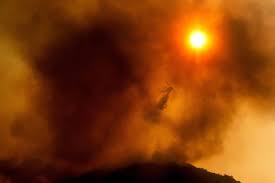
https://www.uidaho.edu/degree-finder/fire-ecology-and-management/bs-fire-ecology-mngt
The fire is probably man’s most useful invention. It allowed the early man to cook food, stay warm, and protect himself against predators. Through generations, fire has still kept its usefulness and we cannot imagine a world without fire. It is an element that all of us can use and also fear because of the danger of fire if it gets out of our control.
Fire is not just man-made; it can occur naturally in nature on a large scale and wipe out entire forests within minutes. Fire Ecology is a branch of Ecology that deals with natural wildfire and its dependence on the environment around it. These wildfires have an impact on the biotic and abiotic parts of an ecosystem and its interactions with it. In most ecosystems, these fires act as an integral part of the ecosystem because most ecosystems actually depend on fire for their survival.
“Buy Organic Products Online at best prices at http://www.getgreen.co.in “.
When we think about large-scale forest fires, we usually think about how it causes destruction in the environment by destroying so many trees. So most people think about the harm it produces to the forests. But what most people don’t realize is that most of these forest ecosystems actually depend on these natural fires for their germination and to make the environment more suitable for the regeneration of these ecosystems.
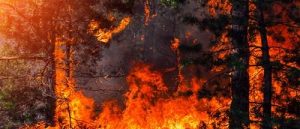
These fires also kill any species of plants that are not supposed to be found in that particular ecosystem and may have been inhibiting the growth of the trees and plants that are supposed to be growing there. In this way, fire acts as a part of the ecosystem, making sure that all the species of plants that are supposed to be in that area get the proper nutrition it requires. When it is time, the old trees and plants are destroyed by the fire and new healthy ones are born to repeat the cycle.
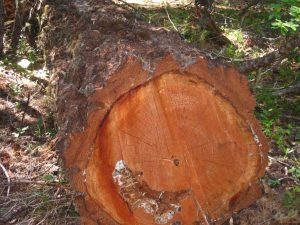
This may be a surprising piece of information, but did you know that trees actually have the ability to tell the stories of their past? We have learned long back that by counting the number of rings on a tree, we can find out how old it is. Each ring tells us about the past and even about the weather conditions at the times.
For example, if there was a forest fire and the said tree was affected, then the ring will be burned showing that the tree was affected. This burnt ring in the tree is called a fire scar which can also be seen on dead trees. These scars can even tell on which year the fire occurred, the intensity at which it occurred, and the weather conditions at the time.
https://www.uaex.edu/yard-garden/resource-library/plant-week/Fire-ecology-09-11-2020.aspx
You may be wondering what causes these natural fires if humans aren’t responsible. Have you ever seen a place where lightning has struck? It is as if that point got burned. So when lightning strikes a somewhat dry tree, it can light it up. If there are more trees near it, the fire spreads, consuming everything in its path. If it is in a forest, the fire will be intense and probable destroy the whole forest. Other than lightning strikes, even volcanoes, meteors, and coal seams can contribute to causing a natural fire.
Read Also : Forest Fires: A threat to the upcoming generations
Natural fires have many advantages when it comes to maintaining biodiversity in most ecosystems. When there is a regular occurrence of wildfire, the ecosystem will adapt itself and reduce the fuel build-up in that area which means that the fire will only burn in a controlled way and will not spread to the whole forest. These fires destroy the plants that are not supposed to be found in that particular ecosystem. These other species of plants take up most of the nutrients present in the soil and inhibit the growth of the plants that are supposed to naturally grow there.

https://www.nationalgeographic.org/article/ecological-benefits-fire/
Further, these fires kill some insects and pests that prove harmful to certain trees in the forests. The ashes left behind after a woodland fire are very nutritious to the plants growing there and act like a fertilizer. The trees that were completely destroyed, decay and add more nutrients to the soil leading to new healthier trees. The dead trees also provide a home to many birds and creatures in the forests. In some ecosystems, these fires are actually an abiotic component that is necessary for the survival of the ecosystem.
Read Also : Ecology is economy
Even though these natural woodland fires have a lot of benefits, there is also another side to the story. Fires can destroy the nutrients that were already present in the soil, making it unfit for growth. When this organic matter is removed, it is easy for erosion to occur. Soil is supposed to absorb water but constant fires can cause the soil to become hydrophobic which means that the rainwater will just run off over the soil and not seep down for the trees and plants. Sudden fires can also be dangerous to the animals in these forests. Many unique and endangered species of animals, birds, and insects can be killed in huge fires that occur without warning. This can reduce the biodiversity of these forests.
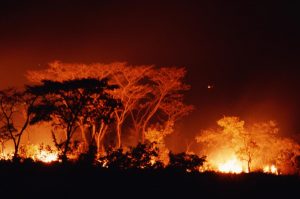
https://sciencing.com/would-happen-forest-fire-destroyed-ecosystem-23397.html
In short, we can conclude that woodland fires are a necessary evil. They are necessary for the trees and plants growing in the forests, but they can be dangerous to the soil and the fauna. Removing fires entirely from the equation may be harmful to the biodiversity of forests, but continuous exposure to fire can also be harmful. In other words, we can only hope that the woodland fires occur only as much as needed by the forests to survive, but not too much so as to destroy the ecosystem.
“You’d think that the forest is at the mercy of the flame, but that’s not it. The flame’s greatest fear is the forest: being out of control, consumed from the inside out, burning with no end in sight. It is the flame which is at the mercy of the forest; but the forest doesn’t care, she promises no end, she never says it stops or that it gets better! Flames never asked to be born as flames: so volatile, so vital, so uncontained. You are a flame, this world is a forest. Do you see it now? It was never the other way around.”
― C. JoyBell C.
-Sharon Ajith -27/05/2021
Tags: #bodyecology, #darkecology, #deepecology, #ecology, #ecologyart, #ecologycenter, #fireecology, #forestecology, #getgreengetgrowing, #gngagritech, #greenstories, #humanecology, #plantecology, #restorationecology, #urbanecology