
http://scitechpoland.com/portfolio/b-droid/
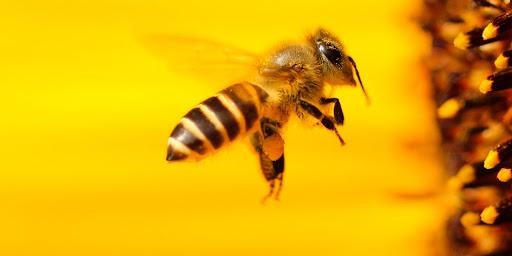
One of the main problems that our world is facing today is the decline of pollinators. Pollinators are one of the most important components of an ecosystem. They are necessary for the fertilization of plants that are bound to die out without them. Pollinators like bees transfer pollen grains from the anthers of male parts of the plant to the stigma of the female parts of the same plant or a different one. Only during pollination does fertilization occur and the plant can give rise to a new plant of the same species.
________________________________________________________________________
“Buy Organic Products Online at best prices at http://www.getgreen.co.in “.
________________________________________________________________________
It is true that there are some plants that don’t require pollinators and can undergo fertilization by themselves. But 90%of plants need bees and other pollinators if they need to give rise to a new generation. The harsh reality is that the pollinators, especially bees, are going extinct slowly because of some human practices and because of other bacteria and fungi as well. Some bees may even die of fatigue when traveling long distances.

https://pastevents.impactcee.com/2016/12/14/b-droid-exactly-droid-youre-looking/
If bees and other pollinators are no longer available to fertilize plants, then the earth as we know it will cease to exist. To find a solution to this problem, scientists around the world tried to find a replacement pollinator. It was then that researchers from Warsaw invented a robot that could act as a pollinator in 2016. This invention was first a robot in wheels but then they tweaked it to make it able to fly and thus, the B-droid was invented.
This robotic bee can go around and pollinate flowers while the actual bees don’t need to travel long distances and can relax in their homes. Robots don’t get tired easily either so they can pollinate 10 times more efficiently than bees. The more recent B-droid is small in size and it has a camera that scans the area around it to check for flowers. When a flower is spotted, the droid brushes against it, and the pollen grains get stuck to the body of the droid. The robot then scans for other flowers and transfers the pollen grains thereby doing the same work as a bee but faster and more efficiently.
________________________________________________________________________
Also Read : Vancouver Island group raises money to buy beloved forest lands from logging company,
________________________________________________________________________

https://www.fastcompany.com/3066318/these-robot-bees-might-save-us-from-the-bee-pocalypse
The droid doesn’t take any detours on its way to pollinate plants and flowers. They find a flower and plot an optimum path to reach the flower without any distractions. Pesticides and insecticides have no effect on these B-droids so there is no fear of them being poisoned. We know that bees need water too while they work but we add mosquito poison in most of our birdbaths so that there will not be the breeding of mosquitoes. The bees get poisoned as well when they drink this water. This is also nothing to be afraid of when it comes to the B-droid because they are robots and they do not need any water or food in order to work.
As we read earlier, the research team from Warsaw made two kinds of pollinators; one of them on wheels and the other one that can fly like a bee. The wheeled one was found to be more efficient because it had all the software on the machine itself and it could pollinate plants by itself by using images of flowers. But in the second drone-like machine, the computer and software remain on the ground. The tracking process is the same in both the machines but the drone consumes more energy and needs to be recharged after a few minutes of its flight. The wheeled robot bee can work for a maximum of two hours before we need to recharge it.
One of the greatest achievements of the Wheeled Robot was established during its testing. The scientists used the robot to pollinate rows of strawberries and garlic. The results were brilliant because the rows pollinated by these robots produced approximately 165 seeds while the rows not pollinated by the robot only produces 23 seeds. The seeds that were produced after pollination by the robot were also heavier which means that it was of better quality than those produced without pollination.

This B-droid was designed to help in precision agriculture in which we use technology and artificial intelligence to grow crops in farms. Using B-droid, the crops can be pollinated faster and farmers can get better produce than they usually get. Using these precision farming techniques, we can reduce the application of fertilizers and pesticides and apply only the necessary amount.
The global decline of bees and other pollinators is a real problem that we are currently facing. If we don’t take appropriate action to help these creatures from mass extinction, we may face a huge crisis and many ecosystems will be destroyed leading to the extinction of other species including ours. We should do whatever is possible to at least protect the pollinators we already have. By creating B-droids, we are not replacing bees but just making their work easier.
When bees are transported to other farms, many die along the way because of problems they face during the travel. But B-droids don’t have that problem and so we can just transport the droids while the bees can rest safely in their homes. In this way, we are actually slowly saving the bee community before they completely go extinct. Members of Green Peace may argue that replacing bees as pollinators is not the solution but that we must tackle the problem at the roots.
______________________________________________________________________
Read Also : Why Are Bees So Important To Our Ecosystem?
______________________________________________________________________
“Greenpeace is in favor of tackling the problem at its roots: banning pesticides, which harm bees and pollinators and switch from industrial agriculture towards ecological farming to preserve the environment, biodiversity, bees and other pollinators.”
– Christine Gebeneter.

-Sharon Ajith -08/06/2021
Tags: #Bee Apocalypse, #bees, #biodiversity, #environment, #getgreengetgrowing, #gngagritech, #greenpeace, #greenstories, #nature, #pollinators