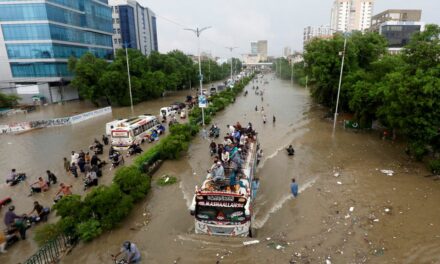
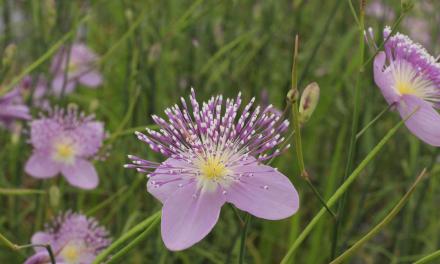
“Agriculture is the greatest and fundamentally the most important of our industries. The cities are but the branches of the tree of national life, the roots of which go deeply into the land. We all flourish or decline with the farmer.”
-Bernard Baruch
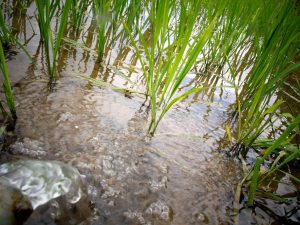
https://www.unwater.org/water-pollution-from-agriculture-a-global-review/
One of the most polluted areas on our planet is the water. It is filled with plastic, bottles, diapers, and all sorts of wastes including oil and other toxic substances like batteries, etc. These substances are harmful to the aquatic life that is found in these water bodies and this, in turn, becomes harmful for us as well when we have to use it.
_________________________________________________________________
Buy Organic Products Online at best prices at http://www.getgreen.co.in .
________________________________________________________________________
Though there are many causes for water pollution, one of the major contributors would be the Agriculture industry. Farmers use a large number of pesticides, fertilizers, insecticides, and so on so that they can get the best produce. The run-off from these agricultural lands is dumped into nearby water bodies even though it is full of toxic chemicals.
As the population increases, the farmers have to work harder to ensure that they have enough produce to feed the increasing number of customers as well as their own families and animals. So they increase their farm area and add more fertilizers than ever in order to obtain the best crop. Sometimes there are competitions among farmers to show off whose farm is bigger, who had the best produce, or who sold the most produce from their farms. The use of these external chemicals helps them win these competitions, which in turn become agricultural run-off and end up in water bodies near these fields.

Statistics show that the agriculture industry uses up almost 70% of the total water available for our use and it is the largest contributor of pollution as well. Due to excess use of these fertilizers and such, the soil quality reduces which can lead to soil erosion. So, if it rains or when the farmer is watering the soil, a lot of the soil is washed away taking along with it the fertilizers, pesticides, and insecticides and ending up in a nearby stream or river and contaminating it.
________________________________________________________________________
Read Also : The chemistry behind water pollution
________________________________________________________________________
When a lot of these fertilizers land in water bodies, the nutrients in the water body increase, which gives rise to a process called Eutrophication. Even though it seems like a complicated word, Eutrophication simply means an uncontrolled growth of plant life on a water body’s surface. You may be thinking that plants are good for the planet; the more the merrier. But the problem with this is that these plants grow fast and spread uncontrollably, taking up all the oxygen in that area, leaving nothing for the aquatic animals in that area and the water quality in that area is also decreased.
Eutrophication can destroy complete ecosystems by taking away a lot of its components. Because of the crowding of plants on the surface of the water body, it is difficult for sunlight to enter the floor of the pond, lake, or river, which makes it hard for the underwater plants to photosynthesize. Without being able to produce their energy and food, these underwater plants die out; causing a domino effect that affects the entire ecosystem.
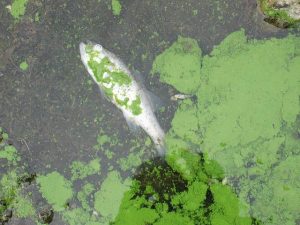
https://www.conserve-energy-future.com/causes-effects-and-solutions-to-eutrophication.php
In the end, water from these water bodies is used up for other agricultural purposes, like for thirsty animals, or for keeping the fishes in. Imagine the animals drinking or surviving in this toxic water. The animals could get sick and in extreme cases even die if the water is not made better. The same water can also be used to water the crops again which can be dangerous as well. The water is already rich in fertilizers and pesticides, so when the farmers add more fertilizers and pesticides, the crops may actually fail because there is a limited amount of fertilizer that one can actually supply to a crop.
To save these water bodies from getting polluted and posing as a threat to the agricultural industry and to our own health, there are a few guidelines that farmers can follow to ensure that they are being safe. During winter or other seasons, make sure the fields are covered with grass beds, plowed surface, or stubble cover so that erosion does not take place. Farmers are required to follow ‘The 4 Point Plan’ which tells the farmers how to prevent or reduce pollution. It includes reducing dirty water around the farm, improving the nutrient use on the soil and crops, carrying out a land risk assessment for slurry and manure, and managing their water margins.
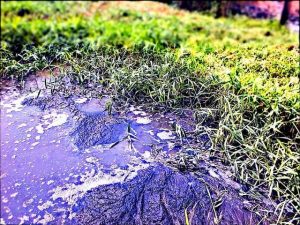
https://www.conserve-energy-future.com/water-pollution-remedies.php
Buffer strips can be used to prevent too much run-off from the fields to water bodies. When there is going to be fertilizer use, the farmers are required to make sure the fields are well away from any source of drinking water or ditches. They have to know to use only the right amount of fertilizer, insecticides, or pesticides on the field so that there won’t be an excess that could be a run-off to nearby water bodies.
________________________________________________________________________
Read Also :Thermal Pollution – Industrial untreated waste polluting water bodies
________________________________________________________________________
Maintaining a farm is not an easy job especially when there is competition for selling the produce. Farmers try to do as much as they can to increase their income each year by growing the best produce they can. But, most of them are not educated enough to know that what they do can cause harm to water bodies. We cannot survive without farms as they are one of our main sources of food and if farms are made to close down, the farmers no longer have a job with income.
We have to help these farmers understand the threat their farms are causing to water bodies and let them know about the methods in which they can stop. Provide them with fully organic fertilizers or pesticides and let them know that in the end, it’s not the best farm that needs to win, but the safest one.
Tags: #AirPollution, #cleanwater, #climatechange, #environment, #flint, #getgreengetgrowing, #gngagritech, #greenstories, #health, #nature, #oceanpollution, #plasticpollution, #Pollution, #pollutionfree, #savetheplanet, #water, #waterislife, #WaterPollution