https://www.onlinebiologynotes.com/wp-content/uploads/2018/07/water-pollution-678×381.jpg
The united nation estimated that around 10% of the world’s people do not have access to clean drinking water. That’s over 700 billion people.(water pollution) The main problem with this untreated water is it carries disease. Chlorella is one of such diseases that spread through human feces. This is particularly serious in shantytowns near big cities and in refugee camps.
________________________________________________________________________
Read Also :10 Health Benefits of Drinking Green Tea with Lemon
________________________________________________________________________
Rivers and streams can also be polluted with diseases from water. This water comes from badly managed rubbish dumps. There are many more harmful substances than human sewage which pollutes water supplies. Most of the other substances humans allow to escape in the streams, rivers, and oceans are more dangerous. This harms more to the natural ecosystem than to us directly.
Chemical’s impact
Chemical fertilizers are much more soluble in water than all organic and manure-based fertilizers. Because of heavy rains, these hazardous substances flow into rivers. The fertilizers cause algae to grow very fast forming a mat on the lake surface. Sunlight is important for vegetation and this blocks it.
Deeper down which dyes bacteria then feed off the dying vegetation. It uses up the remaining oxygen supply. Once the oxygen is gone all animal life dies the lake ecosystem is destroyed. If heavy metals such as lead mercury and cadmium get into rivers and lakes many animals will die.
In Minamata Japan, a polluting mercury fungicide factory was closed in 1968. Yet people there have continued to be affected by the mercury posing. So-called Minamata disease ever since because the fish caught locally in the bay still have traces of mercury in them. Nowadays the use of mercury and cadmium in fungicide has been largely replaced by copper. It is an organic compound.
The removal of lead from petrol began in the 70s when it became clear that lead posing is causing mental defects. Which caused at least in part by the lead compounds added to petrol. This was to make it burn more smoothly. It has taken 40 years since then for a United Nation global ban on the sale of leaded petrol. The last six nations compiled in 2013.
________________________________________________________________________
Read Also : Population and pollution – How they are interrelated?
________________________________________________________________________
Radioactive material
Radioactive waste is normally stored above ground in water tanks. Waiting for more permanent underground storage where it has to be safe for millions of years. There are fears that these underground stores could fail and could contaminate water sources.
Currently, a small amount of radioactive material is allowed to be washed out to sea. On the basis that it will become so diluted that it will make no difference to the natural background radioactivity in the oceans.
Following a nuclear disaster like 5-mile island in 1979 Chernobyl in 1986 or Fukushima in 2011. Watercourses and the oceans can become dangerously polluted with radioactive waste. Pollution can be during mining and drilling to extract minerals from the earth. Aquifers which are the underground watercourses can become polluted.
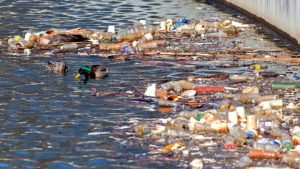
Huge amounts of plastic thrown away from ships and washed out to sea from rubbish dumps on land have ended up floating in the huge islands of waste. It causes a serious threat to fish, seabirds, and other marine animals.
The so-called Great Pacific Garbage Patch is estimated to be half the size of Europe and there are four others. Coal and oil-fueled power stations have been responsible more so in the past for causing acid rain. Which devastated many North European new lakes in the 60s.
Impact of Fossil Fuel and Nuclear Power Station
https://www.pbs.org/wgbh/nova/media/original_images/oyster-harvest.jpg
Fossil fuel and nuclear power stations need a large amount of water for condensing the stream. It drives their turbines. This water is cooled on the site in the great cooling towers.
That dominates the skyline of power stations even so the water will be returned to the river or sea warmer than before. And this can upset the river or sea. Ecosystem although not material pollution this waste heat is a pollutant.
________________________________________________________________________
Read Also : 6 PRACTICAL WAYS WE CAN REDUCE OCEAN PLASTIC POLLUTION
________________________________________________________________________
Summary
There are many ways mankind is polluting rivers, lakes, and seas. Perhaps the most serious causing millions to become ill or die is pollution by human sewage. Water pollution has become a reason to fear.
Despite the considerable effort to clean and treat wastewater. The addition of 1.2 trillion gallons of untreated wastewater happens every year. And the reason for this is human activities. In addition, 14 billion pounds of plastic are dumped into the ocean each year.
Do you have any idea what our activities can do to 47% of the earth’s population? They can face deprivation of safe drinking water till 2050. Water pollution effects on human health and the environment present a serious threat to future humanity.
The effect of ocean acidification is on marine organisms. Ocean acidification is the decrease in pH of water surfaces due to absorption of carbon emission. Seas are the absorber of almost a quarter of the carbon emission.
It’s estimated that by the end of the century if we keep pace with our current emission practices the surface waters of the oceans could be nearly 150% more acidic than now.
Chemical alterations can badly affect the marine ecosystem. Calcium carbonate is very important for shellfish. But the ocean’s carbonate levels go down when acidity levels rise. This threatens the survival of these animals.
Valves are at the lowest level of the food chain. Thus, this impacts all other animals such as fishes, sea birds, marine animals, and many more.
Tags: #AirPollution, #cleanwater, #climatechange, #environment, #flint, #getgreengetgrowing, #gngagritech, #greenstories, #health, #nature, #oceanpollution, #plasticpollution, #Pollution, #pollutionfree, #savetheplanet, #stoppollution, #water, #waterislife, #WaterPollution