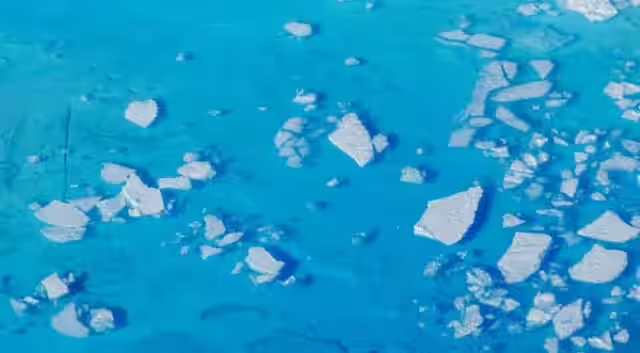
A new study has uncovered a concerning tipping point that could accelerate the melting of Antarctic ice sheets and lead to greater sea level rise than currently projected.
The research, published in the journal Nature Geoscience, found that warm ocean water seeping beneath the ice sheets can trigger a feedback loop of runaway melting.
The study explained that as ocean temperatures rise due to climate change, the warm water can intrude between the ice sheets and the underlying ground.
This creates cavities that allow more warm water to flow in, further melting the ice and expanding the cavities in a self-reinforcing cycle.
________________________________________________________________________
Read Also : Gujarat is seeing a revolution that’s totally out of step with the rest of India
________________________________________________________________________
“Every 10th of a degree (of warming) makes these kind of processes closer, these tipping points closer,” said lead author, Dr Alexander Bradley from the British Antarctic Survey.
The researchers warn that this newly identified melting mechanism could mean that current projections of sea level rise are significant underestimates.
Urgent climate action needed
The study highlighted certain vulnerable areas of Antarctica, such as the Pine Island Glacier, that are at high risk of this accelerated melting due to their topography.
“Increases in ocean temperature can lead to a tipping point being passed, beyond which ocean water intrudes in an unbounded manner beneath the ice sheet, via a process of runaway melting,” the study stated.
________________________________________________________________________
Read Also : Eggs found to remove salt and microplastics from seawater
________________________________________________________________________
While the exact timing of when this tipping point could be reached remains uncertain, the researchers stressed the urgency of curbing fossil fuel emissions to prevent crossing this critical threshold.
Integrating this new understanding of seawater intrusion into ice sheet models is crucial to better anticipate the potential impacts on sea level rise in the coming decades and centuries.
“It really just stresses the need for urgent climate action in order to prevent these tipping points from being passed,” Bradley emphasised.
NOTE – This article was originally published in wionews and can be viewed here