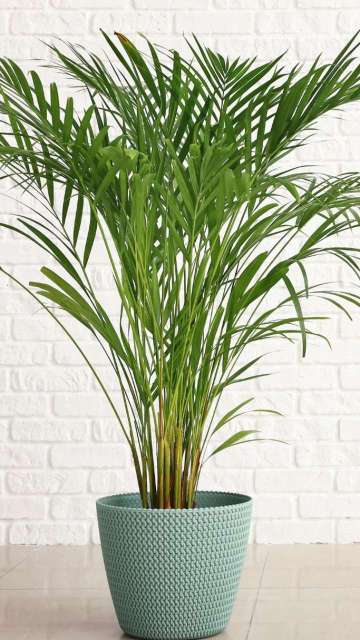
 Areca Palms are amazing houseplants. These plants have found their way from the tropics to your homes across Europe. It is strange to think that Areca Palms are considered endangered in their native home of Madagascar as they seem to be found in bountiful numbers across Europe and the Northern Hemisphere.
Areca Palms look somewhat like bamboo plants and have that seductive palm tree appearance of sprawling branches, droopy leaves, and peaceful vibes. The general consensus about palm trees is that they help to transport your mind to a warm place. This is especially handy
These plants have a fairly wide range of potential sizes so you can cater them to the space you want. The Areca palm care is pretty straightforward and you only need to be aware of a few things. Don’t worry, we will show you all the important indoor areca palm care information that can help your plant grow happy and healthily.
Remember, if you want to buy one of your own areca palm trees you can order one at our online store. These plants are available to be shipped to your home in just a few days! We have lovely plant accessories including plants, plant-caring tools, baskets, lights, and more!
______________________________________________________________________________
Read Also : List Of 50 Extinct Animals On Planet Earth
______________________________________________________________________________
Light

These lovely plants prefer bright, filtered sunlight. They can tolerate some direct sun which many plants cannot. However, they will live a rich and balanced life if kept out of direct sunlight. They do best with south or southwest-facing windows. They do enjoy lots of light so try to place them in a room that has such capacity.
Soil

These plants need a well-draining soil. As we will discuss later, overwatering is one of the biggest issues that these plants can experience. A peat-based potting mix is ideal and will help to keep these plants drinking the right amount. Having some slightly acidic soil is a great addition as well.
_______________________________________________________________________
Read Also : Worst mass extinction event in Earth’s history was caused by global warming analogous to...
________________________________________________________________________
Water

These plants do enjoy moist soil but are really sensitive to overwatering. They can drown quite easily. Think of their natural habitat – a very dry top layer and a constantly wet, not over-watery subterranean environment. The best way of replicating this is to get some well-draining soil and allow it to dry out slightly between waterings. Around once a week should be okay.
Temperature

These plants enjoy around 18-30 degrees when kept indoors. This may sound high but it is actually generally pretty achievable even in European winters. They should be able to adapt to slightly lower temperatures and indeed the inevitable changes. If they’re kept for long periods below 10 degrees this might be a slight problem.
Humidity
High humidity is perhaps one of the most crucial elements to maintaining a healthy and happy palm plant. These plants are used to warm air and mimicking that is pretty essential. You can mist the leaves to help facilitate high humidity. Ideally, place it in the shower/bathroom for a day every fortnight to help build some lovely humid conditions.
________________________________________________________________________
Read Also : India Pollution Tracker: Air quality index today in Delhi, Mumbai and other major cities
_______________________________________________________________________
Fertilizer

This plant likes to eat! Areca palm plants enjoy a liquid fertilizer from the spring to early fall period. You don’t have to feed it in the late fall and the winter time when the plant is dormant. The fertilizer can help the areca palm obtain all the nutrition it needs to look as elegant and gorgeous as it does!
We hope you have enjoyed reading a bit about how to grow a lovely Areca palm tree! These plants can live full, happy, healthy lives when you follow these simple instructions. They are fairly adaptable and will benefit from an attentive eye. During the first few years of life, try to see how it adapts to the conditions you provide. You can always adapt before it’s too late!
NOTE – This article was originally published in bloomboxclub and can be viewed here