In coming decades, major groundwater sources may become economically unfeasible — this could raise food prices and shift diets, among other impacts
Groundwater extraction is set to peak globally within the next three decades as unsustainable pumping depletes accessible stores. This could reshape the food and water systems that serve at least half the world’s population.
 |
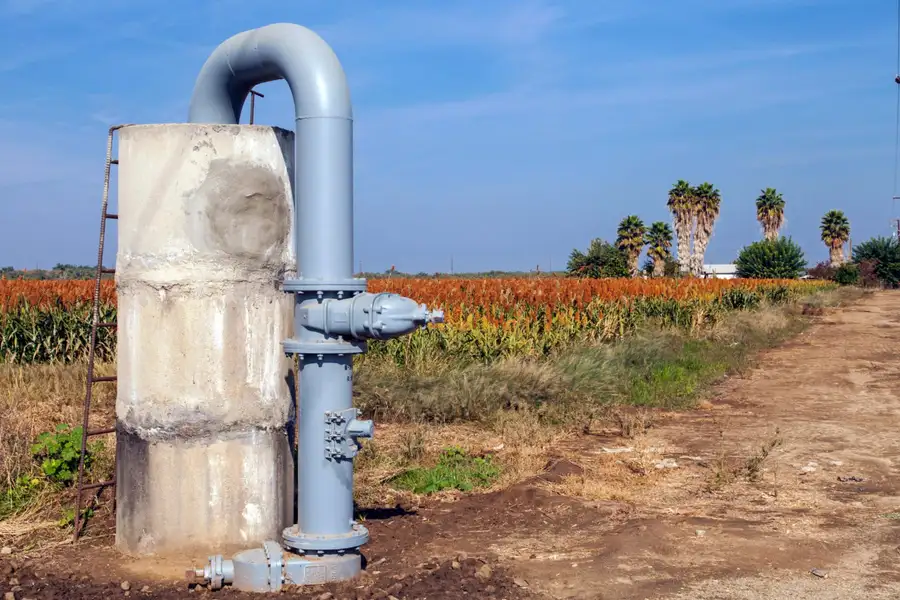
| Reaching peak groundwater pumping could impact agriculture across the globe Peter Bennett / Alamy |
Between 1960 and 2010, global groundwater extraction increased by more than 50 per cent, largely to irrigate crops. Today, one-fifth of all food is produced using groundwater. Much of this water is extracted from aquifers faster than they naturally refill, driving declining water levels. This causes the land to sink, contaminates the remaining water and harms ecosystems fed by the aquifers. It also increases the cost of extraction — wells must be drilled ever deeper and water pumps require more energy.
Previous studies projected this groundwater extraction would rise indefinitely, but they “did not have the human feedback in there”, says Hassan Niazi at Pacific Northwest National Laboratory in Washington state.
________________________________________________________________________
Read Also : Top 10 Central Government Schemes for farmers in India
_______________________________________________________________________
Niazi and his colleagues projected how decreasing water levels and rising pumping costs could affect extraction in the world’s major water basins this century. They used a model that incorporates the intricate relationships between groundwater extraction, economic development, energy systems and climate change. The researchers modelled 900 different scenarios to capture a range of possible futures.
On average across scenarios, they found the volume of groundwater extraction peaked around 2050 at 625 cubic kilometres of water — about twice as much as today. By century’s end, extraction declined to near present-day level. The peak’s timing and magnitude varied across scenarios, but nearly all forecasted a peak before 2100.
Some regions may face even quicker declines. In most scenarios, extraction peaked before 2030 in 10 per cent of studied water basins, including in large areas of India, Pakistan and China. Extraction in some basins appears to have already peaked. The researchers found declining groundwater volumes in Missouri and California since 2010 and 2015, respectively.
________________________________________________________________________
Read Also : Concept – National Mission on Natural Farming
_______________________________________________________________________
“What is driving that peak really differs region to region,” says Niazi. In California, for example, increasing pumping costs appears to be the main cause. In South-East Asia, shifts in precipitation and hotter temperatures due to climate change play a larger role, he says.
The researchers were clear that it is impossible to drain all the planet’s groundwater – they project people will pump less than 1 per cent of the water present in the top 2 kilometres of Earth’s crust over the next century. But supplies that are economically or physically feasible to extract could run short, impacting agricultural and water systems.
Food prices could rise, for instance. That may spur more agriculture on rain-fed lands or compel drier countries to import water-intensive crops. Regions that haven’t pumped much groundwater might start pumping more.
________________________________________________________________________
Read Also : Is Your Smartphone Hurting the Environment?
________________________________________________________________________
“Those changes aren’t going to be easy,” says Peter Gleick at the Pacific Institute, a non-profit research organisation in California. “You can’t just move that agricultural production to somewhere else” in most cases, he says.
Alongside factors like climate change and a growing population, the impact on food availability could be “very alarming”, says Matti Kummu at Aalto University in Finland. Food producers should switch to less water-intensive crops and use groundwater more efficiently as soon as possible, he says.
NOTE – This article was originally published in scihb and can be viewed here
Tags: #california, #climate, #climatechange, #diets, #earth, #envirnment, #foods, #getgreengetgrowing, #gngagritech, #greenstories, #groundwater, #nature, #planets, #water